Rajnath Singh meets Australia's Marles at ADMM-Plus sidelines
Synopsis
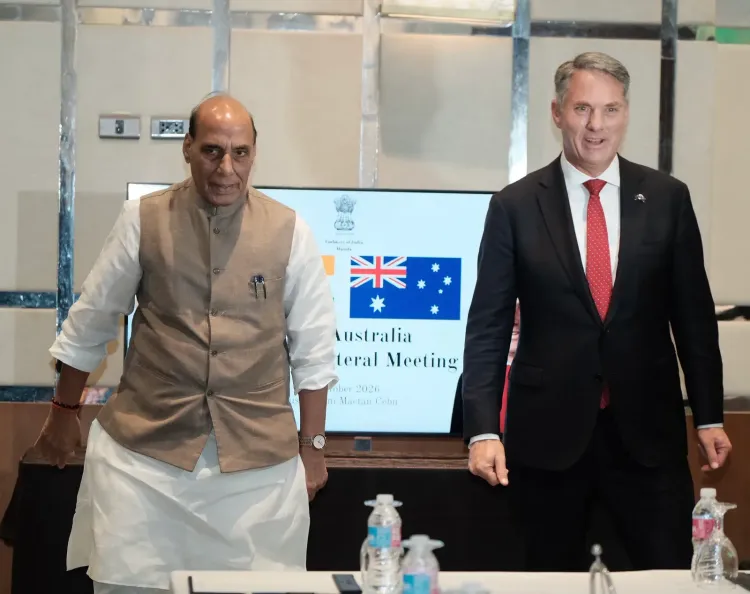
Union Defence Minister Rajnath Singh met Australian Deputy PM and Defence Minister Richard Marles on the sidelines of the ADMM-Plus meeting on October 28, 2026, discussing bilateral defence cooperation, military interoperability, and Indo-Pacific regional security under the India-Australia Comprehensive Strategic Partnership.
Key Takeaways
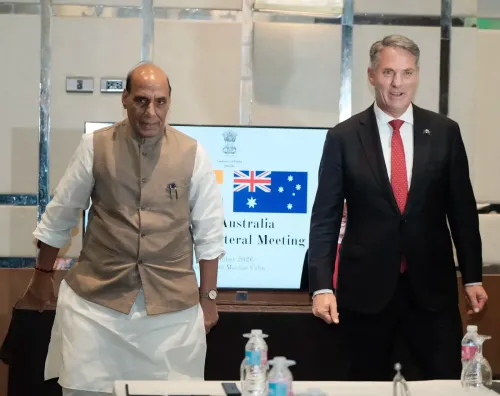
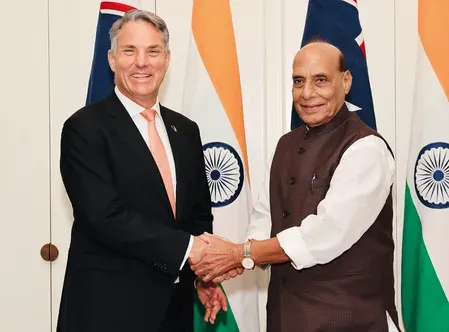
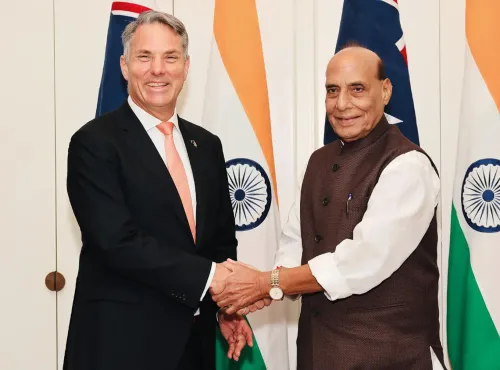
Rajnath Singh and Richard Marles held a bilateral meeting on the sidelines of the ADMM-Plus forum on October 28, 2026 .
Discussions covered reviewing bilateral defence cooperation, enhancing military interoperability, and addressing regional security challenges.
India reaffirmed the importance of the India-Australia Comprehensive Strategic Partnership , elevated in June 2020 .
Both countries participate in the Malabar naval exercise series, which expanded to include Australia from 2020 onwards.
The annual India-Australia 2+2 Foreign and Defence Ministers' dialogue , institutionalised in 2019 , remains the primary bilateral security coordination mechanism.
The meeting reinforces India's consistent push to deepen practical military ties with Quad partners across ASEAN-led multilateral platforms.
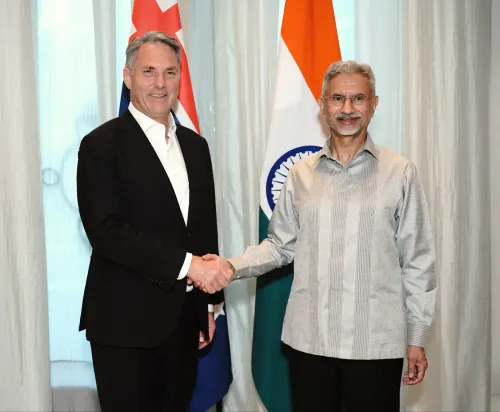
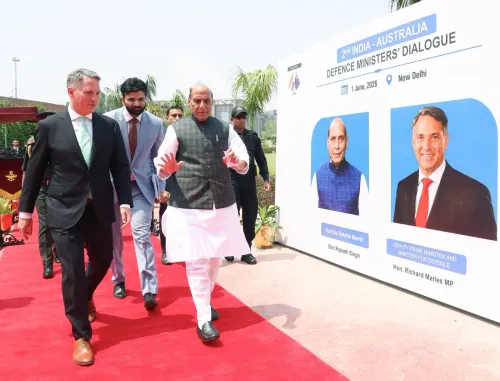
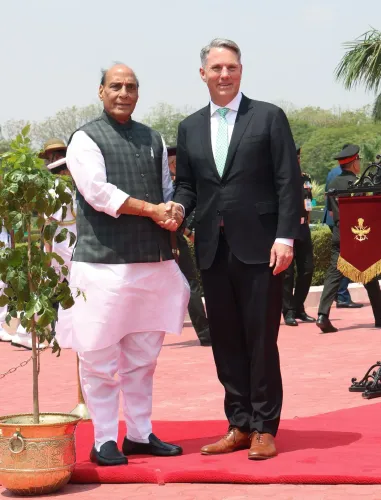
On the sidelines of the ASEAN Defence Ministers' Meeting-Plus (ADMM-Plus) on Wednesday, October 28, 2026, Union Defence Minister Rajnath Singh held a bilateral meeting with Australia's Deputy Prime Minister and Defence Minister Richard Marles — a encounter that put India-Australia defence interoperability and Indo-Pacific security squarely back on the agenda.
What the two ministers discussed
Singh described the talks as 'productive', covering three specific pillars: reviewing bilateral defence cooperation, enhancing military interoperability, and addressing regional security challenges. The framing was deliberate — interoperability is the operational bridge between two militaries that want to work together in a crisis without a formal alliance treaty binding them. It signals intent without obligation.
Singh underlined India's position clearly: 'India places great value on its Comprehensive Strategic Partnership with Australia for a free, open, and secure Indo-Pacific.' The phrase 'free, open, and secure' is the standard Quad-aligned vocabulary — a coded but unmistakable reference to concerns about Chinese assertiveness in regional waters.
The Comprehensive Strategic Partnership at six years
The India-Australia Comprehensive Strategic Partnership was elevated during a virtual leaders' summit in June 2020, covering defence, trade, education, and regional cooperation. That upgrade also birthed the annual 2+2 Foreign and Defence Ministers' dialogue — institutionalised in 2019 — which has become the primary mechanism for syncing the two countries' strategic positions.
On the military side, Australia's entry into the Malabar naval exercise series from 2020 onwards marked a concrete, practical step beyond diplomatic language. Malabar, originally a bilateral India-US drill, now includes Japan and Australia — making it the Quad's de facto naval rehearsal. Each edition builds the procedural muscle memory that 'interoperability' actually means.
ADMM-Plus as a strategic platform
The ADMM-Plus is an annual multilateral forum that brings together defence ministers from the ten ASEAN nations and eight dialogue partners — including India, Australia, the United States, China, Japan, and South Korea. For New Delhi, it serves a dual purpose: engaging ASEAN partners on shared security concerns while using the sidelines for high-value bilateral conversations like this one with Marles.
The forum's multilateral architecture gives India room to advance its Indo-Pacific agenda — connectivity, maritime security, humanitarian assistance — while simultaneously reinforcing its 'Act East' policy credentials. Bilateral pull-asides at ADMM-Plus have increasingly become as important as the plenary sessions themselves.
India-Australia defence ties: the pattern to watch
Rajnath Singh has been the face of India's defence diplomacy through a period of sustained acceleration — from the Galwan crisis of 2020 onwards, New Delhi has moved to lock in defence relationships with like-minded Indo-Pacific partners at a pace unseen in earlier decades. Australia fits that template precisely: a fellow Quad member, a Five Eyes-adjacent partner, and a country with direct Indo-Pacific maritime exposure.
The next concrete test of Wednesday's conversations will be the next scheduled India-Australia 2+2 ministerial dialogue and any fresh logistics or information-sharing agreements that follow. The language of 'interoperability' only counts when it shows up in joint exercise schedules and signed frameworks.
Point of View
Deepening defence ties with India is equally strategic, given the Indo-Pacific's shifting geometry. The real metric to watch is whether this latest engagement translates into a new logistics support agreement or expanded joint exercise calendar — the difference between diplomatic optics and operational depth.
NationPress
28 Oct 2026
Frequently Asked Questions
What is the ADMM-Plus and why does India participate?
The ADMM-Plus is the ASEAN Defence Ministers' Meeting-Plus, an annual multilateral forum involving defence ministers from the ten ASEAN nations and eight dialogue partners including India, Australia, the US, China, Japan, and South Korea. India participates to advance its 'Act East' policy, engage on Indo-Pacific maritime security, and use the sidelines for high-value bilateral defence meetings.
What is the India-Australia Comprehensive Strategic Partnership?
The India-Australia Comprehensive Strategic Partnership is a bilateral framework elevated during a virtual leaders' summit in June 2020. It covers defence, trade, education, and regional cooperation, and is supported by an annual 2+2 Foreign and Defence Ministers' dialogue institutionalised in 2019.
Is Australia part of the Malabar naval exercise with India?
Yes. Australia joined the Malabar naval exercise series from 2020 onwards. The exercise originally involved only India and the United States but now includes Japan and Australia, effectively serving as the Quad's primary naval interoperability drill.
What does 'military interoperability' mean in the India-Australia context?
Military interoperability refers to the ability of Indian and Australian armed forces to operate together seamlessly — sharing communications, procedures, and logistics — during joint exercises or potential coordinated responses to regional security situations, without requiring a formal alliance treaty.
What is the India-Australia 2+2 ministerial dialogue?
The India-Australia 2+2 dialogue is an annual joint meeting of both countries' Foreign Ministers and Defence Ministers, institutionalised in 2019. It is the primary mechanism for synchronising the two nations' diplomatic and security positions and follows a format India also uses with the United States and Japan.