Rajnath Singh Meets Australia's Marles, Reviews Defence Ties
Synopsis
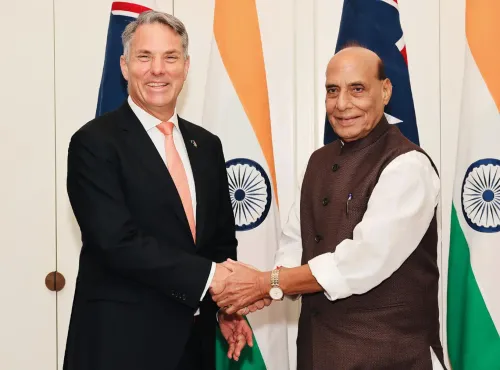
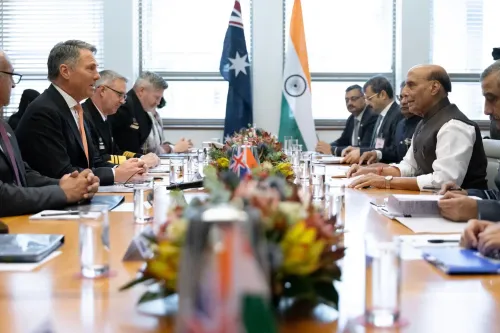
Union Defence Minister Rajnath Singh held talks with Australian Deputy Prime Minister and Defence Minister Richard Marles in New Delhi on June 1, 2026. The two sides reviewed the full range of bilateral defence cooperation and reaffirmed that the India-Australia Defence Partnership is set for steady progress ahead.
Key Takeaways
Rajnath Singh and Richard Marles met in New Delhi on June 1, 2026 for bilateral defence talks.
Both ministers reviewed 'the full range of bilateral defence cooperation' and discussed ways to enhance it further.
India and Australia elevated ties to a Comprehensive Strategic Partnership in 2020 , which includes a dedicated defence pillar.
The Mutual Logistics Support Arrangement (2020) gives both militaries reciprocal access to each other's facilities.
Both nations are Quad members alongside the United States and Japan , reinforcing shared Indo-Pacific interests.
The next India-Australia 2+2 ministerial dialogue and joint service exercises will be key milestones to watch.
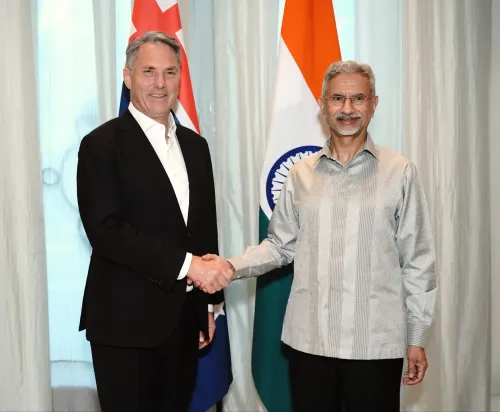
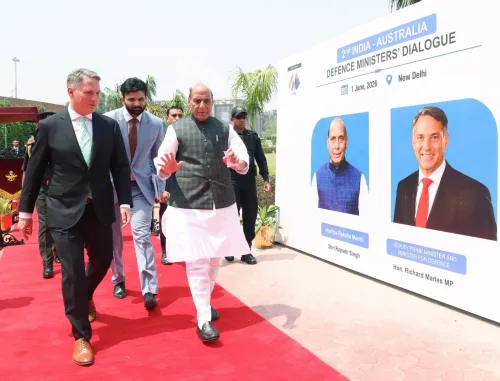
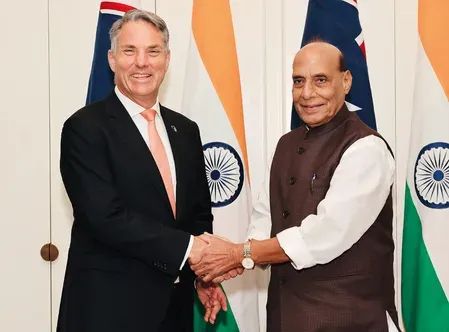
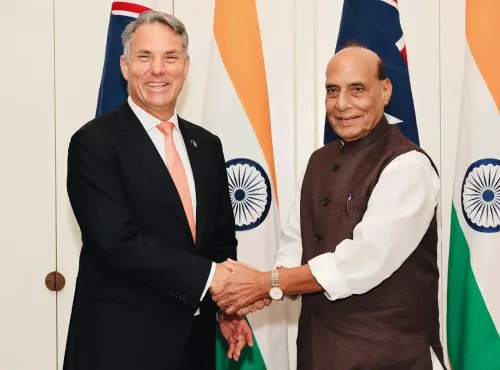
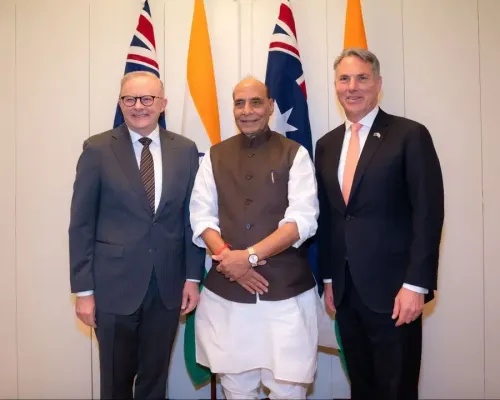
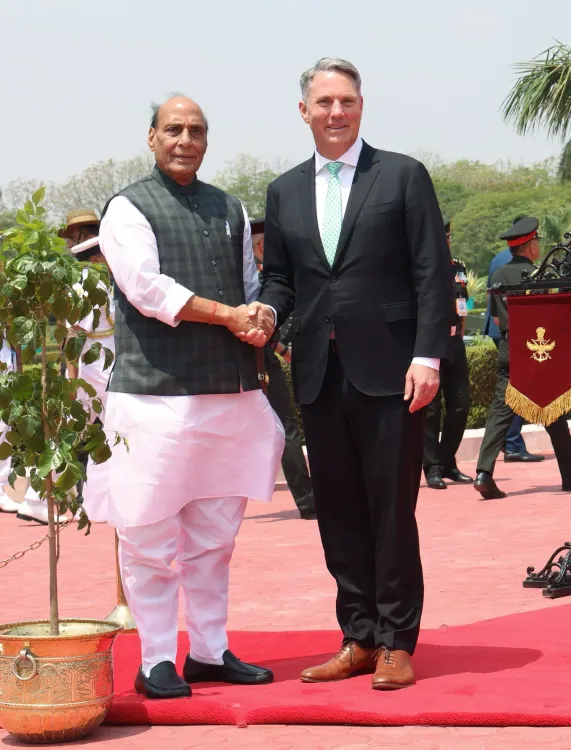
Union Defence Minister Rajnath Singh met Australia's Deputy Prime Minister and Defence Minister Richard Marles in New Delhi on Monday, June 1, 2026, for wide-ranging talks on bilateral defence cooperation. The two ministers reviewed the full spectrum of India-Australia defence ties and discussed avenues to deepen the partnership further.
Context
Singh described the meeting as 'excellent' and said both sides 'reviewed the full range of bilateral defence cooperation and discussed ways and means to enhance it further.' He added that 'the India-Australia Defence Partnership is poised to make steady progress in the years to come.' Marles is visiting New Delhi in his dual capacity as Deputy Prime Minister and Defence Minister, underscoring the strategic weight Canberra places on the bilateral relationship.
High-level ministerial exchanges of this nature have become a regular feature of the India-Australia relationship, which was elevated to a Comprehensive Strategic Partnership in 2020. That upgrade created a dedicated defence and security pillar that has since anchored growing military-to-military engagement.
Policy Backdrop
The two countries signed a Mutual Logistics Support Arrangement in 2020, giving each other reciprocal access to military facilities and boosting operational interoperability. The arrangement was a landmark step, enabling both armed forces to resupply and sustain operations from each other's bases — a practical building block for joint deployments.
India and Australia are both members of the Quad — the Quadrilateral Security Dialogue alongside the United States and Japan — which focuses on regional stability and a free and open Indo-Pacific. The Quad framework has added political momentum to bilateral defence ties, with regular joint exercises and information-sharing arrangements expanding year on year.
Stakeholders and Impact
The primary beneficiaries of deepened cooperation are the armed forces of both nations, which stand to gain from increased joint training, logistics interoperability, and intelligence exchange. Defence industries in both countries also have a stake, as closer strategic ties typically create openings for co-development and co-production arrangements.
For India, the partnership reinforces its strategic autonomy in the Indo-Pacific by diversifying defence relationships beyond traditional partners. For Australia, closer ties with New Delhi strengthen its regional security architecture at a time when Canberra is actively expanding its network of defence partnerships across the region.
What's Next
The next round of India-Australia 2+2 ministerial talks — involving both foreign and defence ministers from each side — will be closely watched for any formalisation of outcomes from the June 2026 meeting. Scheduled joint service exercises in the coming year are expected to provide further opportunities to translate ministerial intent into operational practice.
With both governments signalling commitment to the partnership, the trajectory points toward expanding the scope of joint activities and potentially broadening the industrial and technological dimensions of the defence relationship in the near term.
Point of View
Institutionalised defence relationship that has moved well beyond symbolism since the 2020 Comprehensive Strategic Partnership upgrade. The fact that Marles is visiting in a dual capacity — Deputy Prime Minister and Defence Minister — signals that Canberra treats the India relationship as a top-tier strategic priority, not merely a functional defence dialogue. For New Delhi, the engagement fits a deliberate pattern of building a diversified web of Indo-Pacific security partnerships that reinforces strategic autonomy without formal alliance commitments. The partnership's next test will be whether ministerial warmth translates into concrete deliverables — joint production, expanded exercises, or technology sharing — at the upcoming 2+2 talks.
NationPress
22 Sept 2026
Frequently Asked Questions
Why did Richard Marles visit New Delhi in June 2026?
Richard Marles visited New Delhi on June 1, 2026 to meet Union Defence Minister Rajnath Singh and review the full range of India-Australia bilateral defence cooperation, discussing ways to deepen the partnership further.
What is the India-Australia Comprehensive Strategic Partnership?
India and Australia elevated their bilateral relationship to a Comprehensive Strategic Partnership in 2020, which includes a dedicated defence and security pillar and has anchored growing military-to-military engagement between the two countries.
What is the Mutual Logistics Support Arrangement between India and Australia?
The Mutual Logistics Support Arrangement, signed in 2020, gives India and Australia reciprocal access to each other's military facilities, boosting operational interoperability and enabling both armed forces to sustain joint deployments more effectively.
Are India and Australia part of the Quad?
Yes, both India and Australia are members of the Quad — the Quadrilateral Security Dialogue — alongside the United States and Japan. The grouping focuses on regional stability and maintaining a free and open Indo-Pacific.
What are the next steps in India-Australia defence cooperation?
The next key milestones include the upcoming India-Australia 2+2 ministerial dialogue involving both foreign and defence ministers, as well as scheduled joint service exercises expected in the coming year.