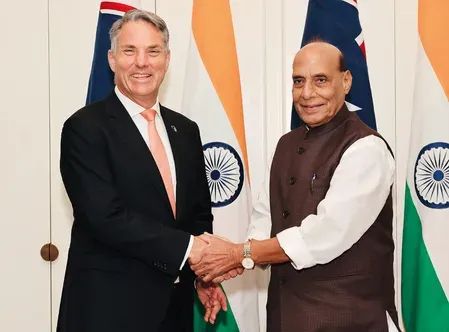
Rajnath Singh, Australia's Marles co-chair India-Australia Defence Dialogue in New Delhi
Synopsis
India and Australia have elevated their defence partnership to a new level, with the second ministerial dialogue in New Delhi putting co-development, co-production, and Indo-Pacific stability squarely on the agenda — a clear sign the Comprehensive Strategic Partnership is moving from rhetoric to industrial integration.
Key Takeaways
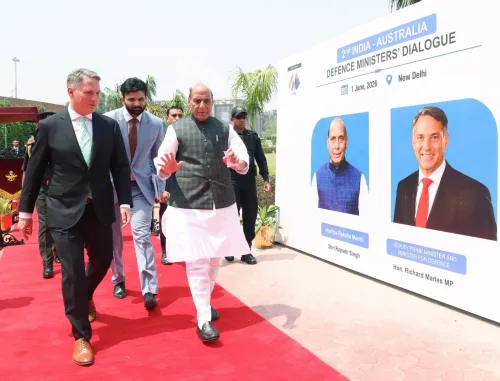
Rajnath Singh and Australian Deputy PM Richard Marles co-chaired the second India-Australia Defence Ministers' Dialogue in New Delhi on 1 June 2025 .
Talks focused on military interoperability , co-development , co-production , and Indo-Pacific regional security.
The inaugural dialogue was held in Australia in October 2025 during Singh's visit to Canberra.
Australia's Defence Ministry described the meeting as showcasing 'unprecedented progress' in the bilateral defence partnership.
Both nations are members of the Quad , making their bilateral ties a key pillar of Indo-Pacific security architecture.
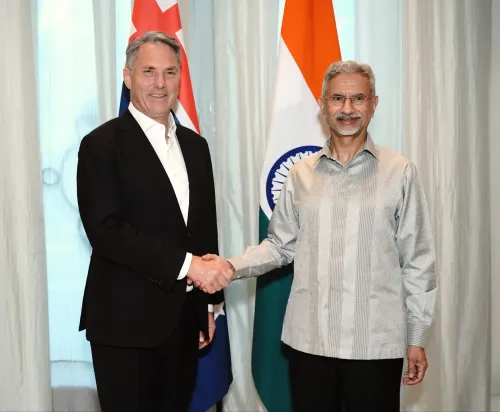
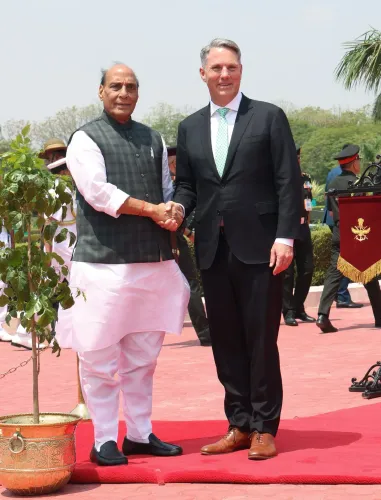
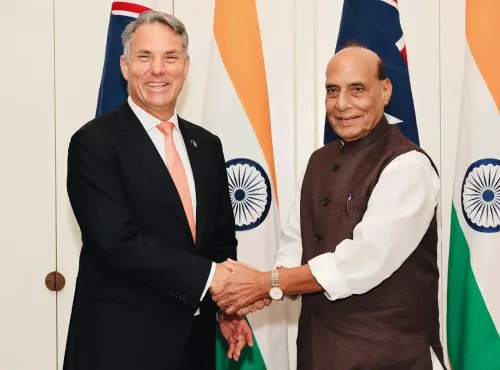
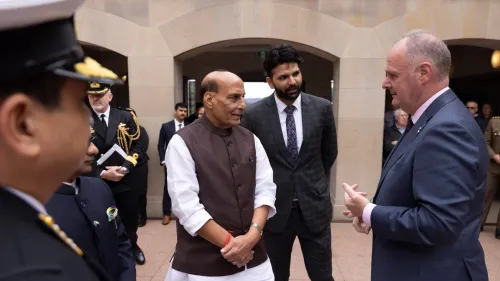
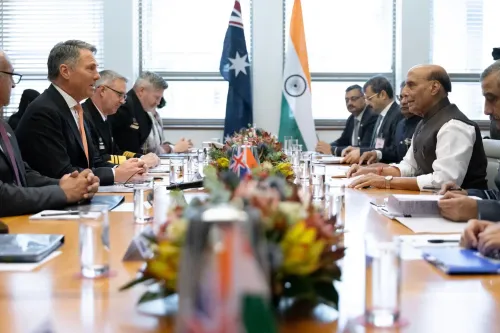
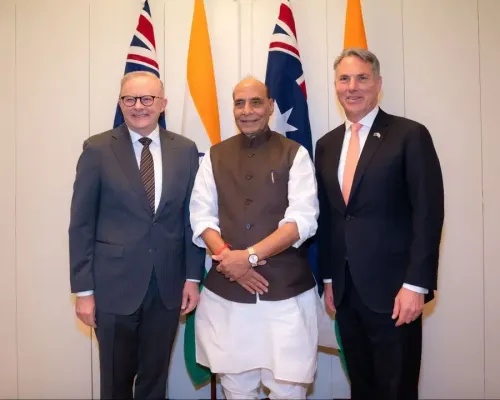
Defence Minister Rajnath Singh and Australian Deputy Prime Minister and Defence Minister Richard Marles jointly chaired the second India-Australia Defence Ministers' Dialogue in New Delhi on Monday, 1 June 2025, with talks centred on deepening bilateral defence and security cooperation across a range of strategic domains. The meeting marks a significant milestone in the two nations' Comprehensive Strategic Partnership.
Key Areas of Discussion
According to a statement from India's Ministry of Defence, the dialogue covered strengthening defence and security cooperation, enhancing military interoperability, and exploring industry collaboration — including co-development and co-production opportunities. The two sides also reviewed regional and global security developments of mutual interest, particularly in the context of the Indo-Pacific.
What the Governments Said
India's Ministry of Defence described the visit as reflecting 'the growing momentum in the India-Australia Comprehensive Strategic Partnership,' adding that Australia is a key partner in India's vision of 'a free, open, inclusive and prosperous Indo-Pacific.'
Marles, in a statement released by the Australian Defence Ministry ahead of his visit, said: 'Australia and India are top-tier security partners. I look forward to meeting with Defence Minister Rajnath Singh to further strengthen our defence partnership following the strong progress we made during his visit to Australia last year.'
Building on the Inaugural Dialogue
This is the second such ministerial-level defence dialogue. The inaugural edition was held in Australia in October 2025, during which Singh visited Canberra. The Australian Defence Ministry noted that the current meeting showcases 'unprecedented progress' in the bilateral defence partnership and a 'shared ambition to enhance cooperation.'
Notably, the frequency and elevation of these engagements reflect a broader trend of India deepening its Quad-aligned partnerships as Indo-Pacific security concerns intensify.
Strategic Significance
The dialogue is expected to further consolidate strategic trust between the two countries, promote stability in the Indo-Pacific region, and identify new avenues for collaboration in defence and security. Both nations are members of the Quad grouping alongside the United States and Japan, making their bilateral defence ties a critical pillar of the broader regional security architecture.
With co-production and co-development now formally on the table, the partnership appears to be moving beyond traditional exercises and intelligence-sharing toward industrial and technological integration.
Point of View
More recently, the United States. What mainstream coverage underplays is the Quad subtext: as China's assertiveness in the Indo-Pacific grows, these bilateral layers are becoming the load-bearing structure beneath the multilateral framework. The real test will be whether the co-production ambitions produce signed agreements or remain aspirational talking points by the next dialogue.
NationPress
21 Sept 2026
Frequently Asked Questions
What is the India-Australia Defence Ministers' Dialogue?
It is a bilateral ministerial-level forum between India and Australia to review and advance defence cooperation. The second edition was held in New Delhi on 1 June 2025, following the inaugural dialogue in Australia in October 2025.
What issues were discussed at the New Delhi dialogue?
The two sides discussed military interoperability, defence industry collaboration including co-development and co-production, and regional and global security developments of mutual interest, particularly in the Indo-Pacific.
Who represented Australia at the New Delhi dialogue?
Australian Deputy Prime Minister and Defence Minister Richard Marles led the Australian side. He described India and Australia as 'top-tier security partners' ahead of the visit.
Why is the India-Australia defence partnership significant?
Both nations are members of the Quad alongside the United States and Japan, making their bilateral defence ties a critical component of the Indo-Pacific security architecture. The partnership is part of the broader India-Australia Comprehensive Strategic Partnership.
What is expected to come out of this dialogue?
The meeting is expected to strengthen strategic trust, enhance military interoperability, and identify new areas for defence and security collaboration, including potential co-production agreements. No specific outcomes had been formally announced at the time of the meeting.