BRICS Summit 2026: Rajnath Singh hails New Delhi Declaration as proof of India's global rise
Synopsis
The 18th BRICS Summit ended with something rare: unanimous consensus on Day 1 among nations deeply divided on Ukraine, Gaza, and the global order. Defence Minister Rajnath Singh's post-summit remarks signal India's intent to cement this outcome as a defining moment of its global leadership — and the Pahalgam terror condemnation baked into the New Delhi Declaration may be the most consequential line in the document.
Key Takeaways
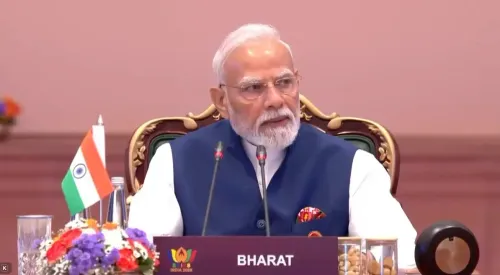
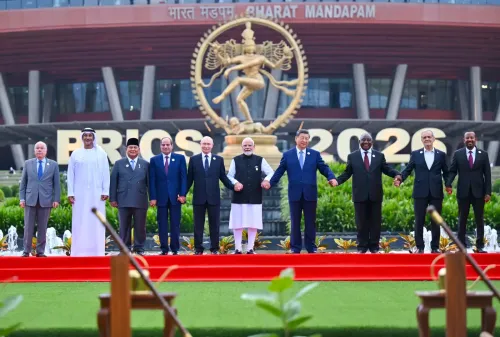
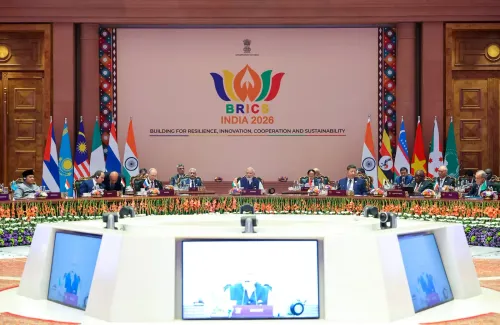
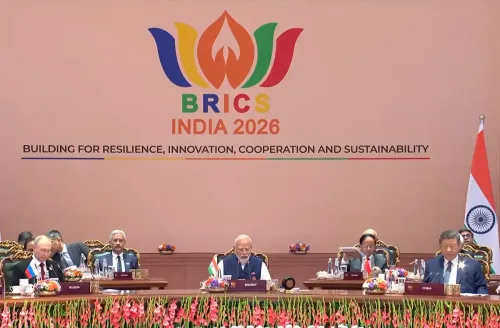
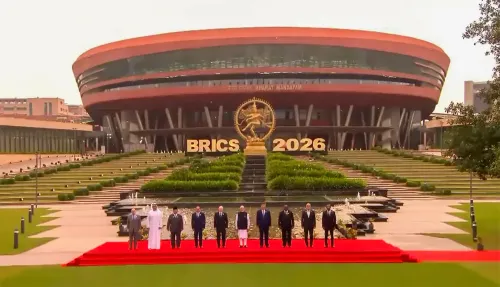
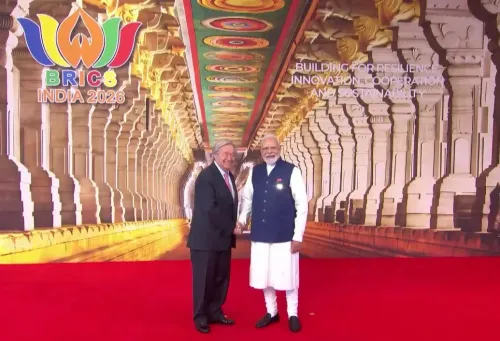
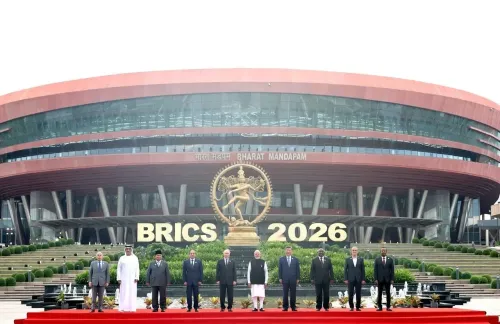
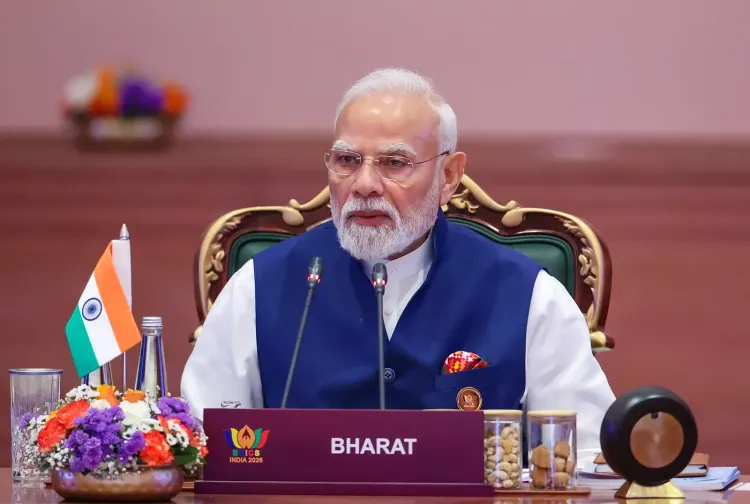
The 18th BRICS Summit 2026 was held on 12–13 September at Bharat Mandapam, New Delhi , under the theme 'Building for Resilience, Innovation, Cooperation and Sustainability'.
Member nations unanimously adopted the New Delhi Declaration , which Defence Minister Rajnath Singh called a testament to India's growing global influence.
BRICS nations reached consensus on a Joint Statement on Day 1 — described as a major diplomatic breakthrough given divergent geopolitical positions among members.
The declaration includes a strong condemnation of the Pahalgam terror attack and a commitment to zero tolerance towards terrorism.
India placed the Global South at the centre of the summit's agenda, framing its chairship around an inclusive, human-centric approach rooted in Vasudhaiva Kutumbakam .
Defence Minister Rajnath Singh on Monday, 14 September 2026 declared that the 18th BRICS Summit has left an indelible mark on the international stage, calling the New Delhi Declaration a testament to India's expanding global influence under Prime Minister Narendra Modi. His remarks came a day after the two-day summit concluded at Bharat Mandapam in New Delhi, where member nations unanimously adopted the landmark declaration.
Summit at a Glance
The 18th BRICS Summit 2026 was held on 12–13 September at Bharat Mandapam, New Delhi, under India's chairship and the theme 'Building for Resilience, Innovation, Cooperation and Sustainability'. Member states reached consensus on a Joint Statement on the very first day — an outcome described by observers as a major diplomatic breakthrough, given the sharply divergent geopolitical positions among the grouping's members.
The declaration also commended India for hosting the Outreach and BRICS Plus Dialogue segment, asserting that India's chairship has injected 'new impetus' to strengthen international cooperation and solidarity.
What Rajnath Singh Said
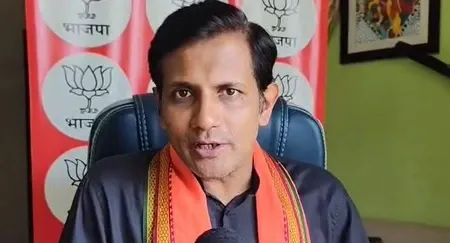
Posting on X, Singh said India had underlined resilience, innovation, cooperation, and sustainability as its foremost priorities as BRICS Chair, guided by Prime Minister Modi's leadership. He described the summit's human-centric approach as its defining hallmark: 'India has laid special emphasis on connecting BRICS cooperation directly with the common people,' he wrote.
On the New Delhi Declaration, Singh called it a 'big achievement', adding: 'It is not just a document, it is a statement of India's growing global influence under the leadership of PM Modi.' He further invoked the concept of Vasudhaiva Kutumbakam — the ancient Sanskrit principle of the world as one family — to frame India's approach: 'India has once again shown that leadership is not about having the loudest voice, but the strongest consensus.'
Key Outcomes of the New Delhi Declaration
The declaration placed the Global South at the centre of BRICS deliberations, committing member nations to a more inclusive, representative, and balanced world order. Leaders reaffirmed their dedication to the BRICS spirit of mutual respect, sovereign equality, solidarity, democracy, openness, and consensus.
Notably, the declaration featured a strong condemnation of the Pahalgam terror attack and established consensus on adopting a zero-tolerance approach towards terrorism — a significant outcome for India, which had pushed hard for the language. The declaration also committed members to deepening cooperation across three pillars: political and security; economic and financial; and cultural and people-to-people.
Why This Matters for India
Securing unanimous consensus among BRICS members — a grouping that now includes nations with sharply divergent stances on Ukraine, Gaza, and the global financial order — on the very first day of the summit is widely seen as a diplomatic win for New Delhi. This comes amid India's sustained push to position itself as the leading voice of the Global South at multilateral forums, a posture that has defined its foreign policy since the G20 New Delhi Summit in 2023.
The condemnation of Pahalgam carries particular weight: getting a grouping that includes countries with historically complex ties to Pakistan to sign on to terrorism language aligned with India's position represents a notable shift in multilateral diplomacy.
What Comes Next
India's BRICS chairship formally concludes with this summit, with the grouping's agenda now passing to the next chair. Implementation of the New Delhi Declaration's commitments — spanning trade, technology, counter-terrorism, and multilateral reform — will be closely watched by member states and international observers alike.
Point of View
However diplomatically welcome, does not name actors or carry enforcement mechanisms, which limits its operational value. India's framing of the Global South leadership role is credible on optics; the test will be whether BRICS outcomes translate into concrete multilateral reform at the UN or WTO. And while Rajnath Singh's rhetoric about 'the strongest consensus, not the loudest voice' plays well domestically, India's bilateral tensions with China — a fellow BRICS member — remain structurally unresolved beneath the summit's cooperative surface.
NationPress
14 Sept 2026
Frequently Asked Questions
What was the 18th BRICS Summit 2026 about?
The 18th BRICS Summit 2026 was held on 12–13 September at Bharat Mandapam in New Delhi, with India as the chair and the theme 'Building for Resilience, Innovation, Cooperation and Sustainability'. Member nations unanimously adopted the New Delhi Declaration, committing to deeper cooperation on political, economic, and people-to-people fronts.
What did Defence Minister Rajnath Singh say about the BRICS Summit?
Rajnath Singh posted on X that the summit was a 'super success' and called the New Delhi Declaration 'not just a document, but a statement of India's growing global influence'. He credited Prime Minister Modi's leadership and invoked the principle of Vasudhaiva Kutumbakam to describe India's inclusive approach.
What is the significance of the New Delhi Declaration?
The New Delhi Declaration is notable for being adopted unanimously on the first day of the summit — a diplomatic achievement given the divergent geopolitical positions among BRICS members. It includes a condemnation of the Pahalgam terror attack, a commitment to zero tolerance towards terrorism, and a focus on the Global South's role in the international order.
How did BRICS address the Pahalgam terror attack?
The New Delhi Declaration featured a strong condemnation of the Pahalgam terror attack and established consensus on adopting a zero-tolerance approach towards terrorism. Getting the full BRICS grouping to endorse this language is considered a significant diplomatic outcome for India.
What does India's BRICS chairship mean for its foreign policy?
India's chairship reinforced its positioning as the leading voice of the Global South at multilateral forums, a strategy that has defined its foreign policy since the G20 New Delhi Summit in 2023. The summit's outcomes — particularly the Day 1 consensus and terror condemnation — are likely to be cited as evidence of India's growing diplomatic weight.