BRICS condemns Pahalgam attack: A diplomatic win for India at 18th Summit
Synopsis
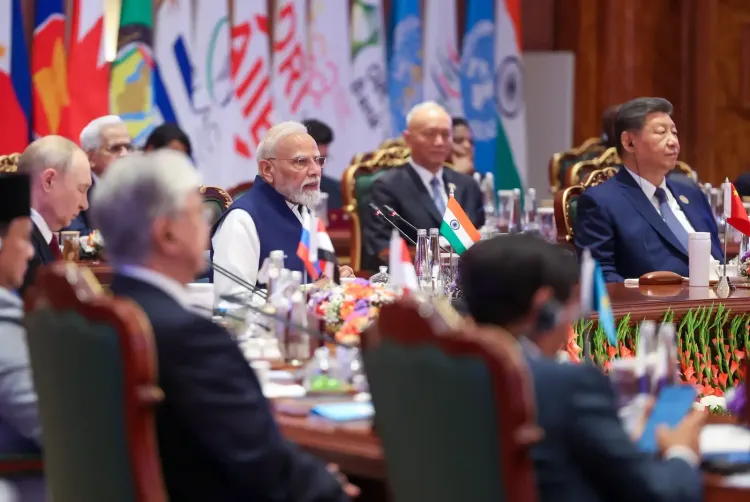
At the 18th BRICS Summit in New Delhi, member nations formally condemned the April 2025 Pahalgam attack that killed 26 tourists and backed zero-tolerance language on cross-border terrorism infrastructure — giving India a rare multilateral endorsement of its core counter-terrorism argument, without naming Pakistan but making the diplomatic message unmistakable.
Key Takeaways
The New Delhi Declaration 2026 , adopted at the 18th BRICS Summit , explicitly condemns the Pahalgam terrorist attack of 22 April 2025 in which 26 tourists were killed.
BRICS nations committed to zero tolerance on terrorism and called out cross-border movement of terrorists, terror financing , and safe havens .
Pakistan is not named in the declaration, but analysts say the language directly targets the infrastructure India has attributed to Pakistani territory.
The declaration reinforces India's longstanding argument that terrorism cannot be justified by political context or selectively applied by any state.
Authors Sunil Sethi and Altaf Thakur , writing in Rising Kashmir , describe the outcome as an 'important diplomatic achievement' for India.
BRICS leaders affirmed that all counter-terrorism efforts must comply with international law , the UN Charter , and applicable human rights and humanitarian frameworks.
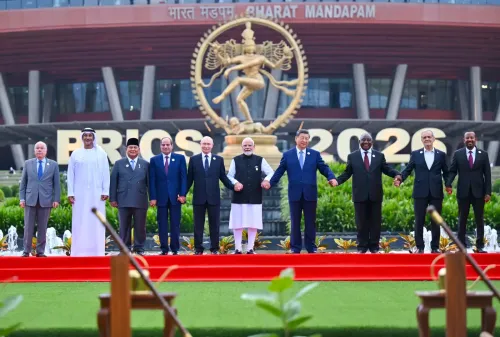
The New Delhi Declaration 2026, adopted at the 18th BRICS Summit in New Delhi on 15 September 2026, has condemned the Pahalgam terrorist attack of 22 April 2025 and adopted firm language against cross-border movement of terrorists, terror financing, safe havens, and double standards in countering terrorism — marking what analysts describe as a significant diplomatic achievement for India.
What the Declaration Says
The joint declaration, signed by all BRICS member nations, states: 'We express strong condemnation of any acts of terrorism as criminal and unjustifiable, regardless of their motivation, whenever, wherever and by whomsoever committed.' It goes on to specifically condemn 'the terrorist attack in Jammu and Kashmir on 22 April 2025, during which 26 people were killed and many more injured.'
The declaration further commits member states to combating terrorism 'in all its forms and manifestations, including the cross-border movement of terrorists, terrorism financing and safe havens,' while calling for zero tolerance against terrorism and rejecting double standards in its countering. The leaders also emphasised that States bear the primary responsibility for combating terrorism, and that all counter-terrorism efforts must comply with international law, the UN Charter, international human rights law, refugee law, and humanitarian law.
Why This Matters for India
According to a report published in Rising Kashmir, authored by Sunil Sethi and Altaf Thakur, India succeeded in ensuring that the Pahalgam attack did not fade into the long catalogue of terrorist incidents the country has endured over the years. By elevating the attack to a multilateral diplomatic platform, India secured condemnation from a diverse bloc of major nations — a group that includes countries not traditionally aligned with New Delhi's position on cross-border terrorism.
'For India, the development represents an important diplomatic achievement,' Sethi and Thakur wrote, adding that BRICS has reinforced India's longstanding argument that 'terrorism cannot be legitimised by political explanations and nations cannot selectively distinguish between terrorists as per their strategic convenience.'
Notably, the significance of the declaration is amplified by the fact that it does not stop at condemning the attack in isolation — it pairs that condemnation with explicit language on the broader terrorism ecosystem: financing, safe havens, and cross-border movement. India has consistently argued that fighting terrorism requires action not only against the individual perpetrator but against the entire infrastructure that enables attacks.
The Pakistan Dimension
During the Pahalgam attack on 22 April 2025, Pakistan-backed terrorists gunned down 26 innocent tourists after reportedly identifying them by religion — one of the deadliest targeted attacks on civilians in Jammu and Kashmir in recent years. While the New Delhi Declaration does not name Pakistan explicitly, the Rising Kashmir report argues that 'the political significance of the declaration lies precisely in the terminology accepted by a diverse group of important nations.'
The report poses a pointed question for Islamabad: 'How long can the international narrative surrounding cross-border terrorism remain separated from the infrastructure, organisations and ideological networks that India has repeatedly accused of operating from Pakistani territory?' The authors note that while Pakistan's omission by name should 'neither be concealed nor exaggerated,' the weight of multilateral consensus carries its own diplomatic pressure.
BRICS and the Multilateral Signal
The declaration's language reinforces a principle India has championed for years — that the terrorism ecosystem, not just isolated actors, must be dismantled. With BRICS member countries now on record supporting this framework, India gains a multilateral backing that strengthens its diplomatic hand in future international forums, including the United Nations.
The declaration also reiterates that 'terrorism should not be associated with any religion, nationality, civilisation or ethnic group,' and that all those involved in terrorist activities and their support networks must be held accountable under national and international law. As the summit concludes, the durability of this consensus — and whether it translates into concrete multilateral action — will be the measure of its true significance.
Point of View
Or whether it remains, like many multilateral counter-terrorism statements before it, a strongly worded document with no enforcement teeth.
NationPress
15 Sept 2026
Frequently Asked Questions
What did the BRICS New Delhi Declaration 2026 say about the Pahalgam attack?
The declaration condemned 'in the strongest terms' the terrorist attack in Jammu and Kashmir on 22 April 2025, in which 26 people were killed and many more injured. It also called for zero tolerance on terrorism and committed BRICS nations to combating cross-border movement of terrorists, terror financing, and safe havens.
Why is the BRICS declaration considered a diplomatic achievement for India?
India secured a formal multilateral condemnation of the Pahalgam attack and explicit backing for its argument that terrorism cannot be politically justified or selectively applied. The declaration's language on cross-border terrorism infrastructure aligns closely with India's longstanding counter-terrorism position, giving it a rare BRICS-wide endorsement.
Does the BRICS declaration name Pakistan?
No, Pakistan is not named explicitly in the New Delhi Declaration 2026. However, analysts writing in Rising Kashmir note that the political significance lies in the terminology — particularly references to cross-border terrorism, safe havens, and financing — which India has repeatedly linked to networks operating from Pakistani territory.
What was the Pahalgam terrorist attack?
The Pahalgam attack occurred on 22 April 2025, when Pakistan-backed terrorists gunned down 26 tourists in Jammu and Kashmir after reportedly identifying them by religion. It was one of the deadliest targeted attacks on civilians in the region in recent years.
What broader counter-terrorism principles did the BRICS declaration affirm?
The declaration affirmed that terrorism must not be associated with any religion, nationality, or ethnic group, and that all those involved — including support networks — must be held accountable under national and international law. It also stressed that counter-terrorism efforts must comply with the UN Charter, international human rights law, and international humanitarian law.