Rubio at G20 Atlanta: Maritime and food security underpin economic stability
Synopsis
Rubio used the G20 Foreign Ministers' Meeting in Atlanta to reframe America First as a multilateral project — arguing that safe shipping lanes and stable food supplies are the real engine of economic security. For India, which depends on the Strait of Hormuz for a large share of its crude imports, the stakes are concrete, not rhetorical.
Key Takeaways
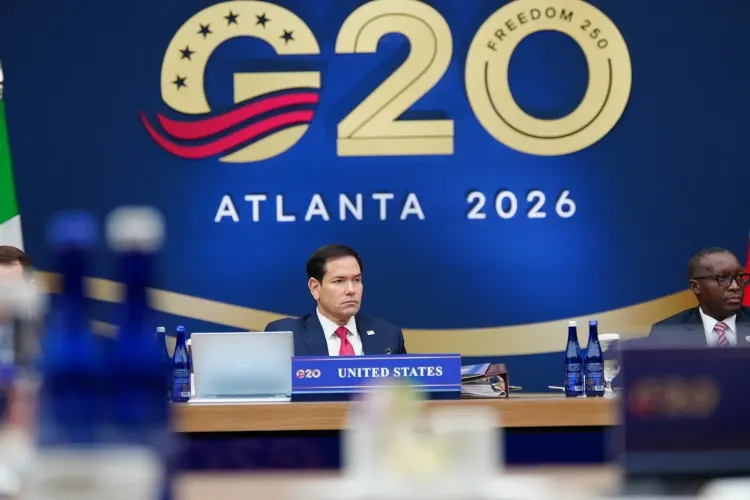
US Secretary of State Marco Rubio addressed the G20 Foreign Ministers' Meeting in Atlanta on 31 October 2026 , stressing maritime and food security as pillars of economic stability.
Rubio framed the push under the America First agenda, calling on partners to protect shipping routes and reduce geopolitical economic shocks.
The State Department flagged the agenda on 26 October , citing threats to freedom of navigation, energy security, and supply chains.
Approximately 20 million barrels of oil per day transited the Strait of Hormuz in 2024 ; China, India, Japan, and South Korea accounted for about 69% of that flow.
External Affairs Minister S.
Jaishankar is attending; the two-day ministerial concludes on 1 November 2026 .
Whether the meeting will produce a joint statement or a chair's summary remains unannounced.
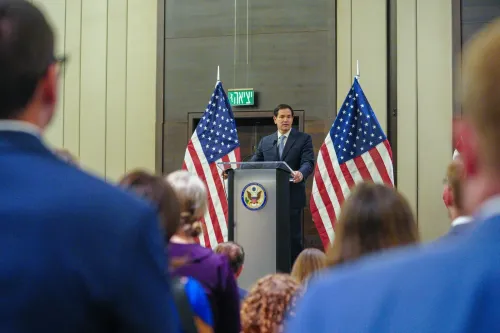
US Secretary of State Marco Rubio used the opening session of the G20 Foreign Ministers' Meeting in Atlanta on 31 October 2026 to argue that protecting shipping routes and food supplies is the bedrock of global economic security, pressing partner nations to share responsibility for cushioning their economies against geopolitical shocks.
What Rubio Said
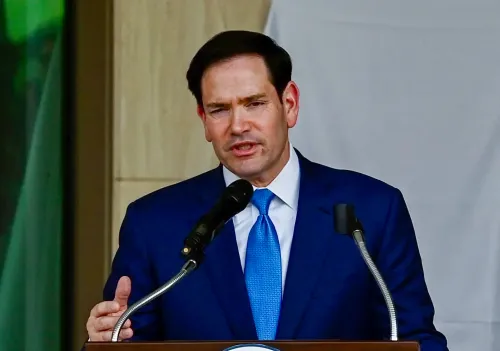
'At today's G20 Foreign Ministers' Meeting, I made clear that maritime and food security drive economic security,' Rubio posted on X after the opening plenary. 'Through our America First agenda, the United States is encouraging partners to protect shipping routes, strengthen food security, and reduce the economic consequences of geopolitical crises,' he added.
In remarks from the session posted by the State Department, Rubio made the case for multilateral cooperation: 'By translating our shared interests into practical cooperation and real action, we can reinforce global stability, and more importantly, we can deliver meaningful results for our citizens.'
The US Agenda at Atlanta
The State Department had signalled this emphasis in its 26 October media note announcing the trip, stating the US would work with G20 partners to address geopolitical crises contributing to global economic shocks, including threats to freedom of navigation, energy and food security, and supply chains. The note also explicitly linked the foreign ministers' discussions to President Trump's forthcoming G20 Leaders' Summit, describing Atlanta as setting the stage for the broader economic agenda that leaders will tackle.
Rubio's opening remarks, according to a preliminary transcript, referred broadly to 'new disruptions and strains to global energy and food supplies and food markets to the global supply chain, trade, to freedom of navigation itself' — without naming any specific country or conflict.
Why This Matters for India
The focus on sea lanes carries direct relevance for import-dependent economies. According to data from the US Energy Information Administration, approximately 20 million barrels of oil per day passed through the Strait of Hormuz in 2024, with China, India, Japan, and South Korea together accounting for roughly 69 per cent of the crude oil and condensate transiting the strait. Any disruption to that corridor would hit Indian energy imports hard.
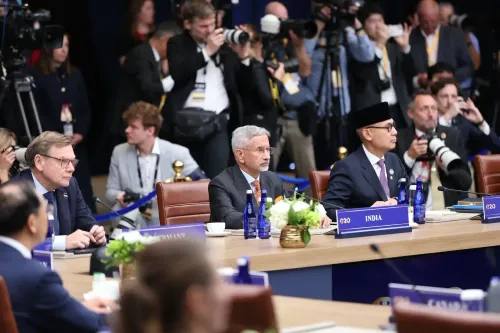
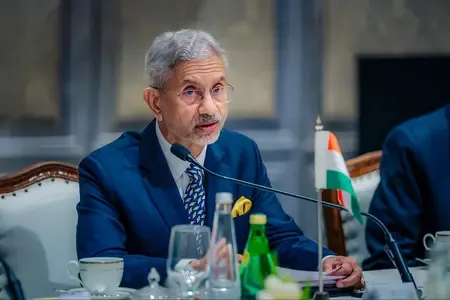
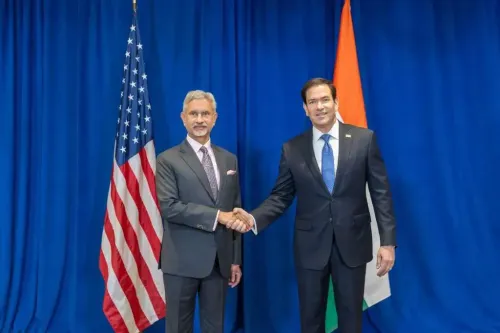
India's External Affairs Minister S. Jaishankar is attending the Atlanta meeting. He posted on X on Friday — 'With colleagues at @g20org #Atlanta' — without commenting on the agenda. His presence signals New Delhi's stake in the discussions, particularly on the maritime security front.
What Comes Next
The two-day ministerial concludes on Saturday, 1 November 2026. Whether the meeting will produce a joint communique or a chair's summary has not yet been announced, leaving open the question of whether the G20 grouping — which has previously struggled to issue unified statements on geopolitical flashpoints — can converge on shared language this time.
Point of View
Washington is signalling that it wants burden-sharing on global stability without ceding the strategic driver's seat. For India, the Strait of Hormuz data point is not background colour; it is leverage. New Delhi's dependence on Gulf crude makes it a natural partner in any maritime security architecture — but also a country that cannot afford to be caught between US pressure and its own diversified relationships with Gulf producers. The real test will come at the Leaders' Summit: whether practical cooperation translates into enforceable commitments, or remains a talking point that the G20's fractured geopolitics may not even allow into a final communique.
NationPress
31 Oct 2026
Frequently Asked Questions
What did US Secretary of State Rubio say at the G20 Foreign Ministers' Meeting in Atlanta?
Rubio stated that maritime and food security are the foundation of economic security, urging G20 partners to protect shipping routes and reduce the economic fallout of geopolitical crises. He framed the push under the US America First agenda and called for translating shared interests into practical cooperation and real action.
Why does the G20 Atlanta meeting matter for India?
India is heavily dependent on oil transiting the Strait of Hormuz, which saw roughly 20 million barrels per day in 2024, with India among the top four consumer nations drawing from that corridor. Any disruption to freedom of navigation directly threatens Indian energy security, making the Atlanta agenda directly relevant to New Delhi.
Is India represented at the G20 Foreign Ministers' Meeting?
Yes. External Affairs Minister S. Jaishankar is attending the meeting in Atlanta. He confirmed his presence on X on Friday but did not comment on the specific agenda items under discussion.
Will the G20 Foreign Ministers' Meeting produce a joint statement?
It has not yet been announced whether the meeting will conclude with a joint communique or a chair's summary. The G20 has previously struggled to agree on unified language on geopolitically sensitive issues, and the outcome remains uncertain as of the first day.
How does the Atlanta meeting connect to the G20 Leaders' Summit?
The State Department described the foreign ministers' discussions as setting the stage for President Trump's G20 Leaders' Summit and the broader economic agenda that leaders will tackle. The Atlanta meeting is effectively a preparatory round for the higher-profile leaders-level summit.