Rubio, Anand align on Haiti, Cuba reforms and Arctic security
Synopsis
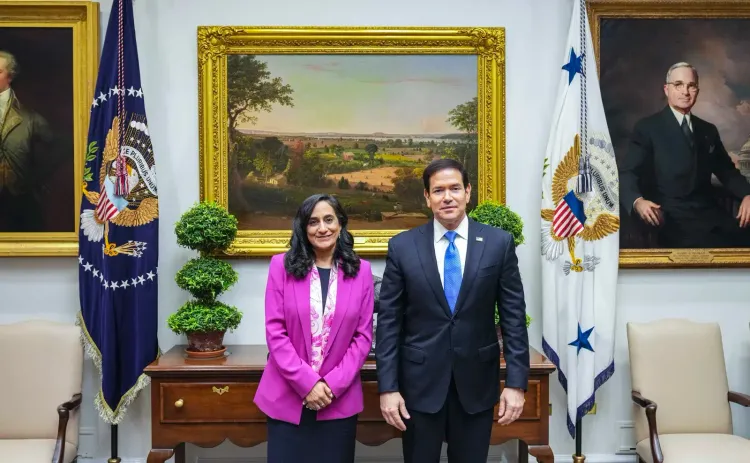
Rubio and Anand's Thursday meeting went well beyond routine diplomacy — covering Cuba reform demands, Arctic defence, Venezuela earthquake aid, and a joint push against transnational online scam networks in a single sitting. The breadth of the agenda signals that Washington and Ottawa are recalibrating their hemispheric coordination at a moment of compounding regional pressures.
Key Takeaways
US Secretary of State Marco Rubio and Canadian Foreign Minister Anita Anand met on 21 August to align on shared regional priorities.
Haiti topped the agenda, with both sides reaffirming support for the Standing Group of Partners in Haiti .
Rubio called for 'immediate, significant, and irreversible reforms' in Cuba , per the State Department readout.
Both ministers discussed emergency earthquake assistance to Venezuela .
Arctic security featured prominently, reflecting the two nations' deep defence ties through NORAD .
The meeting also addressed joint action against transnational online scam centres , marking a newer frontier in bilateral security cooperation.
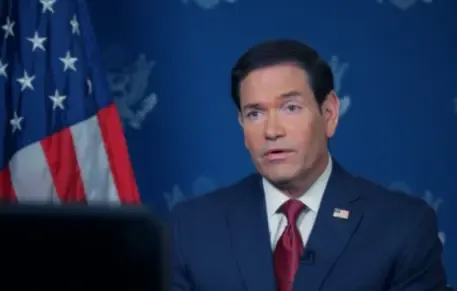
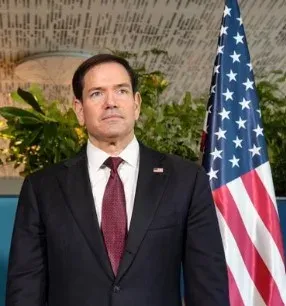
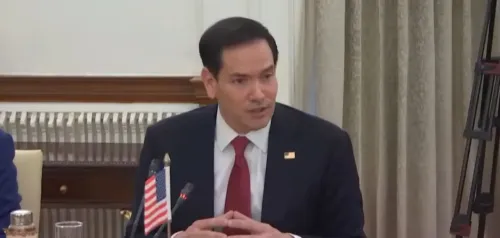
US Secretary of State Marco Rubio and Canadian Foreign Minister Anita Anand held talks on Thursday, 21 August, covering a broad agenda that included Haiti, Venezuela, Cuba, Arctic security, and transnational online scam operations, as Washington and Ottawa moved to deepen coordination on shared regional priorities across the Western Hemisphere.
Key Developments
According to a readout issued by the US State Department, the meeting was designed to strengthen cooperation on security, economic, and regional concerns. Haiti was listed first among the shared priorities, with both sides reaffirming their continued partnership through the Standing Group of Partners in Haiti — a multilateral coordination mechanism that Washington and Ottawa have jointly supported to stabilise the Caribbean nation.
The two ministers also discussed emergency earthquake assistance to Venezuela, addressing the humanitarian dimension of a country that has long been a flashpoint in inter-American diplomacy.
Rubio's Push on Cuba Reforms
On Cuba, Rubio pressed for what the State Department described as the need for 'immediate, significant, and irreversible reforms' — language that signals a hardened US posture toward Havana. Cuba and Venezuela were the two country-specific issues explicitly addressed, underscoring the meeting's focus on political and humanitarian challenges across the Americas.
Arctic Security on the Agenda
The talks also covered Arctic security, an area of extensive territorial, defence, and strategic interest for both nations. The United States and Canada cooperate on continental aerospace and maritime warning through the North American Aerospace Defense Command (NORAD), and Arctic sovereignty has grown in strategic salience amid shifting geopolitical competition in the region.
Tackling Transnational Cyber Crime
In a notable addition to the traditional foreign policy agenda, Rubio and Anand discussed joint efforts to shut down online scam centres — a form of transnational, cyber-enabled crime that targets victims across multiple countries. The inclusion signals that both governments view cross-border digital fraud as a security concern on par with conventional geopolitical challenges.
Broader US-Canada Framework
The bilateral relationship is anchored in the United States-Mexico-Canada Agreement (USMCA), which replaced the North American Free Trade Agreement (NAFTA) in 2020, and is reinforced by decades of defence cooperation through NORAD. The Thursday meeting reflects an effort by both capitals to maintain alignment at a time of heightened pressure across the hemisphere. Further diplomatic engagements on these issues are expected in the months ahead.
Point of View
Significant, and irreversible' — is notably maximalist, echoing the framing of the first Trump term, and risks foreclosing diplomatic flexibility. Meanwhile, the Arctic item is the one most likely to have long-term strategic weight, as great-power competition in the region intensifies. Mainstream coverage will focus on Cuba; the more consequential thread may be the quiet tightening of NORAD-era defence architecture.
NationPress
5 Oct 2026
Frequently Asked Questions
What did Rubio and Anand discuss in their 21 August meeting?
US Secretary of State Marco Rubio and Canadian Foreign Minister Anita Anand discussed Haiti, Venezuela earthquake assistance, Cuba reforms, Arctic security, and joint action against online scam centres. The US State Department described the meeting as aimed at strengthening coordination on shared security, economic, and regional priorities.
What position did the US take on Cuba during the talks?
Secretary Rubio stressed the need for 'immediate, significant, and irreversible reforms' in Cuba, according to the State Department readout. The language signals a firm US posture toward Havana with little room for incremental engagement.
Why is Arctic security a concern for both the US and Canada?
The United States and Canada share extensive territorial, defence, and strategic interests in the Arctic. Both cooperate through NORAD on continental aerospace and maritime warning, and growing geopolitical competition in the region has elevated Arctic sovereignty as a bilateral priority.
What is the Standing Group of Partners in Haiti?
The Standing Group of Partners in Haiti is a multilateral coordination mechanism through which the US, Canada, and other partners align their approach to stabilising Haiti. Both Washington and Ottawa reaffirmed their commitment to this group during the Thursday meeting.
How are the US and Canada cooperating on online scam centres?
Rubio and Anand discussed joint efforts to shut down transnational online scam operations that target victims across multiple countries. The inclusion of this issue alongside traditional foreign policy concerns signals that both governments now treat cyber-enabled fraud as a shared security priority.