Marco Rubio labels Cuba a 'failed state', cites US security threat
Synopsis
Rubio didn’t just criticise Cuba — he declared it a failed state and tied its collapse to a direct US security threat. With $3 million in hurricane aid blocked by Havana’s permitting process, a military company allegedly sitting on $18 billion, and Russian and Chinese intelligence reportedly operating on the island, Washington’s patience appears to be running out — and Rubio isn’t ruling out presidential action.
Key Takeaways
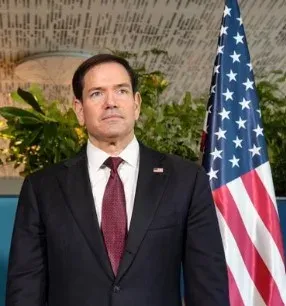
US Secretary of State Marco Rubio called Cuba a ‘failed state’ on 21 May 2025 during remarks in Miami .
Rubio alleged a Cuban military company named GUYA holds $18 billion in assets while ordinary Cubans face blackouts and economic collapse.
The US allocated $6 million in hurricane aid; $3 million was delivered via the Catholic Church , but the remaining $3 million is reportedly blocked by Cuban permitting authorities.
Rubio accused Cuba of hosting Russian and Chinese intelligence operations and possessing weapons supplied by both countries.
Rubio warned a ‘systemic meltdown’ in Cuba could trigger a migration crisis directly affecting the United States .
Rubio said the administration prefers diplomacy but did not rule out presidential action on national security grounds.
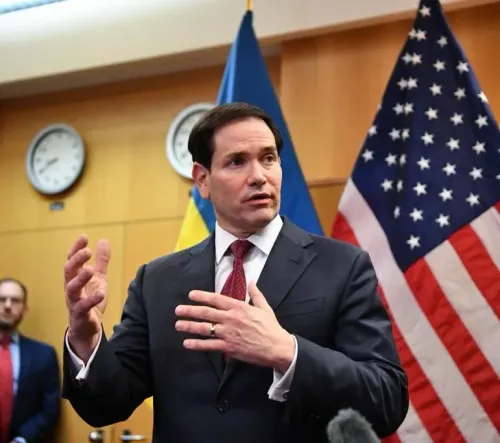
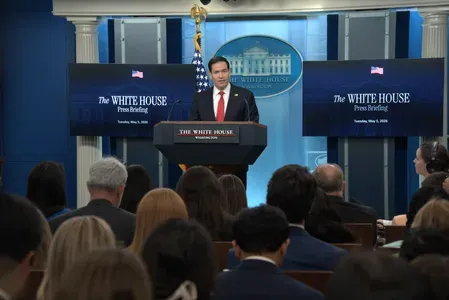
US Secretary of State Marco Rubio on Thursday, 21 May sharply escalated Washington's rhetoric against Havana, declaring Cuba a “failed state” and warning that the island's deepening instability poses a direct threat to US national security. Rubio made the remarks during a media interaction in Miami, ahead of his scheduled trip to India.
Rubio's Core Charges Against Cuba
Rubio argued that Cuba's political and economic structures were irreparably broken. “Their economic system does not work. It’s broken, and you can’t fix it with the current political system that’s in place,” he said. “It’s a failed state.”
He accused the Cuban government of blocking the delivery of humanitarian aid while allowing military-linked entities to accumulate vast wealth. Specifically, Rubio identified a private military company he called “GUYA” as sitting on $18 billion in assets — none of which, he alleged, flows into the state budget — even as ordinary Cubans endure worsening blackouts and economic collapse.
The Aid Dispute: $6 Million and a Permitting Standoff
Rubio disclosed that the United States had allocated $6 million in hurricane relief for Cuba, of which $3 million had already been distributed inside the country through the Catholic Church. The remaining $3 million, he said, was being held up by Cuban authorities through their permitting process.
“There’s another 3 million that’s being held up, by the way, by the Cubans through their permitting process,” Rubio said. Washington, he added, was prepared to do more — but only through organisations with no ties to the regime or military-controlled companies. “It has to be distributed by groups that are not linked to the regime,” he said.
Russia, China, and the Broader Security Concern
Beyond the humanitarian dimension, Rubio raised alarm over Cuba’s strategic alignment with Russia and China. He alleged that Cuba not only possesses weapons acquired from both countries but also hosts their intelligence operations on its soil.
“Cuba not only has weapons that they’ve acquired from Russia and China over the years but they also host Russia and Chinese intelligence presence in their country,” he said. This comes amid heightened US sensitivity to foreign intelligence activity in its near-abroad, particularly following disclosures about suspected Chinese surveillance infrastructure in the Caribbean region.
Migration Risk and the 'Systemic Meltdown' Warning
Rubio warned that a further deterioration in Cuba’s condition could trigger a migration and security crisis that would spill directly into the United States. “If you have a systemic meltdown in that country, which is where they’re headed, we’ll be impacted by the migratory crisis, by any violence and instability that happens there,” he said.
Cuba’s proximity to Florida — roughly 145 kilometres from the US mainland — has historically made migration surges a politically sensitive issue in American domestic politics, particularly in Miami, where Rubio himself has deep roots in the Cuban-American community.
On Military Options
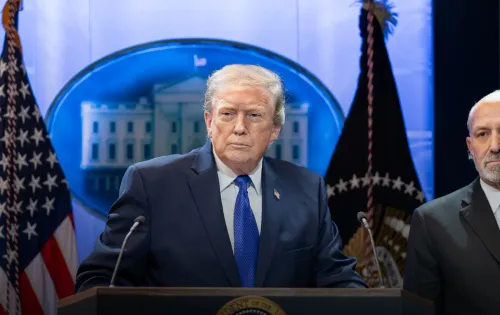
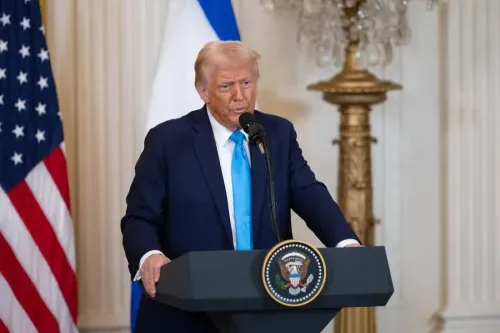
Asked whether military action was on the table, Rubio said the administration’s preference was a “negotiated diplomatic settlement.” However, he did not rule out presidential action, adding that the President “has the obligation to address that national security threat” if one were to emerge. The remarks stop short of a direct threat but signal that Washington is keeping its options open as Cuba’s internal situation worsens.
Point of View
Sympathetic grievance to point to while the bigger strategic anxiety — Russian and Chinese intelligence infrastructure just off Florida’s coast — remains the real driver. Rubio’s Cuban-American political identity makes him a credible messenger for this hardline posture domestically, but it also raises the question of whether policy here is being shaped by geostrategy or by constituency. The ‘presidential obligation’ line is the one to watch — it is the closest Washington has come to signalling that the Cuba file could move from diplomatic pressure to something more consequential.
NationPress
5 Oct 2026
Frequently Asked Questions
Why did Marco Rubio call Cuba a 'failed state'?
Rubio called Cuba a ‘failed state’ on 21 May 2025, arguing that its economic and political system is irreparably broken, that military-linked entities are blocking humanitarian aid, and that the country’s instability poses a direct threat to US national security. He made the remarks during a press interaction in Miami ahead of his India trip.
What is the GUYA company Rubio mentioned?
Rubio identified GUYA as a private military company linked to the Cuban regime, alleging it controls $18 billion in assets — none of which, he claimed, is transferred to Cuba’s state budget. He cited this as evidence that the Cuban government enriches military-connected entities while ordinary citizens suffer.
What happened to the $6 million in US hurricane aid for Cuba?
The US allocated $6 million in hurricane relief for Cuba. According to Rubio, $3 million was successfully distributed inside Cuba through the Catholic Church, but the remaining $3 million is being held up by Cuban authorities through their permitting process.
What security concerns did Rubio raise about Cuba?
Rubio alleged that Cuba hosts Russian and Chinese intelligence operations on its soil and possesses weapons supplied by both countries. He also warned that a ‘systemic meltdown’ in Cuba could trigger a migration and instability crisis that would directly affect the United States, given Cuba’s proximity to Florida.
Did Rubio threaten military action against Cuba?
Rubio said the US administration’s preference was a ‘negotiated diplomatic settlement,’ but he did not rule out action, stating that the President ‘has the obligation to address that national security threat’ if one emerged. He stopped short of an explicit military threat.