Trump and Rubio escalate Cuba pressure, cite security threat 90 miles from US
Synopsis
Three senior US officials — Trump, Rubio, and Miller — publicly escalated pressure on Cuba on the same day, calling it a failed state hosting Russian and Chinese intelligence just 90 miles from American soil. The coordinated messaging signals a sharp policy tightening, yet Trump simultaneously left the door open for a deal, calling himself the president who could finally resolve a 60-year standoff.
Key Takeaways
President Trump and Secretary of State Marco Rubio both described Cuba as a failed state and a national security threat on 22 May .
Rubio alleged Cuba hosts Russian and Chinese intelligence presence and has acquired weapons systems from both countries.
White House Deputy Chief of Staff Stephen Miller warned Cuba could serve as a base for adversary attack drones within reach of US territory.
Washington said it would offer humanitarian aid only through groups not linked to the Cuban military, accusing conglomerate GAESA of diverting resources.
Trump suggested he could be the president to resolve a standoff that has persisted for 50 to 60 years .
The Trump administration has tightened Cuba policy in recent months through sanctions , criminal indictments, and diplomatic pressure.
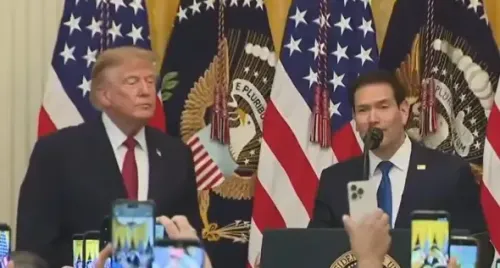
US President Donald Trump and Secretary of State Marco Rubio on 22 May separately intensified pressure on Cuba, describing the island nation as a failed state and a persistent national security threat to the United States. Both officials signalled a tougher posture toward Havana while leaving open the possibility of a negotiated settlement.
Trump's Oval Office Remarks
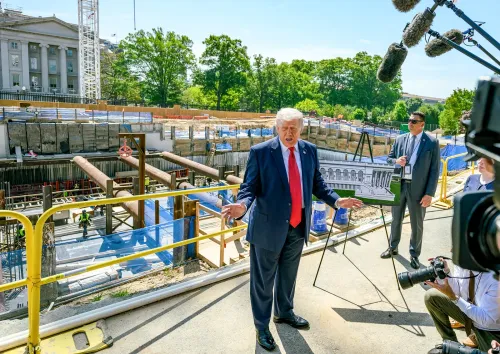
Speaking during an Oval Office event focused on deregulation, Trump responded to questions about Cuba by framing the issue in both humanitarian and geopolitical terms. 'It's a failed country. Everybody knows it. They don't have electricity. They don't have money. They don't have really anything — they don't have food,' Trump said.
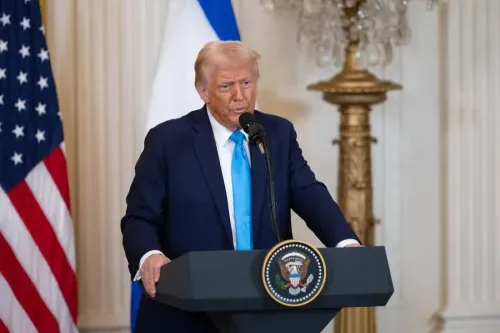
He added that the United States intended to assist the Cuban people and help Cuban Americans — particularly those in Florida — reconnect with the island. 'We're going to help them along and we're going to help them because the people — because, number one, I want to help them, you know, on a humanitarian basis,' he said. Trump also suggested he could be the president to finally resolve the decades-long standoff, saying: 'Other presidents have looked at this for 50, 60 years, doing something, and it looks like I'll be the one that does it.'
Rubio's Sharper Assessment
Hours before Trump's remarks, Rubio delivered a more pointed statement to reporters at Miami Homestead Airport before departing for India. 'Cuba has consistently posed a threat to the national security of the United States,' Rubio said. 'The other thing that poses a threat to the national security of the United States is to have a failed state 90 miles from our shores run by friends of our adversaries.'
Rubio alleged that Cuba hosts Russian and Chinese intelligence presence and has acquired weapons systems from both countries over the years. He also accused Havana of supporting destabilising groups across Latin America, calling Cuba 'one of the leading sponsors of terrorism in the entire region.'
White House Warns of Drone and Adversary Threat
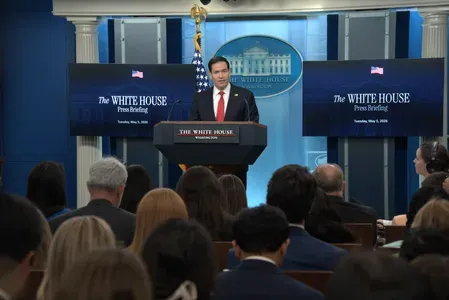
White House Deputy Chief of Staff Stephen Miller echoed those concerns, warning that Cuba could become a launchpad for hostile actors. 'You could have an adversary of the United States send, for example, attack drones to Cuba that would then be within very short reach of the United States Territory and its citizens,' Miller said during a White House briefing. 'We can't have a foothold for enemies, adversaries, or terrorists that close to American territory,' he added.
Conditions on Humanitarian Aid
Rubio said Washington was prepared to provide humanitarian assistance to Cuba, but only through independent organisations — not through entities linked to the Cuban military. He accused GAESA, the military-linked conglomerate, of diverting resources away from ordinary citizens. 'We're prepared to do more, but it has to be distributed by groups that are not linked to the regime,' he said.
Rubio also dismissed characterisations of the administration's approach as 'nation building'. 'The future of Cuba belongs to the people of Cuba in terms of how they're governed. But the national security component, that's 100 per cent something we're going to focus on because that's about America,' he said.
Broader Context and What Comes Next
The Trump administration has steadily tightened its Cuba policy in recent months through sanctions, criminal indictments, and diplomatic pressure. Cuba has simultaneously faced worsening economic conditions, including rolling blackouts and acute shortages of food and fuel. This latest rhetorical escalation marks a notable intensification, with three senior officials — Trump, Rubio, and Miller — all speaking publicly on the same day. Whether Washington moves toward direct negotiations or further sanctions will likely depend on Havana's response to these overtures.
Point of View
Rubio, and Miller all on the same day — is not accidental. It is a calibrated escalation designed to signal resolve while keeping a negotiating window open, a classic pressure-before-talks playbook. What is striking is the explicit invocation of Russian and Chinese intelligence on Cuban soil: that framing lifts the Cuba question out of Cold War nostalgia and plants it squarely in the current great-power rivalry. The humanitarian aid conditionality, meanwhile, is a policy lever that could be tightened or loosened depending on Havana's response. The real question is whether this is genuine diplomatic groundwork or domestic performance for Florida's Cuban-American constituency ahead of the next electoral cycle — and the answer will show in whether sanctions are actually escalated or quietly held in reserve.
NationPress
7 Oct 2026
Frequently Asked Questions
Why are Trump and Rubio escalating pressure on Cuba now?
The Trump administration has been steadily tightening Cuba policy through sanctions and diplomatic pressure in recent months. On 22 May, Trump and Rubio both cited Cuba's worsening economic conditions, alleged Russian and Chinese intelligence presence on the island, and its proximity — 90 miles — to US territory as reasons for the renewed pressure.
What specific security threats did US officials cite regarding Cuba?
Secretary of State Marco Rubio alleged that Cuba hosts Russian and Chinese intelligence operations and has acquired weapons systems from both countries. White House Deputy Chief of Staff Stephen Miller warned that adversaries could use Cuba as a base to deploy attack drones within reach of US territory.
What conditions did the US set for humanitarian aid to Cuba?
Rubio said Washington is prepared to provide humanitarian assistance, but only through independent organisations not linked to the Cuban military. He accused the military-linked conglomerate GAESA of diverting resources meant for ordinary citizens.
Did Trump leave room for a negotiated settlement with Cuba?
Yes. Trump said he wanted to help the Cuban people on a humanitarian basis and indicated that Cuban Americans in Florida wished to invest in and rebuild the island. He also claimed he could be the president to resolve the decades-long standoff, suggesting openness to a negotiated outcome alongside the tougher rhetoric.
What is the current situation inside Cuba?
Cuba has been facing severe economic conditions in recent years, including rolling blackouts and acute shortages of food and fuel. The Trump administration's sanctions and diplomatic pressure have added to Havana's difficulties, though the Cuban government has not publicly responded to the latest US statements.