Trump signals Cuba policy shift, eyes Cuban American investment
Synopsis
Trump's Cuba remarks on 21 May are the clearest opening signal from his current White House — framing a potential policy reversal not as diplomacy but as a humanitarian and diaspora play. With no formal announcement yet, the gap between the rhetoric and actual policy remains wide, but the direction of travel is unmistakable.
Key Takeaways
President Donald Trump on 21 May signalled a possible shift in US policy toward Cuba , calling it a 'failed country' lacking electricity, food, and money.
Trump said the US was ready to help Cuba 'on a humanitarian basis' and wanted to allow Cuban Americans to return and invest.
He dismissed claims that the deployment of the USS Nimitz near Cuba was intended to intimidate Havana .
Trump claimed previous presidents had spent 50 to 60 years trying to change US-Cuba relations without success.
No formal policy announcement, sanctions relief, or diplomatic initiative has been unveiled so far.
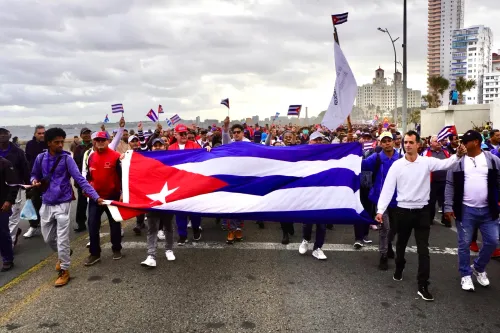
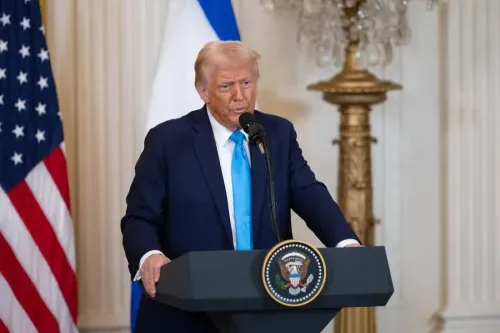
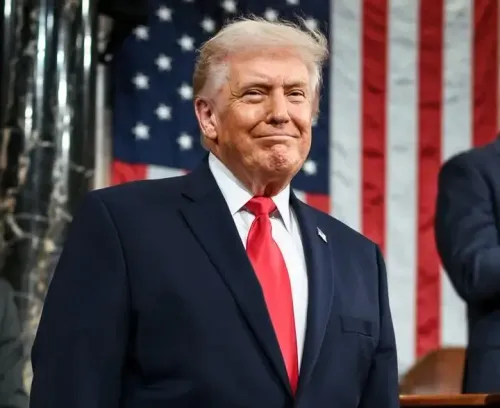
US President Donald Trump on Thursday, 21 May signalled a possible reversal of long-standing American policy toward Cuba, saying his administration wanted to help revive the island nation and enable Cuban Americans to return and invest there. The remarks mark the most direct opening gesture toward Havana from the Trump White House.
What Trump Said
Speaking to reporters, Trump described Cuba as a 'failed country' grappling with acute shortages of electricity, food, and money. He said Washington was prepared to assist 'on a humanitarian basis' and repeatedly praised the Cuban American community, particularly those settled in Miami, Florida.
'Cuba — look, it's a failed country. Everybody knows it. They don't have electricity. They don't have money. They don't have anything. They don't have food,' Trump said.
The USS Nimitz Question
Trump pushed back firmly against suggestions that the recent deployment of the USS Nimitz aircraft carrier near Cuba was intended as a show of force against Havana. 'No, not at all,' he said when asked whether the carrier's arrival was meant as a warning to the Cuban government. The deployment had drawn attention amid speculation about a harder US line on the island.
Cuban Americans at the Centre
Trump framed much of his remarks around the Cuban American diaspora, calling them 'a great group of people, amazing group of people, industrious, they're great Americans.' He said many in the community were eager to reconnect economically with the island. 'They want to go back to their country. They want to help their country,' he said. 'They want to invest in their country and see if they can bring it back.'
A Break From Decades of Stalemate
Trump suggested that successive US administrations had spent 50 to 60 years attempting — and failing — to fundamentally reshape relations with Cuba. 'Other presidents have looked at this for 50, 60 years doing something, and it looks like I'll be the one who does it,' he said. This comes amid broader signals that the administration is reviewing its posture toward several countries in the Western Hemisphere. Notably, US-Cuba relations have oscillated sharply across administrations, with the Obama-era thaw reversed during Trump's first term and tightened further under Biden.
What Comes Next
No formal policy announcement or legislative proposal has been made public. Analysts will watch whether the remarks translate into executive action, sanctions relief, or direct diplomatic engagement with Havana. The Cuban American vote in Florida remains a politically sensitive constituency, adding a domestic electoral dimension to any policy move.
Point of View
No diplomatic framework, no legislative proposal. His first term saw a sharp tightening of Cuba policy, so the credibility gap is real. The USS Nimitz deployment, whatever its intent, sends a contradictory signal — warships and investment pitches rarely travel well together. The Florida political calculus looms large over every word here.
NationPress
7 Oct 2026
Frequently Asked Questions
What did Trump say about Cuba on 21 May 2025?
Trump signalled a possible shift in US Cuba policy, describing the island as a 'failed country' and saying his administration wanted to help on a humanitarian basis. He also said Cuban Americans should be allowed to return and invest in Cuba.
Why was the USS Nimitz deployed near Cuba?
The US Navy deployed the USS Nimitz aircraft carrier near Cuba, prompting speculation about a show of force. Trump denied this, saying the deployment was not intended as a warning to the Cuban government.
Has Trump announced any formal Cuba policy change?
No formal policy announcement, executive order, or sanctions relief has been made public. Trump's remarks on 21 May were signalling language, and no concrete diplomatic or legislative steps have been unveiled.
What is the significance of Cuban Americans in this context?
Trump repeatedly praised the Cuban American community, particularly those in Miami, Florida, framing them as key drivers of any potential economic revival in Cuba. The community is also a politically significant constituency in Florida.
How does this compare to previous US administrations on Cuba?
US-Cuba relations have swung sharply across administrations. The Obama era saw a diplomatic thaw, which Trump reversed during his first term with tighter sanctions. Biden maintained many of those restrictions. Trump's latest remarks suggest a possible third shift, though no policy details have been confirmed.