U.S. Points Finger at Cuba's Regime After Nationwide Blackout
Synopsis
In a scathing critique of Cuba's leadership following a national blackout, President Trump and Secretary Rubio call for urgent political reform. They label the island's economy as 'non-functional' and emphasize the need for change amid a severe energy crisis.
Key Takeaways
U.S. leaders criticize Cuba's regime for its failures following a nationwide blackout.
Economic system deemed 'non-functional' by Trump and Rubio.
Call for political reform to address deep-rooted issues.
Recent measures from Havana are insufficient to tackle the crisis.
Ongoing energy crisis highlights the need for urgent action .
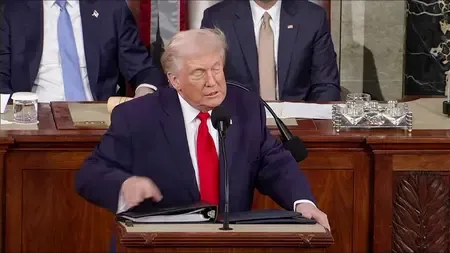
Washington, March 17 (NationPress) President Donald Trump and Secretary of State Marco Rubio expressed strong disapproval of Cuba’s leadership on Tuesday after a nationwide power failure, deeming the island's economic framework as "non-functional" and calling for significant political reform.
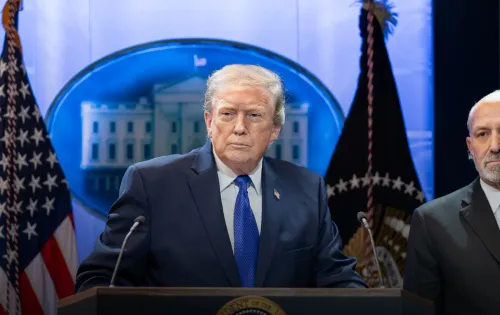
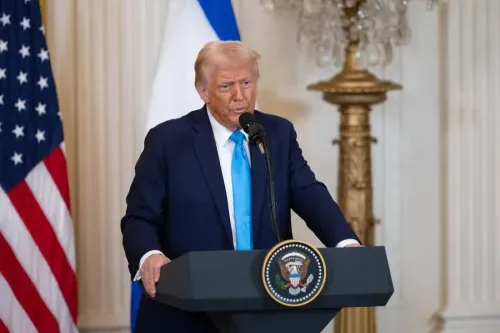
During a discussion with Irish Taoiseach Micheal Martin, Trump asserted that the United States is monitoring the situation in Cuba closely and indicated potential forthcoming actions.
“Cuba is currently facing severe challenges,” Trump stated. “We will be taking action regarding Cuba shortly.”
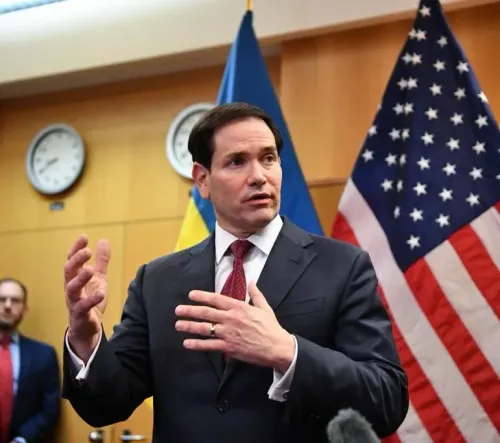
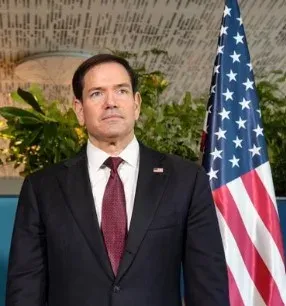
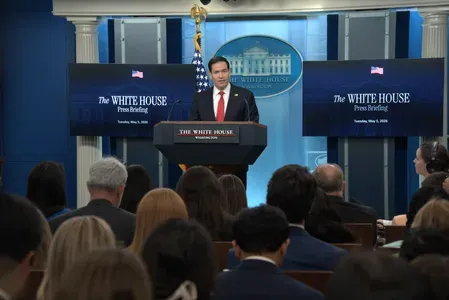
Rubio, addressing inquiries about the island’s economic turmoil, remarked that the circumstances reflect a deeper structural crisis. “Cuba has a dysfunctional economy and a governmental system that remains beyond repair,” he commented.
“They must undergo considerable changes.”
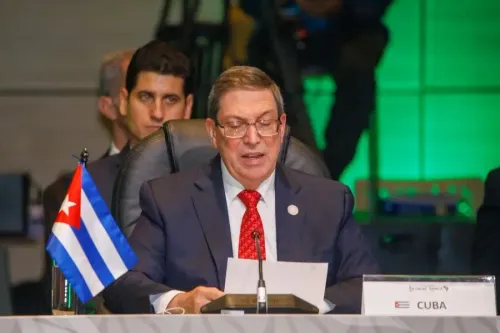
Rubio criticized recent measures introduced by Havana as insufficient to remedy the situation. “What was announced yesterday is far from adequate. It won't resolve the issues,” he said.
He characterized the Cuban economy as fundamentally broken. “It is a nonfunctional economy,” Rubio emphasized, noting that the system has relied on external aid for decades. “It’s not even a revolution; it has persisted due to subsidies from the Soviet Union and presently from Venezuela.”
According to Rubio, this support has largely diminished, placing the nation in a precarious position. “They no longer receive subsidies. Thus, they are in significant trouble,” he said.
He also doubted the current leadership's capability to tackle the crisis. “Those in charge lack the knowledge to resolve it. New leadership is essential,” Rubio stated.
When queried about U.S. policy, Rubio refrained from confirming whether Washington would contemplate easing the trade embargo in exchange for cooperation from Havana, emphasizing that the embargo is contingent upon political change in Cuba.
The remarks followed a collapse of Cuba’s electrical grid on Monday, which left vast sections of the country without power, highlighting the severity of its ongoing energy crisis.
A senior State Department official later reiterated the administration's stance, attributing the blackout directly to failures in governance.
“Widespread blackouts have unfortunately been a common occurrence in Cuba for years—a clear indication of the regime’s incompetence and its failure to provide even the most basic necessities for its population,” the official stated.
This situation has evolved as a consequence of decades of political control. “This is the tragic outcome of over sixty years of Communist governance,” the official remarked.
In a stark evaluation, the official noted the island's significant decline. “What was once the crown jewel of the Caribbean has descended into extreme poverty and darkness,” the official lamented.
The official also referenced Trump’s views regarding the future of the Cuban government. “As President Trump has indicated, what remains of the regime should negotiate and finally allow the Cuban people to experience freedom and prosperity, with the aid of the United States,” the official added.
The administration’s comments suggest that Washington perceives the recent blackout as part of a larger economic and political crisis rather than merely an isolated infrastructure failure.
Point of View
It becomes increasingly evident that significant changes are necessary to address the underlying issues facing the island.
NationPress
21 Sept 2026
Frequently Asked Questions
What caused the blackout in Cuba?
The blackout was attributed to failures in the governance of Cuba's electrical grid, which has struggled for years.
What are U.S. officials saying about Cuba's economy?
U.S. officials, including President Trump and Secretary Rubio, have characterized Cuba's economy as 'non-functional' and in urgent need of reform.
Will the U.S. ease the trade embargo against Cuba?
Secretary Rubio stated that any consideration of easing the trade embargo is linked to political changes in Cuba.
How has the Cuban regime responded to the crisis?
Cuba has announced measures to address the crisis, but U.S. officials believe these actions are inadequate.
What are the consequences of the current situation in Cuba?
The ongoing energy crisis and economic struggles have led to widespread poverty and instability in Cuba.