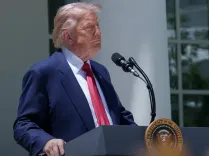
Rubio vows tougher US pushback against China's Latin America footprint
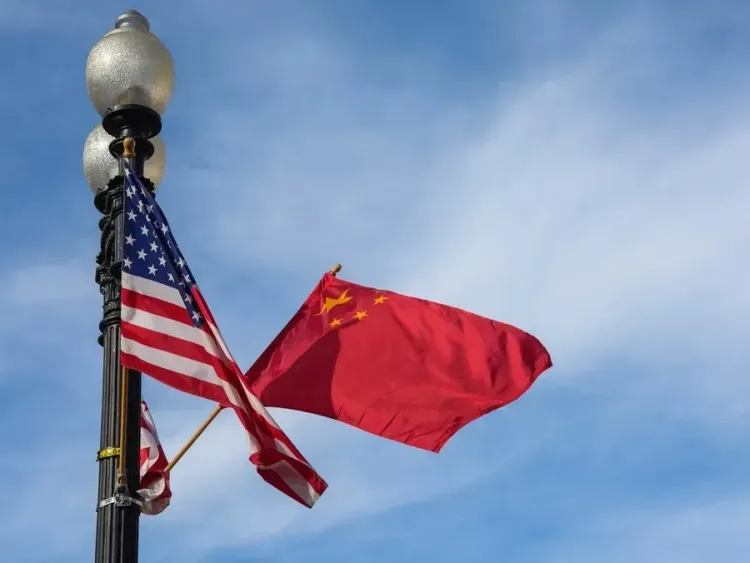
Synopsis
Marco Rubio's testimony is less a policy announcement than an admission: Washington let China walk into its own backyard. With Beijing now embedded in Latin America's ports, telecom and critical minerals, the US is scrambling to offer alternatives — and asking allies to help fill a vacuum it created over two decades of neglect.
Key Takeaways
US Secretary of State Marco Rubio told a House panel on 3 June that Washington is stepping up efforts to counter China in Latin America .
Rubio said Beijing has secured long-term contracts for critical minerals and built influence through investments in ports, telecom and transport .
He admitted countries often choose Chinese financing because ‘the only people showing up are Chinese companies.' Rubio cited Paraguay as a country holding firm with the US and Taiwan despite Beijing's pressure.
He warned Chinese loans come with strings, including expected votes at the United Nations and other international forums.
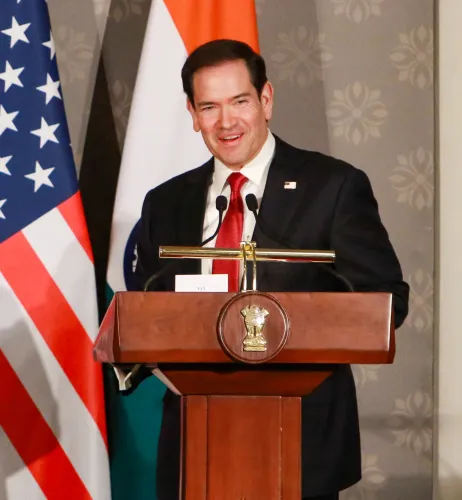
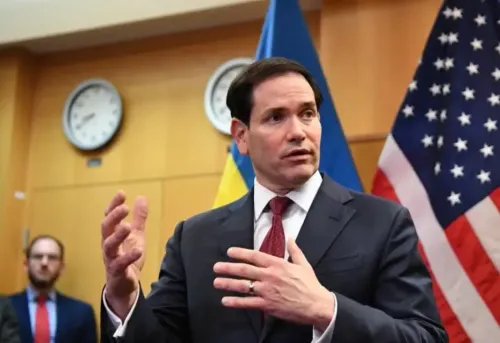
US Secretary of State Marco Rubio on 3 June told lawmakers in Washington that the United States is sharply stepping up efforts to counter China's expanding influence across Latin America, contending that decades of American neglect allowed Beijing to entrench itself in ports, telecommunications, critical minerals and infrastructure across the Western Hemisphere.
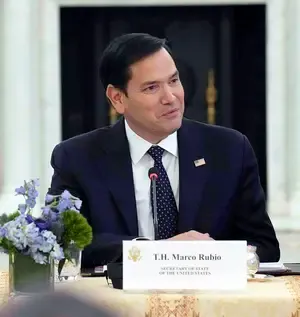
Testifying before the House Appropriations Subcommittee on National Security, Department of State and Related Programs, Rubio framed Beijing's growing footprint in the region as one of the defining strategic challenges for US foreign policy.
How China built its Latin America presence
Rubio said Beijing's strategy has worked on two tracks — locking in access to natural resources while embedding itself through large infrastructure deals. ‘They try to establish for themselves access to critical minerals, mining of any sort and gain these long-term contracts,' he said.
The Secretary pointed to Chinese investments in telecommunications networks, ports and transportation corridors as the second leg of that strategy. ‘They come in with infrastructure investments, key infrastructure like telecommunications, ports,' he told the panel.
Why the region turned to Beijing
According to Rubio, many Latin American governments leaned on Chinese financing simply because no one else showed up. ‘A country will come to us and say, we want to build X, or we want to expand Y, but the only people showing up are Chinese companies,' he said.
The administration, he added, is now working to surface American and allied alternatives. ‘The challenge that we have is to identify and connect those US alternatives and not US, Western allied alternatives to what the Chinese are offering,' Rubio said.
A long-standing blind spot
Rubio conceded that successive US administrations had paid lip service to the hemisphere without follow-through. ‘As long as I served in the Senate for 16 years, everybody said we need to focus more on the Western Hemisphere. No one ever wants to actually do it,' he said.
The exchange came with Representative Mario Diaz-Balart, who recently led a congressional delegation to South America and praised the administration's renewed engagement. Rubio singled out Paraguay for maintaining close ties with Washington and Taiwan despite sustained pressure from Beijing, and flagged cooperation on critical minerals and supply chains with several regional governments.
Strings attached, says Rubio
Rubio warned that Chinese financing often comes with political conditions, including expectations of diplomatic alignment. ‘They expect your vote at the United Nations and in international forums as leverage,' he said.
The renewed US push reflects a broader great-power contest. Over the past two decades, China has emerged as one of the top trading partners and investors across Latin America, bankrolling major projects in transport, energy, mining and telecom — a footprint Washington is now racing to dilute.
Point of View
Methodically, through ports, fibre networks and mining offtake deals. The harder question Washington has not answered is what its ‘alternative' actually looks like in dollar terms; absent concessional finance at Chinese scale, exhortation alone will not move governments that need bridges, grids and 5G now.
NationPress
22 Sept 2026
Frequently Asked Questions
What did Marco Rubio say about China in Latin America?
Rubio told the House Appropriations Subcommittee on 3 June that the US is intensifying efforts to counter China's expanding influence across Latin America. He said Beijing has built leverage through long-term mineral contracts and investments in ports, telecom and infrastructure.
Why has China expanded so rapidly in Latin America?
According to Rubio, many regional governments turned to Chinese financing because no other investors were offering to fund major infrastructure projects. He said the US now wants to connect these countries with American and allied alternatives.
Which Latin American country did Rubio highlight as a US ally?
Rubio singled out Paraguay as a country that has maintained close ties with both the United States and Taiwan despite sustained pressure from Beijing. He also cited cooperation with several regional governments on critical minerals and supply chains.
What conditions does Rubio say come with Chinese financing?
Rubio said Chinese loans and investments often carry strategic strings, including expectations that recipient countries back Beijing's positions at the United Nations and other international forums. He framed this as political leverage embedded in the financing model.
Why does this matter for US foreign policy?
The testimony signals a sharper US focus on its own hemisphere as part of the broader competition with China. With Beijing now a top trading partner for several Latin American nations, Washington is trying to reverse two decades of declining influence in the region.