US takes 200 firms to Central Asia in push against Russia-China influence
Synopsis
Washington isn't just sending diplomats to Central Asia — it's sending Boeing, Citibank, and 200 other companies. With $30 billion in reverse investment commitments already on the books and Kazakhstan joining the Abraham Accords, the Trump administration is making its most aggressive play yet for a region long dominated by Russia and China.
Key Takeaways
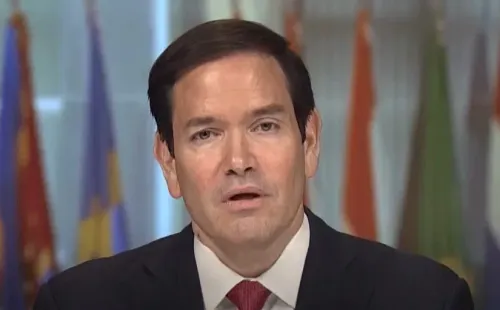
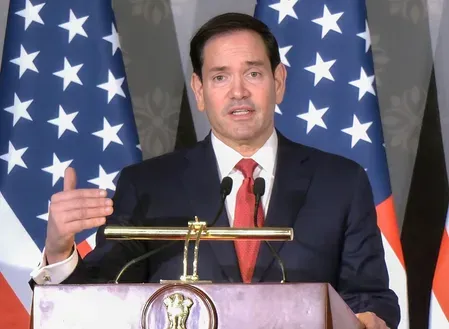
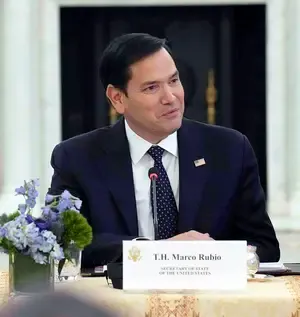
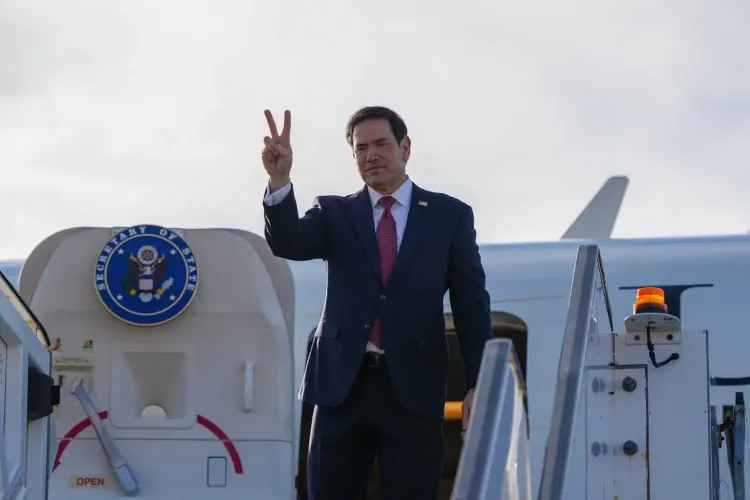
Secretary of State Marco Rubio is leading a delegation of more than 200 American companies to Samarkand, Uzbekistan for C5+1 talks.
The delegation includes Boeing , Citibank , and Franklin Templeton , spanning aviation, banking, and critical minerals sectors.
Kazakhstan and Uzbekistan have together announced more than $30 billion in new investments into the US over the past year.
President Trump hosted all five Central Asian presidents at the White House last year, a diplomatic milestone cited by senior officials.
Washington is also seeking expanded counterterrorism cooperation and cited Kazakhstan's announced participation in the Abraham Accords .
The push aims to give Central Asian nations an economic alternative to Chinese infrastructure financing and reduce dependence on Russia .
Secretary of State Marco Rubio is leading a sweeping commercial and diplomatic delegation to Samarkand, Uzbekistan, bringing more than 200 American companies to Central Asia as the Trump administration intensifies its push into a strategically critical region that borders both Russia and China. The initiative, framed under the C5+1 diplomatic framework, targets stronger economic partnerships, access to critical minerals, and tighter security cooperation with Kazakhstan, Kyrgyzstan, Tajikistan, Turkmenistan and Uzbekistan.
What Is the C5+1 Framework
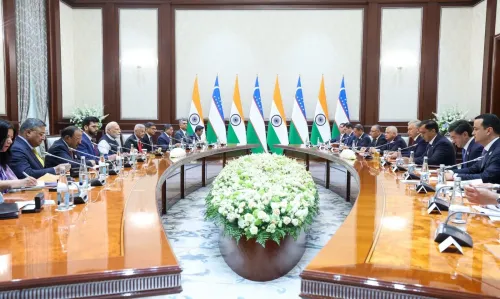
The C5+1 format brings together the United States and the five Central Asian republics to coordinate on economic development, regional security, and diplomatic alignment. Rubio is scheduled to hold individual meetings with all five foreign ministers, alongside broader multilateral engagements. A senior US official described the gathering as unprecedented in scale, noting it goes well beyond the format's traditional diplomatic exchanges.
'What we're gonna have here is not just bilateral meetings, not just a C5 plus one meeting. We're actually bringing over 200 American companies that are coming with us,' the official told reporters at a State Department briefing.
Who Is Going and What They Represent
The corporate delegation spans sectors from aviation and banking to transportation and critical minerals. Among the companies identified are Boeing, Citibank, and Franklin Templeton. Representatives from the US International Development Finance Corporation, the Export-Import Bank, the National Security Council, and the State Department will also participate, signalling that this is as much a government-backed investment push as it is standard diplomacy.
Billions Already on the Table
The visit builds on a notable financial foundation. Kazakhstan and Uzbekistan together have reportedly announced more than $30 billion in new investments into the United States over the past year, according to the senior official. Both countries have also been invited to attend the G20 as observers — a development Washington views as a marker of their rising international stature.
Notably, President Donald Trump hosted all five Central Asian presidents at the White House last year, a step the official described as a milestone in repositioning US engagement with a region that had, by the administration's own admission, been underserved by Washington in the past.
Security and Geopolitical Dimensions
Beyond commerce, the US is explicitly seeking to expand counterterrorism cooperation with several of the five governments and encouraging closer political ties. The official also cited Kazakhstan's announced participation in the Abraham Accords as evidence of its broader diplomatic outreach, though discussions over a potential signing ceremony are reportedly still ongoing with no date confirmed.
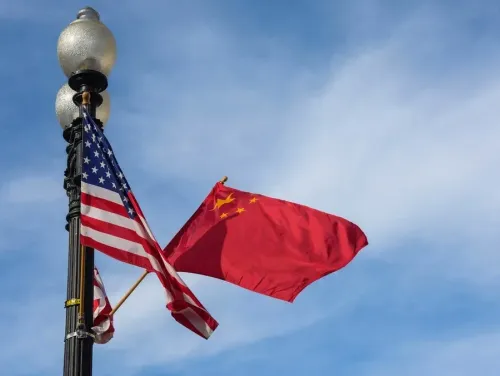
This comes amid persistent great-power competition over Central Asia's mineral wealth and transit corridors, with both Russia and China maintaining deep historical, economic, and military ties in the region. Washington's commercial offensive — pairing government-backed finance with private-sector muscle — reflects a calculated effort to offer an alternative to Chinese infrastructure financing and reduce the region's economic dependence on Moscow.
What Comes Next
The official said the administration hoped the Samarkand visit would advance previously discussed initiatives and unlock fresh commercial opportunities. With critical minerals supply chains increasingly central to US industrial and defence policy, Central Asia — home to substantial reserves of uranium, rare earths, and other strategic materials — represents a rare convergence of economic and national security interests. How much of the $30 billion in commitments translates into on-the-ground investment will be the administration's first real test of this strategy.
Point of View
Government finance arms, and the Secretary of State in a single convoy — signals that Washington has finally decided Central Asia is too strategically consequential to leave to Beijing and Moscow. But commercial diplomacy has a poor conversion rate: announcements of investment intent, like Kazakhstan and Uzbekistan's $30 billion figure, routinely outrun actual capital deployment. The real measure of success will be whether Boeing gets contracts, whether Franklin Templeton mobilises capital, and whether critical mineral agreements move past memoranda of understanding. The C5+1 framework has existed for years with limited traction; this visit is a bet that private-sector horsepower can do what diplomatic talking shops could not.
NationPress
16 Oct 2026
Frequently Asked Questions
Why is the US sending 200 companies to Central Asia?
The Trump administration is making a major commercial and diplomatic push into Central Asia to secure access to critical minerals, deepen economic partnerships, and expand security cooperation with five nations bordering Russia and China. The delegation, led by Secretary of State Marco Rubio, is the largest US private-sector engagement in the region to date.
What is the C5+1 diplomatic framework?
The C5+1 framework is a multilateral format that brings together the United States and the five Central Asian republics — Kazakhstan, Kyrgyzstan, Tajikistan, Turkmenistan, and Uzbekistan — to discuss economic development, regional security, and diplomatic cooperation. Critical minerals, transport connectivity, and investment have become its primary focus areas in recent years.
Which American companies are part of the Samarkand delegation?
Among the over 200 companies in the delegation, Boeing, Citibank, and Franklin Templeton have been specifically identified. The broader group spans sectors including aviation, banking, transportation, and critical minerals extraction.
How much have Kazakhstan and Uzbekistan committed to invest in the US?
According to a senior US official, Kazakhstan and Uzbekistan together have announced more than $30 billion in new investments into the United States over the past year. The figure was cited as evidence of deepening economic ties ahead of the Samarkand meetings.
What is Kazakhstan's role in the Abraham Accords?
Kazakhstan has announced its participation in the Abraham Accords, the US-brokered normalisation framework between Israel and Arab states. A senior US official cited this as an example of Kazakhstan's growing international diplomatic engagement, though discussions over a formal signing ceremony are reportedly ongoing with no confirmed date.