Rubio: China rivalry now shapes nearly every US diplomatic talk
Synopsis
Rubio's testimony lays bare how thoroughly China now defines US diplomacy — from rare earths to pharma to Taiwan arms sales. With a $14 billion Taiwan package pending, a 14-nation ‘Pax Silica' bloc forming, and 88% of US drug ingredients still sourced from one country, Washington is moving from theory to triage. India sits squarely in the alternative supply-chain map.
Key Takeaways
Marco Rubio told US lawmakers on 4 June 2025 that China features in ‘virtually every' major US diplomatic engagement.
Washington hosted a rare-earths ministerial with over 30 countries and launched a ‘Pax Silica' bloc of 14 nations for AI-critical supply chains.
88% of active ingredients in US pharmaceuticals are still sourced from a single country, Rubio said.
An $11 billion Taiwan arms package was cleared in December; a further $14 billion is under review.
India is positioned as a key partner in Quad-led critical minerals and manufacturing diversification.
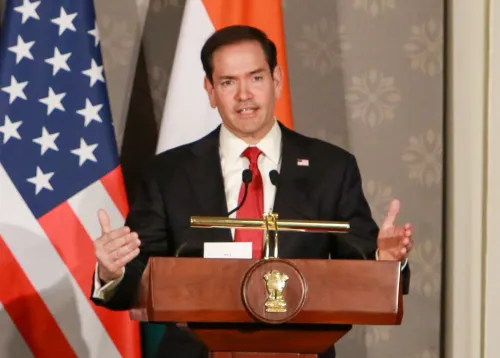
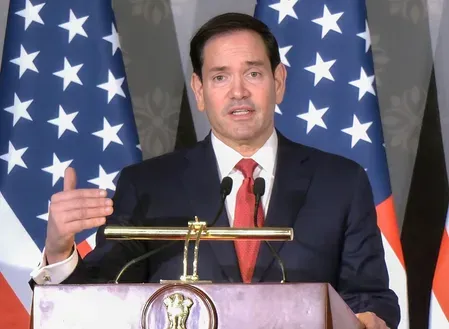
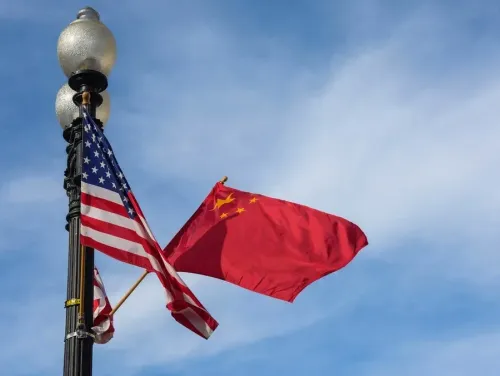
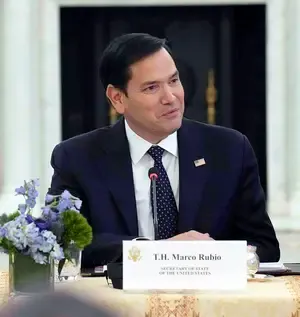
US Secretary of State Marco Rubio told lawmakers on 4 June 2025 that competition with China — spanning critical minerals, pharmaceuticals, advanced manufacturing and strategic supply chains — now features in virtually every major American diplomatic engagement abroad. Testifying before the Senate Appropriations Committee and the House Foreign Affairs Committee, Rubio framed Beijing as Washington's most consequential long-term strategic challenge.
Critical minerals at the centre
Rubio said decades of deep economic integration with China have created dependencies that now threaten US national security and economic resilience. ‘Virtually every foreign engagement that I have with a foreign minister or when I visit another country,' he said, involves critical minerals — ‘every single one of those critical minerals is a part of it.'
He warned that risks once dismissed as hypothetical have already materialised. ‘Many of the critical minerals supply chain that have been denied to parts of the world, including the United States, were theoretical threats two or three years ago,' Rubio said. ‘And then it actually happened.'
‘Pax Silica' and the rare-earths push
To diversify sourcing, processing and refining, Washington recently hosted a rare earths ministerial attended by more than 30 countries, and launched a ‘Pax Silica' initiative involving 14 nations focused on supply chains essential to artificial intelligence and advanced technologies. Rubio said the administration has mapped strategic dependencies and is coordinating with allies on alternatives.
Pharma dependence flagged as national security risk
Rubio called it an ‘unacceptable risk' that 88 per cent of the active ingredients in US pharmaceuticals are still sourced from a single country. ‘The threat may be theoretical today,' he said. ‘I think we have to assume it will not be theoretical one day.'
Taiwan: $11 billion arms sale, $14 billion under review
Rebutting reports that the administration had slowed support for Taipei, Rubio said, ‘We don't consult with the Chinese on these sales.' He pointed to an $11 billion arms package cleared in December, which he described as the largest single sale to Taiwan in history, and confirmed an additional $14 billion package is under review. Beijing's displeasure, he said, was visible in repeated People's Liberation Army Air Force crossings of the Taiwan Strait centre line.
Myanmar, influence ops and shipbuilding
On Myanmar, Rubio said ‘the Chinese hold a tremendous amount of leverage' over the military regime, limiting US room for manoeuvre. He cited evidence of Chinese Communist Party influence operations abroad, including ‘the opening of police stations, the sending of individuals to harass Chinese nationals that are abroad.' He also flagged Beijing's dominance in commercial shipbuilding, built on years of subsidies, as a gap Washington must close.
Why it matters for India
For New Delhi, the testimony reinforces its rising relevance in US strategy. India is a core participant in the Quad, the critical-minerals diversification push and advanced manufacturing alignments — positioning it as a central economic and geopolitical partner as Washington builds alternatives to Chinese chokeholds across the Indo-Pacific.
With sanctions debates over Russian oil buyers and Strait of Hormuz security also intersecting Beijing's interests, the China question is unlikely to recede from US diplomacy any time soon.
Point of View
Not a sub-chapter. The ‘Pax Silica' framing is telling: the US is openly building parallel supply-chain blocs, much like Cold War-era alliances. For India, this is a strategic windfall, but also a stress test — New Delhi will be expected to deliver scale on minerals, pharma APIs and electronics manufacturing, not just rhetoric. The unanswered question is whether US industrial capacity can rebuild fast enough to make these alternatives credible before the next supply shock.
NationPress
18 Oct 2026
Frequently Asked Questions
What did Marco Rubio say about China in his June 2025 testimony?
Rubio told the Senate Appropriations Committee and House Foreign Affairs Committee on 4 June 2025 that China is the United States' most significant long-term strategic challenge and that critical minerals, pharmaceuticals and supply chains now feature in virtually every US diplomatic engagement abroad.
What is the ‘Pax Silica' initiative?
‘Pax Silica' is a US-led grouping of 14 nations focused on securing supply chains for artificial intelligence and advanced technologies. It complements a rare-earths ministerial Washington recently hosted with more than 30 countries to diversify sourcing, processing and refining away from China.
How large is the latest US arms sale to Taiwan?
Rubio said an $11 billion arms package was approved in December, which he described as the largest single sale to Taiwan in history. An additional $14 billion package is currently under review.
Why does Rubio's testimony matter for India?
India is a central partner in US-led diversification through the Quad, critical minerals coordination and advanced manufacturing. As Washington builds alternatives to Chinese dominance, New Delhi's role in the Indo-Pacific economic and security balance becomes increasingly important.
What did Rubio say about US pharmaceutical dependence on China?
Rubio called it an ‘unacceptable risk' that 88 per cent of active ingredients in US pharmaceuticals are sourced from a single country. He warned the vulnerability could become acute during a future geopolitical crisis.