Rubio: US rallies 30+ nations in rare-earth bloc to curb China grip
Synopsis
Washington is no longer just talking about rare-earth diversification — it is building a bloc. Rubio's disclosure of a 30-plus-nation coalition, paired with a 14-member ‘Pax Silica' AI supply pact, signals a hard pivot to coordinated containment of China's processing dominance. For India, already chasing critical-mineral self-reliance, the question is no longer whether to engage, but how deeply.
Key Takeaways
Marco Rubio said over 30 countries have joined a US-led rare earths initiative to cut reliance on China .
A separate ‘Pax Silica' grouping of 14 countries is focused on AI supply-chain security.
Rare earths are critical to EVs, batteries, semiconductors, wind turbines and defence systems.
China dominates global rare-earth processing, a key vulnerability flagged by Washington.
India, pushing critical-mineral self-reliance, is a key potential partner in the emerging bloc.
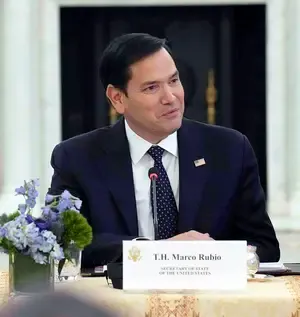
US Secretary of State Marco Rubio on Wednesday told lawmakers that the United States has assembled a coalition of more than 30 countries to secure global supplies of rare earth minerals, in a coordinated push to reduce dependence on China for resources critical to advanced manufacturing, clean energy and defence systems. The disclosure, made before the House Foreign Affairs Committee in Washington, frames supply-chain resilience as a central plank of the administration's foreign policy.
Key Developments
Rubio said the State Department recently convened a rare earths ministerial attended by ‘over 30-some-odd countries from around the world, all who were signing up for an American-led effort to ensure that critical supplies of rare earth minerals around the world are available for our emerging economies, and we don't remain overly dependent on China'.
He also flagged progress on a parallel initiative branded ‘Pax Silica', which he said now has 14 member countries cooperating to safeguard supply chains tied to artificial intelligence development. ‘These are 14 countries that are cooperating with one another to protect the supply chains critical to AI and AI development in the future,' Rubio said.
Why Rare Earths Matter
Rare earth minerals are embedded in electric vehicles, batteries, wind turbines, advanced electronics, semiconductors and defence platforms. China presently dominates large parts of the global rare-earth processing chain and remains a major supplier of critical minerals used across high-technology sectors, a concentration that has alarmed policymakers in Washington and allied capitals.
Concerns over concentrated supply chains have intensified in recent years, as export restrictions and geopolitical frictions exposed how thin the buffer is between industrial demand and a single dominant supplier.
What the Administration Said
Outlining what he described as the administration's foreign policy record over the past 16 to 17 months, Rubio repeatedly returned to efforts to counter Beijing's influence in strategic sectors, alongside diplomatic moves in Europe, the Middle East, Africa and Asia. He cast economic security, critical technologies and supply-chain resilience as core components of modern statecraft.
Rubio also pointed to stepped-up engagement with Pacific Island nations. ‘The Pacific Islands, small Pacific Islands, under constant pressure and threat from China, have received more attention from this administration than they received in the last 10 years combined,' he said.
Impact on India
For New Delhi, the rare-earths push carries direct strategic weight. India has been working to diversify supply chains and build domestic capacity in critical minerals as demand climbs across clean energy, electronics manufacturing and defence production.
The issue has also become a growing pillar of US-India economic and technology cooperation, with both sides exploring deeper collaboration in advanced manufacturing, semiconductors and resilient supply networks. Whether India formally joins the Rubio-led bloc, and on what terms, will be closely watched.
What Comes Next
The administration is expected to expand both the rare-earths coalition and the Pax Silica grouping in the coming months. The real test will be whether participating nations move from declarations to financed processing capacity outside China — the bottleneck that has frustrated every previous diversification attempt.
Point of View
Yet refining capacity outside China has barely budged. The real signal to watch is not the headcount of signatories but whether capital, offtake contracts and environmental clearances follow. For India, the opportunity is genuine — but so is the risk of being slotted as a raw-material supplier rather than a processing hub. Pax Silica's framing around AI hardware is the sharper, more novel move; the rare-earths bloc, on its own, is familiar territory.
NationPress
18 Oct 2026
Frequently Asked Questions
What is the US-led rare earths initiative announced by Marco Rubio?
It is a coalition of more than 30 countries, convened at a rare earths ministerial, aimed at securing global supplies of rare earth minerals and reducing dependence on China. Rubio described it as an ‘American-led effort' to keep critical minerals available for emerging economies.
What is Pax Silica and which countries are part of it?
Pax Silica is a US-backed grouping of 14 countries cooperating to protect supply chains critical to artificial intelligence development. Rubio said the membership is growing, though the full country list was not disclosed in his remarks.
Why is reducing rare-earth dependence on China important?
Rare earth minerals are essential inputs for electric vehicles, batteries, semiconductors, wind turbines and defence systems, and China currently dominates large parts of the global processing industry. That concentration creates strategic vulnerabilities, particularly amid export restrictions and geopolitical tensions.
How does this affect India?
India has been actively diversifying supply chains and building domestic capability in critical minerals to support clean energy, electronics and defence. The emerging US-led bloc opens room for deeper US-India cooperation in advanced manufacturing, semiconductors and resilient supply networks.
What did Rubio say about Pacific Island nations?
Rubio said the Pacific Islands, which he described as being under ‘constant pressure and threat from China', have received more US attention under this administration than in the previous 10 years combined. The remark underscored the geographic breadth of the China-focused strategy.