India-US critical minerals pact targets China's supply chain monopoly
Synopsis
India and the US have signed a bilateral framework to jointly secure critical minerals and rare earths supply chains — a direct counter to China's processing monopoly. Signed at the Quad Foreign Ministers' meeting in New Delhi, with Jaishankar and Rubio both present, the pact covers the full supply chain from mining to recycling and builds on India's recent Pax Silica Declaration sign-on.
Key Takeaways
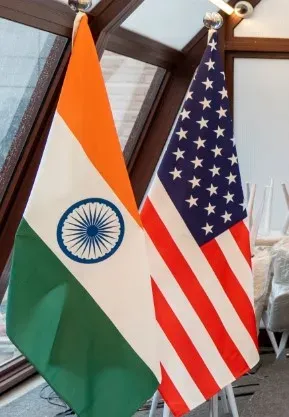
India and the US signed a bilateral critical minerals and rare earths framework on 26 May in New Delhi .
The agreement was signed at the Quad Foreign Ministers' meeting in the presence of EAM S.
Jaishankar and US Secretary of State Marco Rubio .
The pact covers the full supply chain: mining, processing, recycling, and investment in critical minerals used in semiconductors , EVs , solar panels , and defence systems .
It is explicitly aimed at reducing dependence on China's dominant position in global rare earth processing.
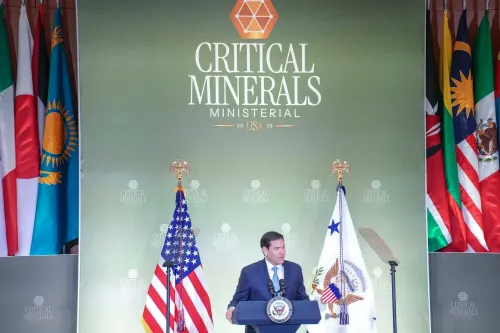
India had participated in the Critical Minerals Forum in Washington, DC on 4 February , which Rubio cited as the foundation for Tuesday's agreement.
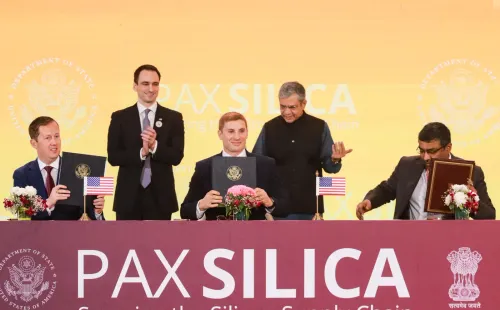
India has also signed the Pax Silica Declaration , a US-led coalition for secure AI, semiconductor, and critical minerals supply chains.
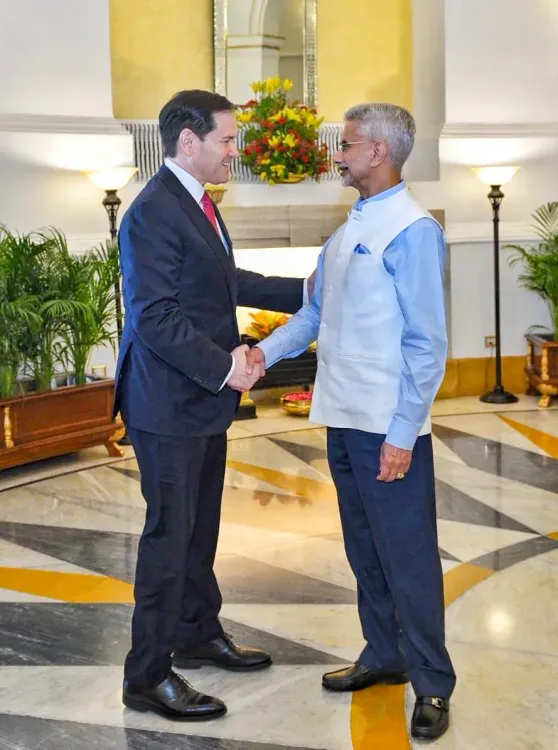
India and the United States on Tuesday, 26 May signed a landmark bilateral framework to strengthen cooperation across the critical minerals and rare earths supply chain — covering mining, processing, recycling, and related investment. The agreement was formalised on the sidelines of the Quad Foreign Ministers' meeting in New Delhi, in the presence of External Affairs Minister S. Jaishankar and US Secretary of State Marco Rubio.
What the Agreement Covers
The framework targets the full lifecycle of critical minerals and rare earths — materials that are foundational to semiconductors, electric vehicles, solar panels, and high-tech defence systems. Both sides have committed to deepening ties across every stage: from extraction and refining to recycling and capital deployment.
The pact is explicitly designed to reduce dependence on single-source supply chains — a direct reference to China's dominant position in global rare earth processing, which gives Beijing significant leverage over the technology and defence industries of major economies.
What Jaishankar and Rubio Said
External Affairs Minister Jaishankar described the signing as both timely and critical. 'We are today signing a bilateral India-US framework on securing supplies of mining and processing of critical minerals and rare earths,' he said, adding that the issue had also been discussed at the Quad meeting. 'Whether we are doing it bilaterally, or in the Quad format or as a larger gathering of like-minded nations, it is something very timely and critical,' he noted.
Secretary of State Rubio framed the agreement in terms of strategic vulnerability, warning that innovation economies cannot afford to leave their foundational materials 'vulnerable to single source monopolies that could deny us these things, not just in a time of conflict, but as a leverage point contrary to our sovereign national interests.' He described the India-US strategic alliance as central to American national interest and called the pact 'a tangible example' of it.
Background and Build-Up
Rubio noted that the groundwork for Tuesday's agreement was laid as far back as 4 February, when India participated in the Critical Minerals Forum hosted in Washington, DC. India has also signed the Pax Silica Declaration — a US-led strategic coalition aimed at building secure, resilient, and trusted supply chains for artificial intelligence (AI), semiconductors, and critical minerals.
This comes amid a broader global realignment away from China-dependent supply chains, accelerated by export controls Beijing has imposed on rare earth processing chemicals in recent months. The Quad grouping — comprising India, the US, Japan, and Australia — has increasingly positioned supply chain resilience as a collective security priority.
Strategic Significance for India
India holds substantial deposits of several critical minerals, including lithium, cobalt, and graphite, but has historically lagged in domestic processing capacity. The bilateral framework with Washington is expected to attract investment into India's upstream and midstream mineral sectors, potentially positioning the country as an alternative processing hub to China.
Notably, this is the second major supply chain agreement India has concluded within the Quad framework in recent months, signalling a consistent strategic pivot. With global demand for EV batteries and semiconductor-grade materials set to surge through the decade, the timing of the pact carries long-term industrial weight.
What Comes Next
Both governments are expected to operationalise the framework through joint working groups covering investment facilitation, technology transfer, and standards alignment. Industry bodies on both sides will likely be consulted on implementation timelines. The agreement's real test will be in execution — particularly in accelerating India's processing infrastructure, where gaps remain significant.
Point of View
But its weight will be determined by what follows the signing ceremony. India has abundant mineral deposits yet chronically underdeveloped processing capacity — the very bottleneck that gives China its leverage. A framework that stops at investment pledges without accelerating India's midstream infrastructure will not meaningfully shift the supply balance. Rubio's invocation of the 4 February Critical Minerals Forum suggests Washington has been building this architecture deliberately, but India will need to match diplomatic momentum with industrial investment at a scale it has not yet demonstrated in this sector.
NationPress
9 Oct 2026
Frequently Asked Questions
What is the India-US critical minerals agreement signed on 26 May?
It is a bilateral framework signed on 26 May in New Delhi to deepen cooperation across the critical minerals and rare earths supply chain, including mining, processing, recycling, and investment. The pact is aimed at reducing dependence on China's dominant position in global rare earth processing.
Why are critical minerals and rare earths strategically important?
Critical minerals and rare earths are essential inputs for semiconductors, electric vehicles, solar panels, and advanced defence systems. China currently dominates their processing, giving it the ability to disrupt global supply chains or use access as geopolitical leverage.
What is the Pax Silica Declaration that India signed?
The Pax Silica Declaration is a US-led strategic coalition aimed at building secure, resilient, and trusted supply chains for artificial intelligence, semiconductors, and critical minerals. India's signing signals its alignment with a broader Western-led effort to reduce dependence on Chinese supply chains.
What role did the Quad play in this agreement?
The agreement was signed on the sidelines of the Quad Foreign Ministers' meeting in New Delhi. EAM Jaishankar noted the issue was discussed both bilaterally and at the Quad level, indicating that supply chain resilience is now a formal agenda item for the four-nation grouping.
What was the groundwork laid before the 26 May signing?
US Secretary of State Rubio cited India's participation in the Critical Minerals Forum hosted in Washington, DC on 4 February as the foundation for Tuesday's bilateral framework, suggesting the agreement was several months in preparation.