India to set up 4 critical mineral processing plants in Odisha, Gujarat, Telangana, Maharashtra
Synopsis
India is building four critical mineral processing plants across four states — and the stakes go well beyond industrial policy. With China controlling 90 per cent of global rare earth processing and having already weaponised that leverage against India, the National Critical Mineral Mission is as much a geopolitical hedge as it is an economic one.
Key Takeaways
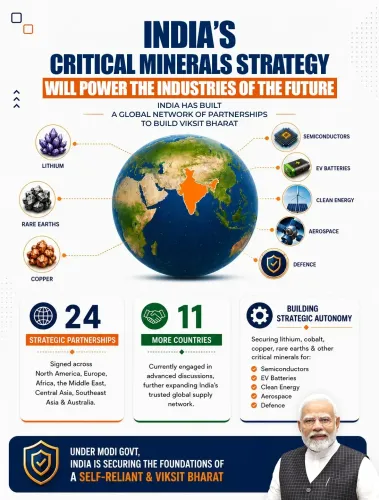
The Centre is establishing four critical mineral processing plants in Odisha , Gujarat , Telangana , and Maharashtra under the National Critical Mineral Mission (NCMM) .
Land has already been allotted by the respective state governments; dedicated action plans are being prepared.
China controls roughly 90 per cent of rare earth processing and 93 per cent of magnet manufacturing globally.
India depends on China for 80–90 per cent of its magnets — a vulnerability exposed when China restricted exports during a trade dispute.
India holds the world's fifth-largest rare earth reserves and the technology to process them.
The government expects visible progress within one year as auctions, plants, and international partnerships become operational.
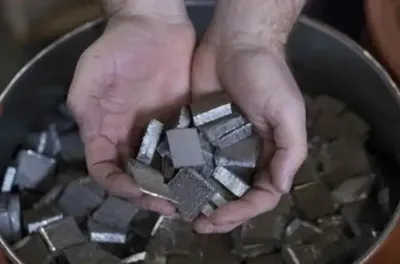
The Centre is pressing ahead with plans to establish four critical mineral processing plants in Odisha, Gujarat, Telangana, and Maharashtra, marking a decisive push to reduce India's dependence on China for materials essential to semiconductors, electric vehicles, solar panels, hi-tech electronics, and defence equipment. The initiative falls under the National Critical Mineral Mission (NCMM) and represents one of the most significant steps in building a domestic supply chain for these strategic resources.
Key Developments Under the Mission
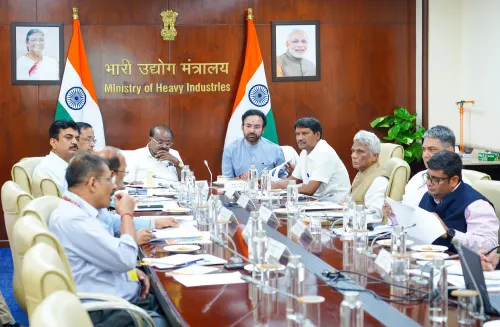
Union Coal and Mines Minister G. Kishan Reddy stated that the Centre has carved out dedicated mining blocks for critical minerals and conducted large-scale auctions — the first of their kind since independence. A significant number of these blocks have already been auctioned, laying the groundwork for an integrated domestic supply chain.
The respective state governments have already allotted land for the four proposed processing facilities, and state administrations are drawing up dedicated action plans to support the rollout. Reddy indicated that visible progress is expected within the next year as auctions, processing infrastructure, and international partnerships begin translating into operational capacity.
India's China Dependency — The Core Problem
The urgency behind this push is rooted in a stark strategic vulnerability. China currently accounts for roughly 90 per cent of global rare earth separation and processing, and 93 per cent of magnet manufacturing. India itself relies on China for 80–90 per cent of its magnets and related materials.
This dependence was thrown into sharp relief when China tightened rare earth exports during a trade dispute, resuming supply only after India provided end-user guarantees that the materials would not be re-exported to the United States. The episode underscored how China has leveraged its near-monopoly as a geopolitical instrument.
India's Strategic Potential
India holds the world's fifth-largest rare earth reserves and possesses the technology to process these minerals — a combination that positions it as a credible alternative supplier in the global rare earth economy. The government has also signed multiple memoranda of understanding with partner countries to strengthen international cooperation and diversify supply chains.
Notably, the global race for rare earth elements has shifted from the margins of industrial policy to the centre of geopolitics, making India's domestic processing capacity a matter of both economic and national security interest.
What the Processing Plants Will Achieve
The four plants are designed to accelerate India's refining and processing capabilities — the critical bottleneck that has historically kept the country dependent on imports despite its own mineral reserves. By co-locating processing infrastructure with state-level support, the Centre aims to create end-to-end supply chains rather than simply extracting raw ore for export.
Industry observers note that processing capacity — not just mining rights — is where China's real leverage lies, making the plant initiative strategically significant beyond its industrial value.
What Comes Next
With land already allotted in all four states, the next milestones are finalising plant designs, awarding construction contracts, and operationalising the first processing units. The government's own timeline points to meaningful outcomes within a year, though execution — particularly in scaling refining technology — will determine whether the mission delivers on its strategic promise.
Point of View
Modest processing, and chronic import dependence — all while a single country controls the global refining chokepoint. The four processing plants are the right structural response, but the bottleneck has never been land or even intent; it has been the technology and capital intensity of refining. China built its dominance over decades of subsidised capacity, not just geological luck. Whether India's plants can achieve commercial-scale output quickly enough to matter — for its own EV and semiconductor ambitions, let alone as an alternative to China for partner nations — will depend on execution rigour that past mining-sector initiatives have not always demonstrated. The MoUs with partner countries are a useful signal, but supply-chain credibility is earned through consistent output, not signed agreements.
NationPress
26 Sept 2026
Frequently Asked Questions
What is the National Critical Mineral Mission (NCMM)?
The National Critical Mineral Mission is India's strategic initiative to build domestic capabilities in mining, processing, and refining critical minerals essential for semiconductors, electric vehicles, solar panels, and defence equipment. It includes dedicated mining block auctions, processing plant construction, and international supply-chain partnerships.
Which states will host the four critical mineral processing plants?
The four plants will be located in Odisha, Gujarat, Telangana, and Maharashtra. Land has already been allotted by the respective state governments, and state administrations are preparing dedicated action plans to support the facilities.
Why is India so dependent on China for critical minerals?
China controls approximately 90 per cent of global rare earth separation and processing, and 93 per cent of magnet manufacturing. India currently imports 80–90 per cent of its magnets and related materials from China, a dependence that became a strategic liability when China restricted exports during a trade dispute and resumed supply only after India gave end-user guarantees.
What rare earth reserves does India hold?
India holds the world's fifth-largest rare earth reserves and possesses the technology required to process these minerals, giving it the potential to become a significant player in breaking China's near-monopoly on global rare earth supply.
When will the critical mineral processing plants become operational?
Union Minister G. Kishan Reddy has indicated that the government expects visible progress and positive outcomes within the next year as auctions, processing infrastructure, and international partnerships begin translating into operational capacity. Specific commissioning dates have not yet been announced.