India's Strategic Role in Dismantling China's Mineral Monopoly
Synopsis
As India emerges with significant rare earth reserves, it stands at the forefront of breaking China's grip on critical minerals. This shift not only has economic implications but also reshapes geopolitical dynamics in South Asia and beyond.
Key Takeaways
India holds the world's fifth-largest reserves of rare earth elements.
China currently dominates 90% of rare earth processing and 93% of magnet manufacturing.
The National Critical Minerals Mission aims to enhance domestic exploration and processing.
India's regional cooperation frameworks promote collaboration on critical mineral resources.
Strengthening partnerships can reduce reliance on external powers.
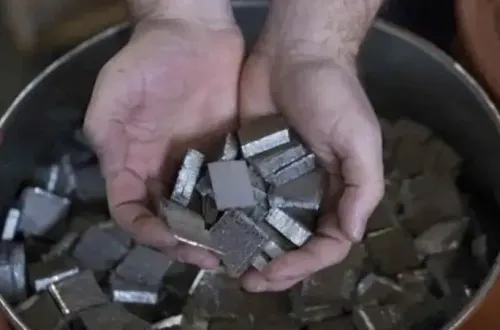
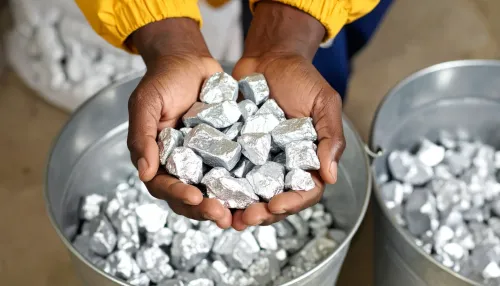
New Delhi, March 22 (NationPress) With the world's fifth largest reserves of rare earth elements and advanced technology for their production, India is poised to significantly disrupt China's near-monopoly on these essential minerals. These minerals are crucial for the manufacturing of electric vehicles, wind turbines, high-tech electronics, and defense equipment, as highlighted in a recent article.
The competition for rare earth elements (REEs) has escalated from a mere industrial concern to a pivotal aspect of global geopolitics. Currently, China dominates approximately 90 percent of the separation and processing of rare earths and accounts for 93 percent of magnet production, according to a report from the Australian Institute of International Affairs.
This dominance has allowed China to wield rare earth exports as a tool for strategic leverage. Notable incidents include the restrictions on shipments to Japan in 2010 and January 2026 during maritime disputes in the East China Sea, as well as more recent export controls employed in negotiations with the United States. As geopolitical tensions escalate, governments and industries are urgently seeking alternative supply sources, as discussed by Dalbir Ahlawat.
India, however, remains largely dependent on China for 80-90 percent of its magnets and associated materials. This reliance became evident when China restricted exports during a trade dispute, resuming them only after India assured that the materials would not be re-exported to the United States, the article states.
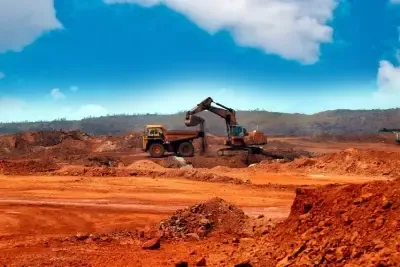
Despite its vast reserves, India's rare earth sector has historically been underdeveloped. Production has been limited and primarily managed by state-owned entities like Indian Rare Earths Limited, whose regulatory framework has traditionally discouraged private investment. Consequently, this has restricted refining capabilities and hindered India from fully leveraging its rich resource base.
To address these challenges, India launched the National Critical Minerals Mission in January 2025, aiming to enhance domestic exploration, processing, and value addition. The government has started to open critical mineral exploration to private companies and is enhancing collaboration with international partners through initiatives like the Minerals Security Partnership (MSP), which includes the United States, Japan, Australia, and various European nations.
Geostrategically, India holds a unique position in South Asia, increasingly influenced by competing connectivity projects. China's Belt and Road Initiative continues to expand its infrastructure and economic ties, while the US-led Indo-Pacific frameworks aim to establish alternative supply chains. Infrastructure investments, energy corridors, and connectivity projects have become defining features of strategic rivalry in South Asia and the Indian Ocean region. The competition for rare earth resources is becoming intertwined with broader strategic dynamics, linking resource security to infrastructure development and regional influence.
India's regional strategies, originating from the Security and Growth for All in the Region (SAGAR) doctrine and recently evolving into the Mutual and Holistic Advancement for Security and Growth Across Regions (MAHASAGAR), reflect a collaborative approach to regional advancement. These frameworks prioritize maritime cooperation, disaster management, sustainable development, and economic connectivity across the Indian Ocean and South Asia. Incorporating rare earth supply chains into this strategy could unveil new opportunities for collaboration with neighboring states rich in critical minerals: Afghanistan (lanthanum, cerium, neodymium), Bangladesh (monazite, zircon), Myanmar (dysprosium, terbium), Nepal (tantalum, niobium), Bhutan (tungsten, lithium), and Sri Lanka (monazite, zircon). However, these resources remain largely untapped due to technological, regulatory, and financial barriers.
India's combination of resource endowment, technological capability, and geopolitical positioning places it in a prime position to spearhead the establishment of regional value chains for rare earth extraction and processing. In doing so, New Delhi could empower South Asian nations to engage more actively in global supply networks while reducing their overreliance on external powers.
Furthermore, India has enhanced international collaboration through the MSP framework, complementing broader efforts by partners such as Australia’s Lynas Corporation, the United States’ Mountain Pass mine, Japan’s initiatives for diversification through overseas partnerships and recycling technologies, and the European Union’s Critical Raw Materials Act.
By bolstering domestic capacity, collaborating with international producers, and fostering regional partnerships across South Asia, New Delhi can solidify its role as a stabilizing force in the region, the article concludes.
Point of View
India's potential to disrupt China's dominance in rare earths represents a pivotal moment for resource security and regional cooperation in South Asia. By leveraging its reserves and technology, India can catalyze a collaborative approach that benefits the region while minimizing dependency on external powers.
NationPress
23 Sept 2026
Frequently Asked Questions
Why is India's rare earth sector underdeveloped?
Historically, India's rare earth sector has been dominated by state-owned enterprises with a regulatory framework that discouraged private investment, limiting production and refining capacity.
What is the significance of the National Critical Minerals Mission?
Launched in January 2025, this mission aims to boost domestic exploration, processing, and value addition of critical minerals, facilitating private sector participation and international collaboration.
How does China's monopoly affect global supply chains?
China's near-monopoly on rare earth elements allows it to exert strategic leverage in international relations, affecting supply chains critical for technology and defense industries.
What role do regional initiatives play in resource cooperation?
India's regional initiatives focus on maritime cooperation and economic connectivity, which can integrate rare earth supply chains and promote collaboration with neighboring countries rich in these resources.
How can India strengthen its position in the global market?
By enhancing domestic production capacity, forming strategic partnerships with international producers, and fostering regional cooperation, India can play a major role in the global rare earth supply chain.