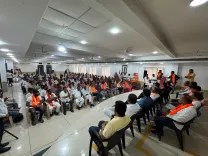
CM Saini Hails Pinjore Mango Mela as Tribute to Farmers

Synopsis
Haryana Chief Minister Nayab Singh Saini on 10 July 2026 praised the Pinjore Mango Mela as a tribute to the state's farmers, calling the annual fair in Panchkula district more than a horticultural showcase. His remarks highlight the Haryana government's push to promote non-cereal agriculture and rural cultural events.
Key Takeaways
CM Nayab Singh Saini publicly praised the Pinjore Mango Mela on 10 July 2026 , calling it a tribute to farmers' hard work.
The mela is held in Pinjore, Panchkula district , situated in the Shivalik foothills known for mango cultivation.
Haryana has organised district-level fruit and vegetable melas since the 2000s to promote horticulture diversification beyond wheat and paddy.
The event benefits mango growers by providing market visibility and consumer access for diverse, locally grown varieties.
Saini's remarks may precede policy announcements by the Haryana Horticulture Department on subsidies or market linkages for fruit growers.
The endorsement fits a broader pattern of BJP-led state governments using cultural-agricultural events to reinforce their farmer-welfare messaging.
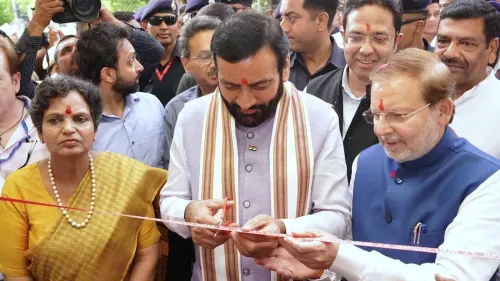
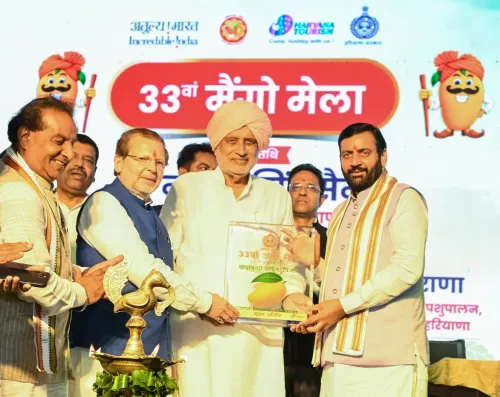
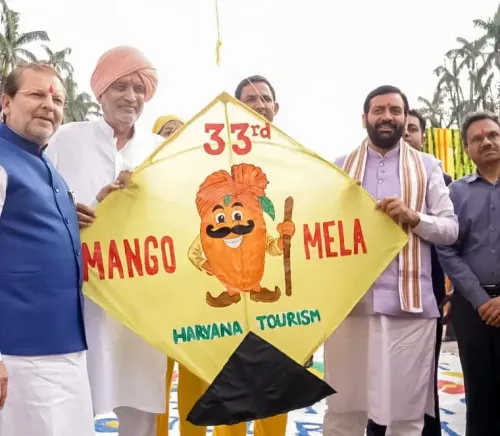
Haryana Chief Minister Nayab Singh Saini on Friday, 10 July 2026, praised the Pinjore Mango Mela as more than a horticultural showcase, calling it a mark of respect for the hard work of the state's farming community. Saini made the remarks on X, framing the annual fair in Pinjore, Panchkula district, as a celebration of agrarian labour rather than merely a display of fruit varieties.
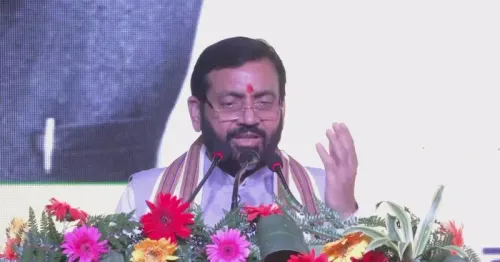
In his post, the Chief Minister wrote: 'Pinjore ka Mango Mela kewal aam ki vividh kismon ki pradarshani nahin, balki hamare kisan bhaion ki mehnat ka samman hai' — translated: 'The Pinjore Mango Mela is not merely an exhibition of diverse mango varieties, but a tribute to the hard work of our farmer brothers.'
Context
Pinjore, nestled in the Shivalik foothills of Panchkula district, has long been associated with mango cultivation alongside its historic Mughal-era gardens. The town's orchard belt produces a range of mango varieties that are showcased annually at the Mango Mela, drawing growers, consumers, and horticulture officials from across the region. The fair has become a focal point for celebrating the produce of farmers who cultivate non-cereal crops in a state otherwise dominated by wheat and paddy.
Policy Backdrop
Haryana has periodically organised district-level fruit and vegetable melas since the 2000s as part of broader efforts to encourage horticulture diversification beyond the wheat-rice cultivation cycle. These events serve a dual purpose: providing farmers a platform to display their produce and enabling state agencies to spotlight policy support for non-cereal agriculture. Chief Minister Saini, who assumed office in July 2024, has continued this tradition of publicly acknowledging farmers at cultural and agricultural gatherings.
The Haryana Horticulture Department has over the years used such melas to highlight market linkages, varietal improvement programmes, and subsidy schemes aimed at mango and other fruit growers in the Shivalik belt. The Pinjore fair fits within this longer arc of state-supported rural tourism blended with agricultural promotion.
Stakeholders and Impact
Mango growers in and around Pinjore stand to benefit most directly from the visibility that the mela provides, gaining access to wider consumer markets and potential buyers from urban centres. Local farmers cultivating diverse mango varieties — many of which are not commonly available in mainstream retail — use the platform to secure better prices and recognition for their produce. The event also supports the local rural tourism economy, drawing visitors to the region's orchard landscape and heritage gardens.
For the BJP-led Haryana government, such public endorsements carry political weight in agricultural constituencies, reinforcing the administration's messaging around farmer welfare ahead of any future electoral cycle. CM Saini's framing of the mela as a 'tribute' rather than a commercial event signals a deliberate effort to connect cultural occasions with the government's agrarian identity.
What's Next
Attention will now turn to whether the Haryana Agriculture or Horticulture Department follows the Chief Minister's remarks with concrete announcements — such as enhanced subsidies, new market linkages, or expanded support for mango growers in the Panchkula region. Future editions of the Pinjore Mango Mela are likely to be positioned more prominently within the state's rural tourism and horticulture promotion calendar. The Chief Minister's public endorsement could also prompt similar district-level fruit fairs to be scaled up across other horticultural belts in Haryana.
Point of View
Embedding cultural events within the BJP's farmer-welfare narrative in Haryana. The move fits a well-established pattern in BJP-governed northern states where agrarian imagery is cultivated through public endorsements of local fairs and melas. With Haryana's agricultural economy still heavily weighted toward wheat and paddy, such gestures also signal the government's intent to mainstream horticulture as a credible livelihood alternative. Whether the symbolism translates into substantive policy support for mango growers in Panchkula will be the real measure of the administration's commitment.
NationPress
10 Jul 2026
Frequently Asked Questions
What is the Pinjore Mango Mela?
The Pinjore Mango Mela is an annual fair held in Pinjore, Panchkula district, Haryana, that showcases diverse mango varieties grown in the Shivalik foothills and celebrates the contributions of local fruit farmers.
What did CM Nayab Singh Saini say about the Pinjore Mango Mela?
On 10 July 2026, CM Saini said the Pinjore Mango Mela is not merely an exhibition of mango varieties but a tribute to the hard work of the state's farmer brothers, posting the remark on X.
Where is Pinjore located and why is it known for mangoes?
Pinjore is a town in Panchkula district, Haryana, situated in the Shivalik foothills. Its geographic conditions support mango orchards, making it a hub for diverse mango cultivation in the state.
How does the Pinjore Mango Mela help farmers?
The mela gives mango growers a platform to display their produce to a wider audience, helping them access better markets, attract buyers from urban centres, and gain recognition for locally grown varieties.
Has Haryana held such agricultural fairs before?
Yes, Haryana governments have organised district-level fruit and vegetable melas since the 2000s as part of efforts to promote horticulture diversification alongside the state's dominant wheat and rice farming.