Dr. Jitendra Singh Opts for Dialogue Over Lecture at LBSNAA
Synopsis
Union Minister Dr. Jitendra Singh visited LBSNAA in Mussoorie on 10 July 2026 and chose an informal two-way dialogue over a formal lecture with IAS officers from the 2002-2008 batches attending their Mid-Career Training Programme, calling for an end to 'feudal models of long discourses' in civil service training.
Key Takeaways
Jitendra Singh visited LBSNAA, Mussoorie on 10 July 2026 for a mid-career training session with IAS officers.
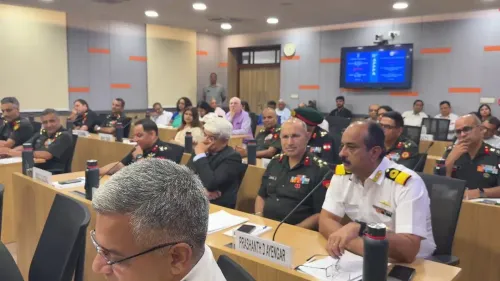
Officers from the 2002 to 2008 batches , with approximately two decades of service , were attending the Mid-Career Training Programme .
The Minister proposed and conducted an informal two-way dialogue instead of a conventional one-way lecture.
Singh publicly called for discarding 'feudal models of long discourses' in favour of mutual learning in civil service training.
The Mid-Career Training Programme was formalised by DoPT from around 2007 following recommendations of the Second Administrative Reforms Commission.
DoPT curriculum reviews and upcoming parliamentary sessions may determine whether this dialogue-based approach is institutionalised.
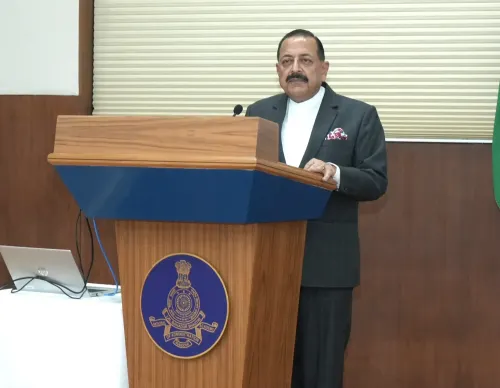
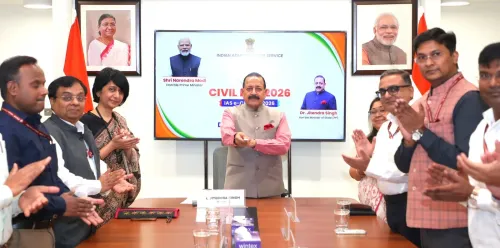
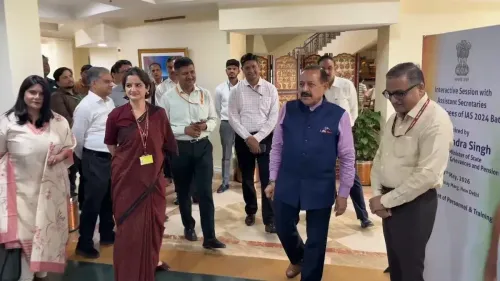
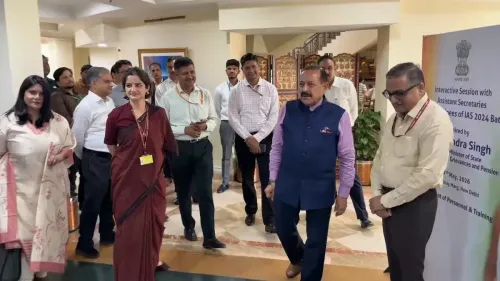
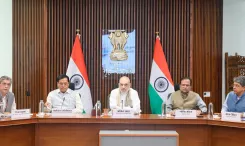
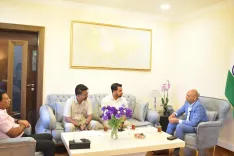
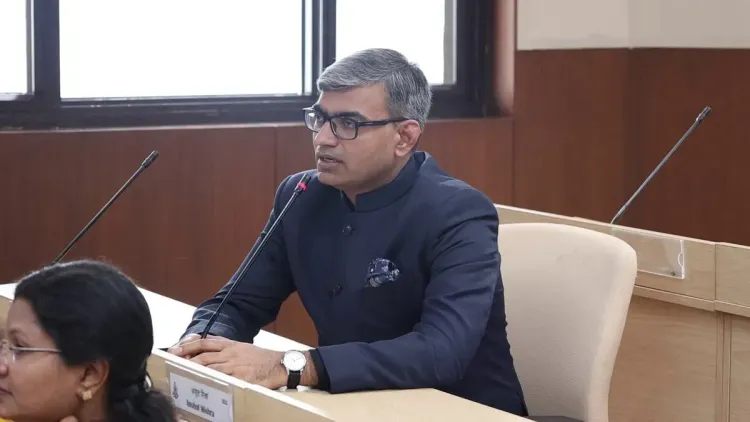
Union Minister of State (Independent Charge) for Science and Technology Dr. Jitendra Singh visited the Lal Bahadur Shastri National Academy of Administration (LBSNAA) in Mussoorie on 10 July 2026, where he engaged in a two-way dialogue with a group of IAS officers from the 2002 to 2008 batches who were attending their Mid-Career Training Programme after approximately two decades of service.
Context
Rather than delivering a conventional one-way address, Dr. Singh proposed an informal, candid exchange with the mid-career officers — a suggestion that the Academy's Director accepted. The session was designed to draw on the field experience of officers who have spent roughly two decades serving across different state cadres, and to understand their expectations from the central government. Dr. Singh described the interaction as 'unusual but rewarding.'
In his post on X, the Minister stated: 'I firmly believe, it is time to discard feudal models of long discourses and instead, learn to learn from each other.' The remark signals a deliberate departure from the hierarchical, lecture-centric formats that have historically characterised civil service training in India.
Policy Backdrop
The Mid-Career Training Programme (MCTP) for IAS officers was formalised by the Department of Personnel and Training (DoPT) from around 2007, mandating structured refresher courses at LBSNAA after approximately two decades of service. The programme was designed to update officers' knowledge and reorient them toward evolving governance challenges at a stage when they are positioned for senior leadership roles.
The Second Administrative Reforms Commission (2005–2009) had explicitly recommended moving away from one-way lecture formats toward participatory and experience-sharing methods in civil service training. Dr. Singh's approach at LBSNAA is consistent with those long-standing recommendations, though implementation has been uneven across successive administrations.
LBSNAA, located in Mussoorie, Uttarakhand, is the premier training institution for the Indian Administrative Service and functions under the administrative oversight of DoPT, a portfolio that falls within the Minister's broader responsibilities through the Prime Minister's Office.
Stakeholders and Impact
The officers attending this particular cohort represent a significant cross-section of India's senior bureaucracy. Having entered service between 2002 and 2008, many are now positioned at the level of Joint Secretary or equivalent in their respective state cadres, making them key implementers of both central and state government programmes.
A shift toward dialogue-based training formats, if institutionalised, could have downstream effects on how mid-career officers approach policy design and stakeholder engagement in their own jurisdictions. Civil service reform advocates have long argued that experiential learning — drawing on what officers have actually encountered in the field — produces more durable behavioural change than lecture-based instruction alone.
Dr. Singh's direct participation also signals ministerial-level interest in bridging the gap between policy formulation at the centre and ground-level implementation realities, a divide that has been a persistent concern in Indian administrative discourse.
What's Next
DoPT is expected to periodically review the curriculum and format of the Mid-Career Training Programme, and the Minister's public remarks may lend momentum to a more formal shift toward participatory formats in upcoming cohorts. The issue of civil service capacity-building is also likely to surface in parliamentary discussions during the Monsoon Session, where questions on training outcomes and administrative reform progress are routinely raised.
Whether this session marks the beginning of a structured policy push to reform MCTP formats — or remains a one-off ministerial initiative — will depend on follow-through from DoPT and LBSNAA's programme design teams in the coming months.
Point of View
And it aligns with a broader pattern of administrative reform rhetoric that has gained traction since the Second Administrative Reforms Commission. However, the durability of this shift will depend on whether DoPT translates ministerial preference into revised programme guidelines, or whether this remains an isolated, well-intentioned gesture. The political optics are also notable: engaging senior IAS officers as peers rather than subordinates projects an image of a reform-minded ministry at a time when Centre-state bureaucratic relations are under scrutiny.
NationPress
10 Jul 2026
Frequently Asked Questions
What is the Mid-Career Training Programme for IAS officers?
The Mid-Career Training Programme (MCTP) is a DoPT-mandated refresher course for IAS officers conducted at LBSNAA, Mussoorie, typically after approximately two decades of service. It was formalised from around 2007 to help senior officers update their skills and reorient toward evolving governance challenges.
What did Dr. Jitendra Singh do at LBSNAA in July 2026?
Dr. Jitendra Singh visited LBSNAA in Mussoorie on 10 July 2026 and, instead of delivering a formal lecture, engaged in an informal two-way dialogue with IAS officers from the 2002-2008 batches who were attending their Mid-Career Training Programme.
What is LBSNAA and where is it located?
The Lal Bahadur Shastri National Academy of Administration (LBSNAA) is India's premier training institution for IAS officers, located in Mussoorie, Uttarakhand. It functions under the Department of Personnel and Training (DoPT).
What did Dr. Jitendra Singh mean by 'feudal models of long discourses'?
Dr. Singh used the phrase to describe traditional, hierarchical training formats where senior officials or ministers deliver one-way lectures to civil servants. He argued these should be replaced by mutual, participatory learning that draws on officers' field experience.
What is DoPT and what is Dr. Jitendra Singh's connection to it?
The Department of Personnel and Training (DoPT) is the nodal central department responsible for civil services policy, recruitment, training and cadre management. Dr. Jitendra Singh holds a ministerial role in the Prime Minister's Office, through which DoPT matters fall within his oversight responsibilities.