Sonowal, Amit Shah Review Bureau of Port Security Progress
Synopsis
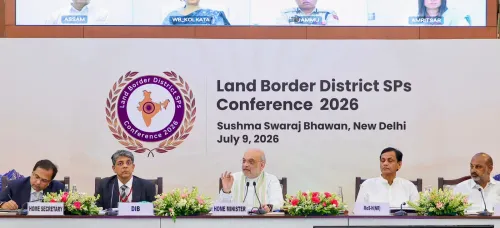
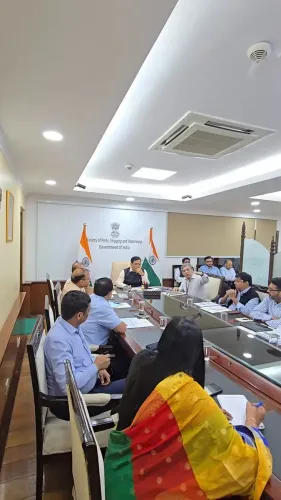
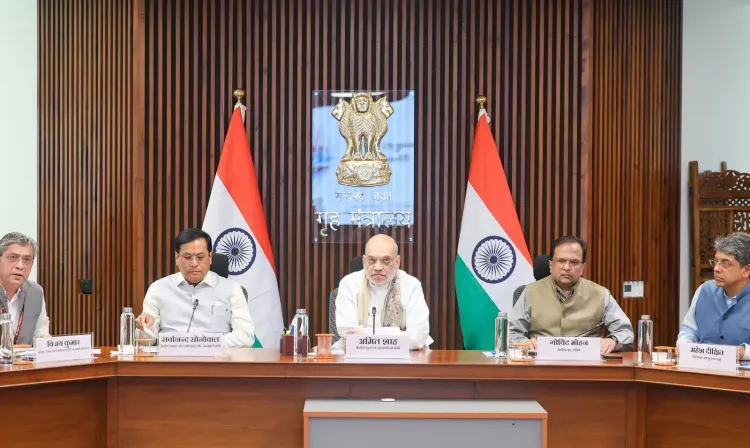
Union Minister Sarbananda Sonowal joined Home Minister Amit Shah in New Delhi on 10 July 2026 to review progress on the Bureau of Port Security (BoPS), a new national body set to integrate tech-driven port security with trade facilitation through a risk-based, internationally compliant framework.
Key Takeaways
Sarbananda Sonowal and Amit Shah held a joint review meeting in New Delhi on 10 July 2026 on the establishment of the Bureau of Port Security (BoPS) .
BoPS is designed as a modern, technology-driven national framework that links port security with trade facilitation.
The bureau will adopt a risk-based approach with time-bound procedures to safeguard supply chains and improve Ease of Doing Business at ports.
Compliance with international maritime security standards (including the ISPS Code) is central to the BoPS mandate.
India's coastal security architecture has been progressively strengthened since the 2008 Mumbai attacks , with BoPS representing the next institutional step.
The initiative involves close coordination between the Ministry of Ports, Shipping and Waterways and the Ministry of Home Affairs .
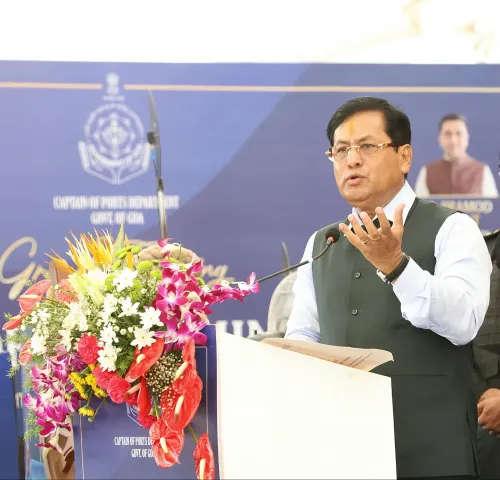
Union Minister of Ports, Shipping and Waterways Sarbananda Sonowal joined Union Home Minister Amit Shah in New Delhi on 10 July 2026 to review the progress of establishing the Bureau of Port Security (BoPS), a new national body designed to integrate port security with trade facilitation under a technology-driven framework.
Context
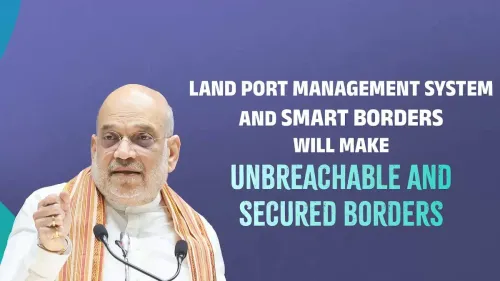
Sonowal described the review meeting as part of the Modi government's firm commitment to making India's coastal security 'absolutely impregnable.' In his post, he stated that BoPS 'will establish a modern, tech-driven national framework where robust security and trade facilitation move hand-in-hand,' signalling a deliberate policy shift away from treating security and commerce as competing priorities at India's ports.
The minister added that the bureau will implement 'a practical, risk-based approach with simple and time-bound procedures' to safeguard critical supply chains and enhance the Ease of Doing Business (EoDB) across ports. Strict compliance with international standards, he said, would 'elevate global confidence' and strengthen India's position in global maritime trade.
Policy Backdrop
India's layered approach to coastal security has evolved significantly since the 2008 Mumbai attacks, which exposed critical gaps in maritime domain awareness. The government launched the Coastal Security Scheme in 2009 to bolster surveillance and inter-agency coordination among maritime stakeholders including the Navy and Coast Guard.
On the trade compliance side, India adopted the ISPS Code in 2004 in line with mandates from the International Maritime Organization (IMO), establishing baseline security standards for ships and port facilities. BoPS is positioned as the next institutional step in this lineage — consolidating security oversight under a single national framework while embedding trade-facilitation objectives from the outset.
The risk-based approach referenced by Sonowal aligns with global best practices, where ports tier their security protocols according to assessed threat levels rather than applying uniform procedures, reducing friction for low-risk cargo and operators while concentrating resources on higher-risk movements.
Stakeholders and Impact
Port operators, shipping lines, and supply chain firms stand to be directly affected by BoPS's operational framework. A unified national security body with standardised, time-bound procedures could reduce compliance costs and clearance delays that have long been cited as friction points at Indian ports.
For the broader maritime sector, alignment with international security standards carries strategic weight: global shipping consortiums and foreign investors often assess port-security certification levels when making routing and investment decisions. A credible, tech-enabled BoPS could improve India's standing in global maritime trade facilitation indices.
The involvement of Home Minister Amit Shah in the review underscores the inter-ministerial character of the initiative — coastal security sits at the intersection of the Ministry of Ports, Shipping and Waterways and the Ministry of Home Affairs, requiring close coordination to be operationally effective.
What's Next
The key questions now centre on the operational rollout of BoPS: its coordination mechanisms with the Indian Navy and Indian Coast Guard, its technology architecture, and whether enabling legislation or dedicated budgetary provisions will be introduced in Parliament. The pace of staffing and the delineation of BoPS's authority relative to existing maritime security agencies will determine how quickly the framework becomes operational.
As India continues to expand port capacity under flagship programmes and positions itself as a major node in global supply chains, the institutionalisation of BoPS could become a benchmark for how emerging maritime economies reconcile security imperatives with the demands of high-volume, time-sensitive trade.
Point of View
Time-bound procedures, supply chain protection — directly into a security institution is a meaningful architectural choice, reflecting lessons from two decades of post-Mumbai reforms. The risk-based framing also positions India to meet the bar set by major trading partners and global shipping alliances that increasingly scrutinise port-security certifications before committing to routing decisions. Whether BoPS delivers will depend on the legislative and budgetary follow-through that a review meeting alone cannot guarantee.
NationPress
11 Jul 2026
Frequently Asked Questions
What is the Bureau of Port Security (BoPS) in India?
The Bureau of Port Security (BoPS) is a new national body being established by the Indian government to create a unified, technology-driven framework that integrates port security with trade facilitation across all major ports.
Why did Sarbananda Sonowal meet Amit Shah on 10 July 2026?
Sonowal joined Home Minister Amit Shah in New Delhi to review the progress of establishing BoPS, reflecting the inter-ministerial coordination required between the Ministry of Ports and the Ministry of Home Affairs for coastal security.
How does BoPS relate to India's coastal security history?
BoPS is the latest step in India's post-2008 coastal security evolution, building on the Coastal Security Scheme launched in 2009 and India's adoption of the IMO's ISPS Code in 2004.
What is a risk-based approach to port security?
A risk-based approach tiers security protocols according to assessed threat levels, concentrating resources on higher-risk cargo and operators while reducing procedural friction for low-risk movements, improving both security outcomes and trade efficiency.
How will BoPS affect shipping and trade at Indian ports?
BoPS aims to reduce compliance costs and clearance delays through standardised, time-bound procedures, and its alignment with international security standards is expected to improve India's attractiveness for global shipping lines and investors.