Smart Border Security Project: Shah vows no breach of India's frontiers
Synopsis
India's border security doctrine is getting its most significant overhaul in years. Home Minister Amit Shah, speaking at BSF's 60th anniversary in Bhuj, announced a shift from line-guarding to 'territorial security' — a multi-agency, technology-heavy grid covering both the Pakistan and Bangladesh frontiers, backed by thousands of crores in planned investment.
Key Takeaways
Home Minister Amit Shah announced the Smart Border Security Project on 29 May at Border Outpost G7, Bhuj, Gujarat .
The project shifts the BSF from conventional border guarding to a 'territorial security' model covering India-Pakistan and India-Bangladesh frontiers.
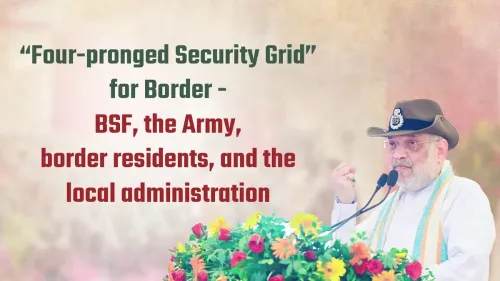
A 'quadrangular concept' will involve the public, civil administration, local police, armed forces, and BSF in an integrated security grid.
Investment will run into 'thousands of crores of rupees' ; technology components include drones, radars, and watch towers .
A proposal to expand BSF jurisdiction to new areas is under consideration; no final decision has been taken.
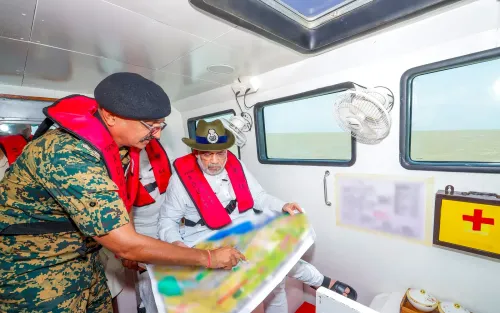
Shah reviewed border infrastructure and surveillance in the Sir Creek and Harami Nala areas of Kutch district .
Union Home Minister Amit Shah on Friday, 29 May announced a sweeping overhaul of India's border management strategy, declaring that the government would shift the Border Security Force (BSF) from conventional guarding to a broader 'territorial security' model under the new Smart Border Security Project. The announcement was made at Border Outpost G7 in Bhuj, Gujarat, during the BSF's 60th year, covering both the India-Pakistan and India-Bangladesh frontiers.
What the Smart Border Security Project Entails
Shah described the project as built on a 'quadrangular concept' — a multi-agency framework involving the public, civil administration, local police, the armed forces, and BSF personnel working in concert along international borders. The integrated network is designed to create a comprehensive security grid that goes well beyond the traditional single-force patrol model.
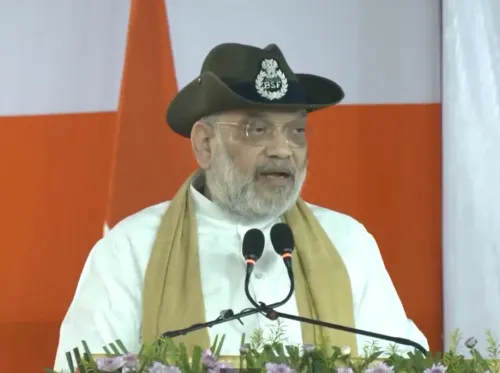
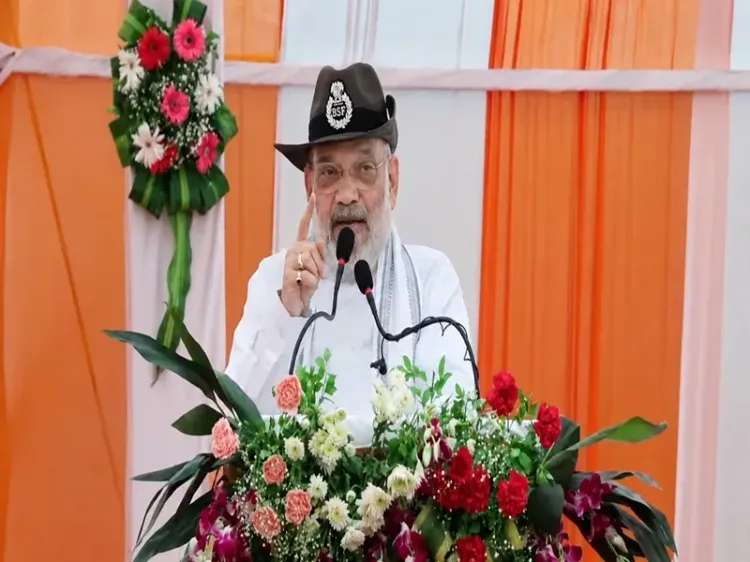
'In this 60th year, we have decided to completely transform the concept of BSF border security. We will launch a new concept of territorial security instead of only border security,' Shah said while addressing BSF jawans.
Technology at the Core
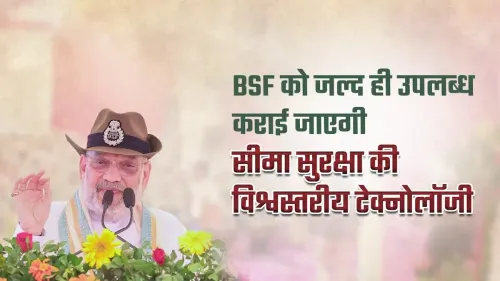
According to the Home Minister, the project is currently in its planning stage and will require investments worth 'thousands of crores of rupees'. The system will incorporate drones, radars, watch towers, and other advanced surveillance technologies alongside deployed personnel. 'It will include drones, radars, watch towers, the most modern technologies, and you jawans. Combining all these components, we will establish a strong security grid,' Shah said. He added that a substantial portion of the groundwork has already been completed, and that technological upgrades are expected to ease hardships for personnel posted in remote and harsh terrain.
Possible Expansion of BSF Jurisdiction
Shah also hinted at a potential expansion of the BSF's operational jurisdiction, though he stopped short of making a firm commitment. 'There is also a proposal under consideration to add some new areas under your jurisdiction. No final decision has yet been taken, so it would not be appropriate for me to say more,' he said. This comes amid ongoing debates over the Centre's earlier move to extend BSF jurisdiction in border states, which had drawn pushback from several state governments.
Infrastructure Review and Praise for Personnel
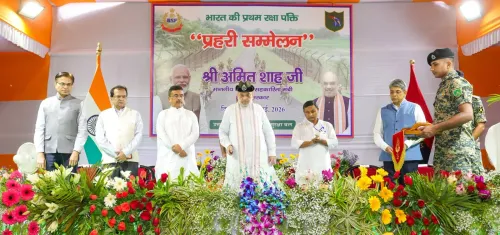
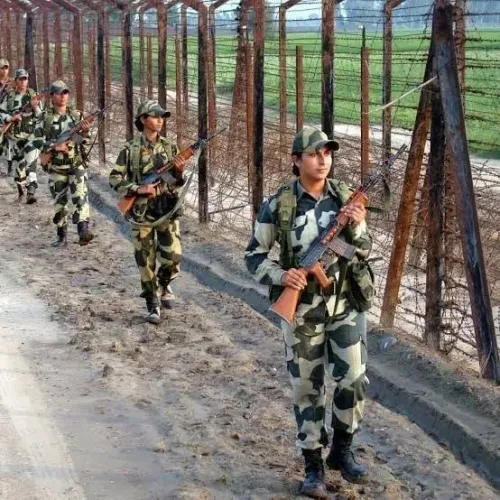
The Home Minister's visit to Kutch district included the inauguration of new border infrastructure facilities and a firsthand review of surveillance arrangements in the Sir Creek and Harami Nala areas. Shah praised BSF jawans for maintaining vigilance across some of India's most challenging terrain — deserts, marshlands, forests, and mountainous regions — and expressed confidence that the new project would both strengthen security and improve conditions for frontline personnel.
The Broader Strategic Signal
The announcement carries clear strategic weight at a time of heightened sensitivity along both the Pakistan and Bangladesh borders. By framing the shift as 'territorial security' rather than line-guarding, the Centre is signalling a doctrine change — one that embeds border management into a wider civil-military-community architecture. Notably, this is among the most significant public articulations of border security doctrine by a Home Minister in recent years, and the BSF's 60th anniversary provided a deliberate symbolic backdrop for the declaration.
Point of View
Not just a rebranding exercise — it formally embeds civilian administration and local communities into what has historically been a purely paramilitary function. The timing, at BSF's 60th anniversary and against a backdrop of cross-border tensions, is deliberate. But the real test lies in execution: previous border-tech investments, including the Comprehensive Integrated Border Management System (CIBMS), have faced delays and cost overruns. Shah's hint at expanded BSF jurisdiction is also worth watching — it reopens a politically charged federalism fault line that several border states have previously resisted. Whether this project delivers doctrine change or becomes another headline number will depend on whether the 'thousands of crores' come with a credible timeline and accountability framework.
NationPress
13 Oct 2026
Frequently Asked Questions
What is the Smart Border Security Project announced by Amit Shah?
The Smart Border Security Project is a planned overhaul of India's border management along the India-Pakistan and India-Bangladesh frontiers, announced by Home Minister Amit Shah on 29 May in Bhuj. It shifts the BSF from conventional line-guarding to a 'territorial security' model integrating drones, radars, watch towers, and a multi-agency community network.
What is the 'quadrangular concept' Shah referred to?
The quadrangular concept is a multi-agency framework that brings together the public, civil administration, local police, the armed forces, and BSF personnel into a single comprehensive security grid along India's international borders. It is designed to go beyond the traditional single-force patrol approach.
How much will the Smart Border Security Project cost?
Home Minister Shah said the project would involve investments worth 'thousands of crores of rupees', though the project is currently in its planning stage and a precise figure has not been officially disclosed.
Will the BSF's jurisdiction be expanded under this project?
Shah said a proposal to add new areas under BSF jurisdiction is under consideration, but stressed that no final decision has been taken and declined to elaborate further.
Which border areas were reviewed during Shah's visit to Bhuj?
Shah reviewed surveillance arrangements and border infrastructure in the Sir Creek and Harami Nala areas of Kutch district, Gujarat, and also inaugurated new border infrastructure facilities during the visit.