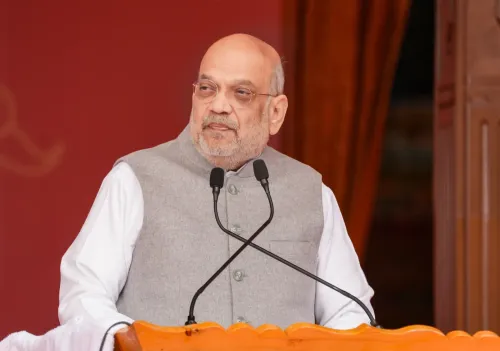
Amit Shah inaugurates Land Port Management System in Delhi
Synopsis
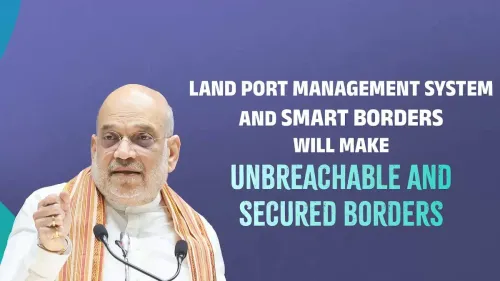
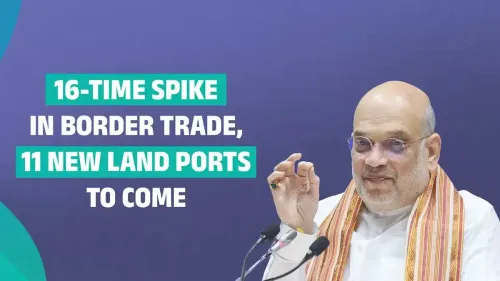
Union Home Minister Amit Shah on 9 June 2026 inaugurated the Land Port Management System in New Delhi, a digital platform integrating customs, immigration and security operations at India's land ports under the Land Ports Authority of India.
Key Takeaways
Union Home Minister Amit Shah addressed the inauguration of the Land Port Management System in New Delhi on 9 June 2026 .
The system is a digital platform designed to integrate customs clearance, immigration and security operations at India's land ports.
It is administered by the Land Ports Authority of India , constituted under the Land Ports Authority of India Act, 2012 .
India's first Integrated Check Post at Attari-Wagah became operational in 2012 ; ICPs have since been established at borders with Bangladesh , Nepal and Myanmar .
The initiative aligns with India's Act East Policy and mirrors digital reforms already implemented at airports and seaports.
Key beneficiaries include border traders , customs and immigration agencies, and security forces stationed at land border crossings.
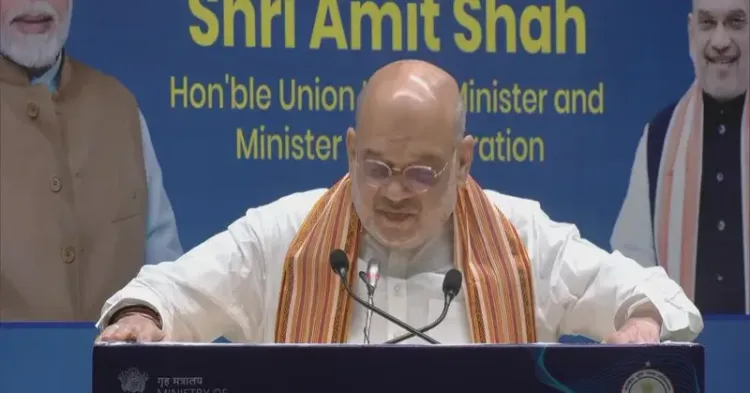
Union Home Minister Amit Shah on Tuesday, 9 June 2026 addressed the inauguration ceremony of the Land Port Management System in New Delhi, marking a significant step in India's digital overhaul of border infrastructure.
Context
The Land Port Management System is a digital platform designed to integrate operations across customs clearance, immigration and security at India's land ports. The launch brings land border crossings in line with digital systems already operational at airports and seaports, addressing a long-standing gap in border management modernisation.
The system falls under the purview of the Land Ports Authority of India (LPAI), the statutory body constituted under the Land Ports Authority of India Act, 2012, which is responsible for planning, development and management of land ports and Integrated Check Posts (ICPs) across the country.
Policy Backdrop
India's land border infrastructure has undergone systematic upgrades since the enactment of the LPAI Act. The first Integrated Check Post at Attari-Wagah became operational in 2012, followed by additional ICPs at borders with Bangladesh, Nepal and Myanmar.
The push for digitised land port operations is consistent with India's broader connectivity agenda, including the Act East Policy, which prioritises seamless movement of goods and people across eastern and northeastern borders. Successive governments have sought to cut dwell times and reduce manual bottlenecks at these crossings, which handle substantial volumes of bilateral trade.
The digitisation of land port management mirrors reforms already carried out at major air and sea entry points, where integrated platforms have reduced clearance times and improved coordination between agencies including customs, immigration and security forces.
Stakeholders and Impact
The primary beneficiaries of the Land Port Management System are border traders and logistics operators who rely on efficient clearance at land crossings. Faster and more transparent processing is expected to reduce costs and waiting times for goods moving across borders with Bangladesh, Nepal, Bhutan and Myanmar.
For customs and immigration agencies as well as security forces, an integrated digital platform enables better data sharing, stronger screening capabilities and reduced scope for procedural lapses. The system is positioned as a tool that simultaneously facilitates legitimate trade and strengthens national security at the border.
The Land Ports Authority of India, operating under the Ministry of Home Affairs, oversees the network of ICPs that the new system is intended to connect. Home Minister Shah's direct involvement in the inauguration underscores the MHA's stake in both the security and trade facilitation dimensions of the initiative.
What's Next
Attention will now turn to the rollout timeline for deploying the Land Port Management System across all operational ICPs, and whether subsequent data on trade volumes and clearance times demonstrates measurable improvement. The scale and pace of that rollout will determine the system's real-world impact on India's land border commerce and security architecture.
Point of View
Multi-year effort by the Ministry of Home Affairs to bring land border infrastructure up to the standard already set at airports and seaports. By personally presiding over the launch, Home Minister Shah signals that border digitisation is as much a security priority as a trade facilitation measure — a dual framing consistent with the MHA's mandate. The initiative also feeds into India's Act East connectivity agenda, giving it a strategic dimension beyond domestic administrative reform. The real test will be the speed and uniformity of rollout across all Integrated Check Posts, where operational gains will ultimately be measured.
NationPress
23 Oct 2026
Frequently Asked Questions
What is the Land Port Management System launched by Amit Shah?
The Land Port Management System is a digital platform launched on 9 June 2026 to integrate customs clearance, immigration and security operations at India's land ports and Integrated Check Posts, bringing them in line with systems already used at airports and seaports.
Which ministry oversees the Land Ports Authority of India?
The Land Ports Authority of India operates under the Ministry of Home Affairs. It was constituted under the Land Ports Authority of India Act, 2012, and is responsible for developing and managing land ports and Integrated Check Posts.
What are Integrated Check Posts and where are they located in India?
Integrated Check Posts are modern border facilities that house customs, immigration, security and other agencies under one roof. India has ICPs at major land border crossings including Attari-Wagah on the Pakistan border, and at borders with Bangladesh, Nepal and Myanmar.
How does the Land Port Management System benefit border traders?
The system is expected to reduce dwell times and manual bottlenecks at land border crossings, making customs and immigration clearance faster and more transparent for traders and logistics operators moving goods across India's land borders.
What is India's Act East Policy and how does it relate to land port digitisation?
The Act East Policy is India's strategic framework to strengthen connectivity and economic ties with Southeast Asia and neighbouring countries to the east. Digitising land port operations supports this policy by facilitating smoother cross-border trade with Bangladesh, Nepal, Bhutan and Myanmar.