Amit Shah launches Land Port Management System for smarter border trade
Synopsis
India's 15 land ports — long outpaced by digital systems at airports and seaports — are getting a unified digital overhaul. Home Minister Amit Shah's launch of the LPMS on 9 June brings real-time cargo tracking, single-window clearances, and customs integration to borders that handle trade with Pakistan, Nepal, Bhutan, Bangladesh, and Myanmar.
Key Takeaways
Home Minister Amit Shah launched the Land Port Management System (LPMS) on 9 June in New Delhi .
LPMS integrates operations across 15 land ports into a single digital platform, covering slot booking, payments, cargo tracking, and single-window clearances.
The system is linked to ICEGATE , ULIP , and the motor vehicle ecosystem for interoperable border management.
New stakeholder accommodation facilities were inaugurated at Dawki (Meghalaya) and Srimantapur (Tripura) land ports.
The LPAI , under the Ministry of Home Affairs, operates land ports on borders with Pakistan, Nepal, Bhutan, Bangladesh, and Myanmar .
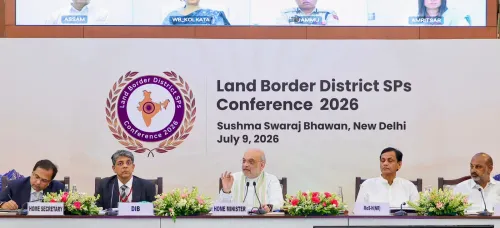
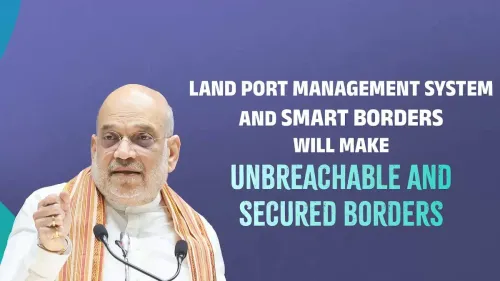
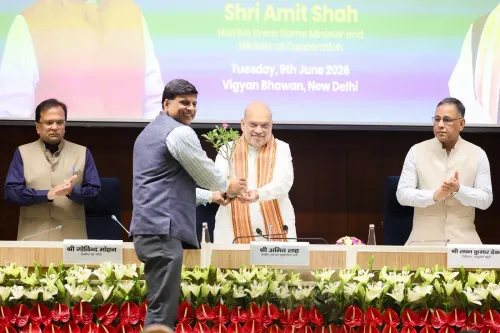
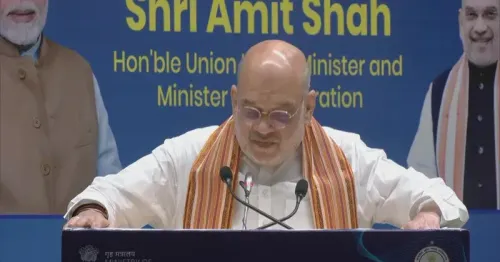
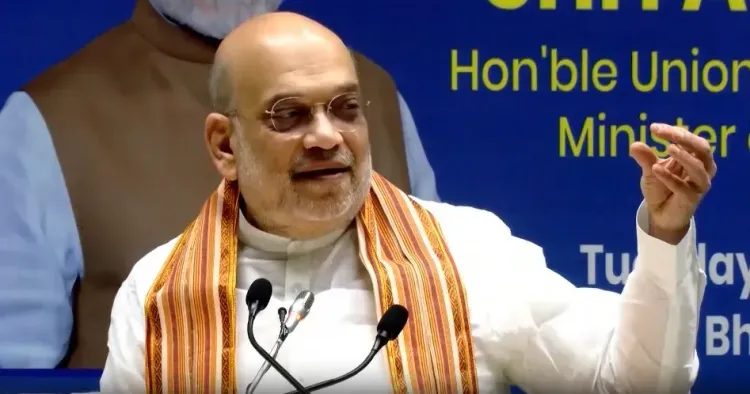
Union Home Minister Amit Shah on Tuesday, 9 June launched the Land Port Management System (LPMS) in New Delhi, a centralised digital platform designed to modernise India's land border operations and bring them on par with systems already running at airports and seaports. The launch underscores the Narendra Modi-led government's stated commitment to smart border management, trade facilitation, and national security.
What the LPMS Does
The LPMS is described in an official statement as a state-of-the-art digital platform that integrates operations across all land ports into a unified system. It enables secure, real-time exchange of logistics and regulatory information, and introduces end-to-end digital workflows covering slot booking, payments, cargo tracking, and single-window clearances for both cargo and passenger processing.
The system is fully integrated with key national platforms, including the Indian Customs Electronic Data Interchange Gateway (ICEGATE), the Unit Linked Insurance Plan (ULIP), and the motor vehicle ecosystem — enabling interoperable and transparent border management. According to the official statement, LPMS will function as a neutral, open platform facilitating seamless coordination among government agencies and private operators, thereby reducing delays and improving operational efficiency.
Shah on LPAI's Evolving Role
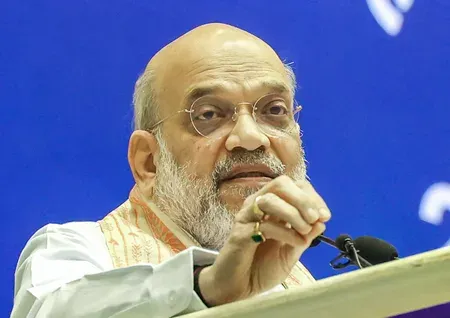
Addressing the event, Home Minister Shah noted that the creation of the Land Ports Authority of India (LPAI) originated from a formal committee recommendation. He said Prime Minister Modi's vision had transformed the LPAI into not merely a first layer of security but also an agency that makes cross-border trade easier and more secure.
'It has also acted as a bridge of connectivity between people on both sides. It has added a new dimension to the concept of how land ports can function. We have also linked how land ports can become ambassadors of our culture and heritage,' Shah said.
New Infrastructure at Dawki and Srimantapur
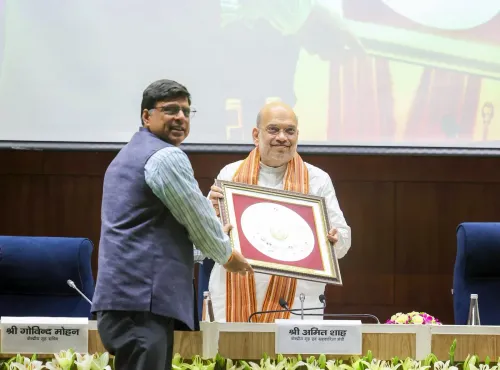
Alongside the LPMS launch, Shah also inaugurated newly developed stakeholder accommodation facilities at the Dawki land port in Meghalaya and the Srimantapur land port in Tripura. These facilities are intended to reinforce infrastructure support for border security personnel and other stakeholders operating at these crossings.
India's Land Port Network
The LPAI, a statutory body under the Ministry of Home Affairs' Department of Border Management, currently operates 15 land ports across India's international borders. These span the frontiers with Pakistan (Attari and Dera Baba Nanak, both in Punjab), Nepal (Rupaidiha in Uttar Pradesh, Raxaul and Jogbani in Bihar), Bhutan (Darranga in Assam), Bangladesh (Petrapole in West Bengal; Dawki in Meghalaya; Sutarkandi, Golakganj, and Mankachar in Assam; Agartala, Srimantapur, and Sabroom in Tripura), and Myanmar (Moreh in Manipur).
Officials framed the LPMS launch as a landmark step in India's broader push toward a technology-enabled smart border management system, aligned with the government's Viksit Bharat by 2047 vision. How quickly the platform achieves full operational integration across all 15 ports will be the next test of its ambition.
Point of View
Creating friction that disproportionately affects small traders and border communities. Integrating ICEGATE and ULIP is the right structural move, but the real measure will be adoption speed across 15 ports straddling five very different bilateral relationships. The Moreh port on the Myanmar border and the Pakistan-facing Attari crossing operate in politically sensitive environments where 'operational efficiency' means something different from a standard trade corridor. Whether LPMS can handle those asymmetries — or whether it defaults to a one-size-fits-all template — is the question officials have not yet answered publicly.
NationPress
23 Oct 2026
Frequently Asked Questions
What is the Land Port Management System (LPMS) launched by Amit Shah?
The LPMS is a centralised digital platform launched on 9 June by Home Minister Amit Shah to integrate operations across India's 15 land ports into a unified system. It enables real-time exchange of logistics and regulatory information and introduces end-to-end digital workflows for cargo and passenger processing, including slot booking, payments, tracking, and single-window clearances.
Which land ports are covered under the LPAI and LPMS?
The Land Ports Authority of India currently operates 15 land ports across borders with Pakistan (Attari, Dera Baba Nanak), Nepal (Rupaidiha, Raxaul, Jogbani), Bhutan (Darranga), Bangladesh (Petrapole, Dawki, Sutarkandi, Golakganj, Mankachar, Agartala, Srimantapur, Sabroom), and Myanmar (Moreh).
How does LPMS improve on the existing system at land ports?
LPMS brings land ports up to the digital standard already operational at airports and seaports by enabling secure real-time data exchange and integrating with national platforms such as ICEGATE and ULIP. It replaces fragmented manual processes with a single, interoperable system for all stakeholders, including government agencies and private operators.
What new infrastructure was inaugurated alongside the LPMS launch?
Home Minister Shah also inaugurated newly developed stakeholder accommodation facilities at the Dawki land port in Meghalaya and the Srimantapur land port in Tripura, aimed at improving conditions for border security personnel and other operational stakeholders.
What is the Land Ports Authority of India (LPAI)?
The LPAI is a statutory body under the Ministry of Home Affairs' Department of Border Management, responsible for developing and managing India's land ports to facilitate trade, connectivity, and regional cooperation. It currently oversees 15 operational land ports on India's international borders.