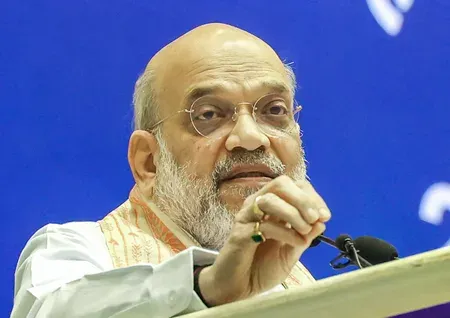
Amit Shah to launch Land Port Management System on 9 June
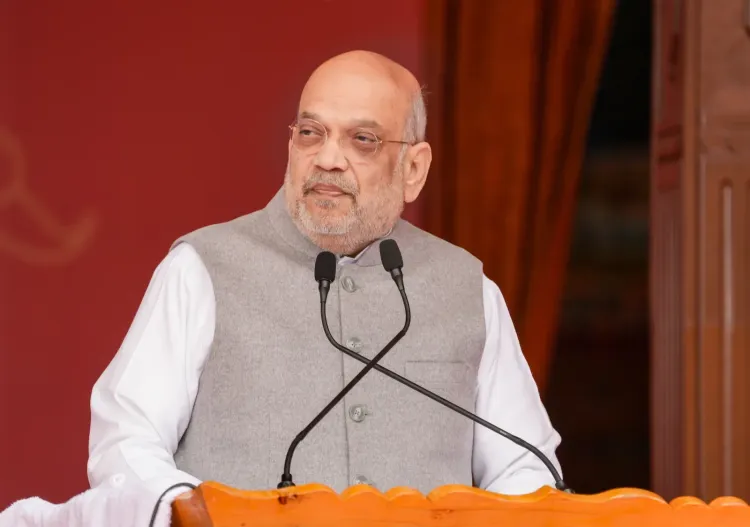
Synopsis
India's 15 land ports are about to get a digital overhaul. Home Minister Amit Shah's 9 June launch of the Land Port Management System will integrate cargo tracking, single-window clearances, and real-time data exchange — bringing land crossings up to speed with airports and seaports, and signalling a serious push on northeast trade connectivity.
Key Takeaways
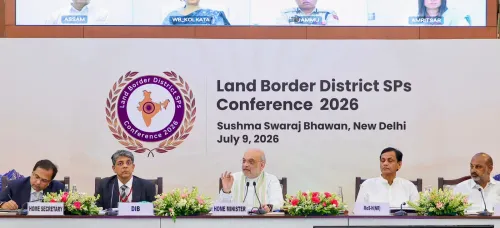
Home Minister Amit Shah will launch the Land Port Management System (LPMS) on 9 June .
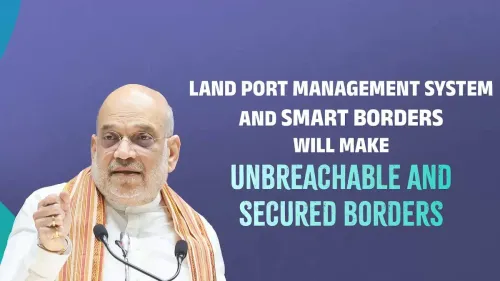
The LPMS digitises end-to-end workflows including slot booking, payments, tracking, and single-window clearances across land ports.
The platform integrates with ICEGATE , ULIP , and the motor vehicle ecosystem for interoperable border management.
New stakeholder accommodation facilities at Dawki (Meghalaya) and Srimantapur (Tripura) will also be inaugurated on the same day.
The Land Ports Authority of India (LPAI) operates 15 land ports on borders with Pakistan, Nepal, Bhutan, Bangladesh, and Myanmar.
Union Home Minister Amit Shah will launch the Land Port Management System (LPMS) on 9 June in a significant push to modernise India's border management infrastructure, officials confirmed on Sunday. The digital platform is designed to unify operations across all land ports and bring them on par with systems already operational at airports and seaports.
What the LPMS Does
The LPMS is a state-of-the-art digital platform that enables secure, real-time exchange of logistics and regulatory information across land ports. It introduces end-to-end digital workflows covering cargo and passenger processing, including slot booking, payments, shipment tracking, and single-window clearances.
The system is fully integrated with key national platforms — the Indian Customs Electronic Data Interchange Gateway (ICEGATE), the Unified Logistics Interface Platform (ULIP), and the motor vehicle ecosystem — enabling interoperable and transparent border management. As a neutral, open platform, it will facilitate seamless coordination between government agencies and private operators, reducing delays and improving operational efficiency.
New Infrastructure at Dawki and Srimantapur
On the same occasion, Shah will also inaugurate newly developed stakeholder accommodation facilities at the Dawki (Meghalaya) and Srimantapur (Tripura) land ports. These facilities are intended to reinforce infrastructure support for border security personnel and other stakeholders operating at these crossings.
India's 15 Operational Land Ports
The Land Ports Authority of India (LPAI), a statutory body under the Ministry of Home Affairs' Department of Border Management, currently operates 15 land ports across India's international borders. These include Attari and Dera Baba Nanak (Punjab) on the India–Pakistan border; Rupaidiha, Raxaul, and Jogbani on the India–Nepal border; Darranga (Assam) on the India–Bhutan border; Petrapole, Dawki, Sutarkandi, Golakganj, Mankachar, Agartala, Srimantapur, and Sabroom on the India–Bangladesh border; and Moreh (Manipur) on the India–Myanmar border.
Strategic Significance
The launch is framed within the Prime Minister Narendra Modi-led government's broader 'Viksit Bharat by 2047' vision, with officials describing the LPMS as a landmark step in India's transition to a technology-enabled smart border management system. The initiative is expected to strengthen trade facilitation, regional connectivity, and national security simultaneously — three goals that have historically been managed through siloed systems.
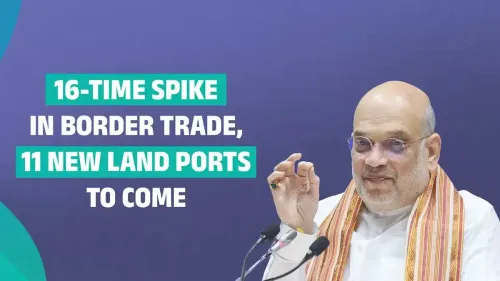
With cross-border trade through land ports growing steadily, the digitisation of these corridors could have significant implications for India's northeastern states and its trade relationships with Bangladesh, Nepal, and Bhutan. All eyes will be on the rollout timeline and how quickly the 15 LPAI ports achieve full integration with the new platform.
Point of View
Creating bottlenecks that hurt both trade and security. The real test is integration speed: connecting 15 ports across five international borders to a single platform is an execution challenge, not just a policy one. Notably, the northeastern ports on the Bangladesh and Myanmar borders carry the most strategic weight for India's Act East policy, yet have historically received the least infrastructure investment. If LPMS delivers on its single-window promise, it could meaningfully accelerate trade in a region where delays at land crossings have long been a friction point.
NationPress
19 Sept 2026
Frequently Asked Questions
What is the Land Port Management System (LPMS)?
The LPMS is a digital platform developed by the Land Ports Authority of India (LPAI) to unify operations across India's land ports. It enables real-time logistics and regulatory data exchange, end-to-end digital workflows for cargo and passenger processing, and single-window clearances, bringing land ports on par with digital systems at airports and seaports.
When and who will launch the LPMS?
Union Home Minister Amit Shah will officially launch the LPMS on 9 June. The event will also include the inauguration of new stakeholder accommodation facilities at the Dawki and Srimantapur land ports.
How many land ports does India currently operate?
The Land Ports Authority of India (LPAI) operates 15 land ports across India's international borders with Pakistan, Nepal, Bhutan, Bangladesh, and Myanmar.
Which national platforms is the LPMS integrated with?
The LPMS is integrated with the Indian Customs Electronic Data Interchange Gateway (ICEGATE), the Unified Logistics Interface Platform (ULIP), and the motor vehicle ecosystem, enabling interoperable and transparent border management.
Why does the LPMS matter for trade and security?
By digitising cargo tracking, payments, and clearances at land ports, the LPMS is expected to reduce delays, improve transparency, and strengthen national security. It is particularly significant for India's northeastern states, where land-port trade with Bangladesh, Nepal, and Bhutan is a key economic driver.