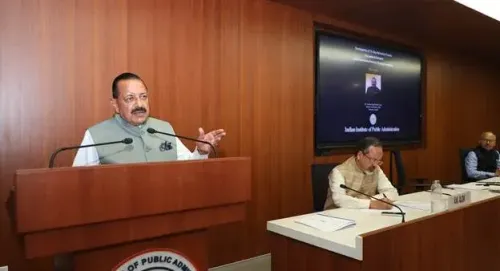
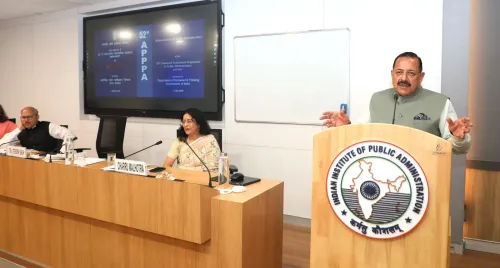
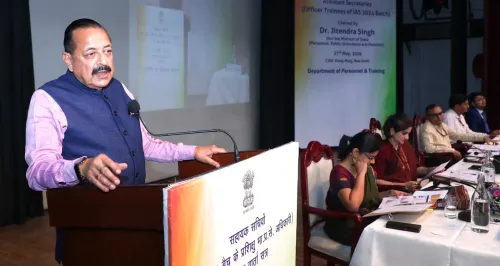
Dr. Jitendra Singh addresses 52nd APPPA at IIPA New Delhi
Synopsis
Union Minister Dr. Jitendra Singh addressed the 52nd APPPA at IIPA New Delhi on 1 July 2026, calling siloed work culture 'obsolete' and urging greater synergy among civil servants and armed forces officers in India's evolving governance landscape.
Key Takeaways
Jitendra Singh addressed the 52nd APPPA at IIPA, New Delhi on 1 July 2026 .
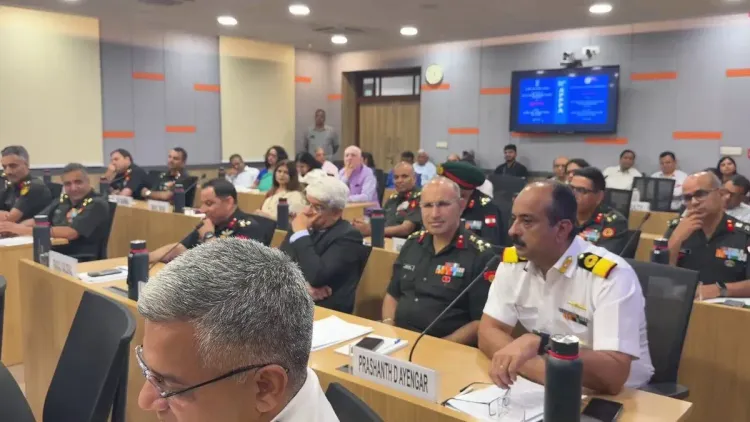
The audience comprised officers from the Armed Forces, Civil Services, and allied sectors .
The minister called the culture of working in silos 'obsolete' and stressed urgent need for cross-sectoral synergy.
IIPA , established in 1954 , is India's apex body for public administration training; APPPA is its flagship mid-career programme for senior civil and defence officers.
The remarks align with Mission Karmayogi (launched 2020 ), which introduced competency-based frameworks to break departmental isolation across civil services.
Outcomes from the 52nd APPPA may inform updated Mission Karmayogi modules and future civil-military coordination policy.
Union Science and Technology Minister Dr. Jitendra Singh addressed the 52nd Advanced Professional Programme in Public Administration (APPPA) organised by the Indian Institute of Public Administration (IIPA) in New Delhi on 1 July 2026, calling for an urgent end to siloed work cultures across government and the armed forces.
Context
The minister described the session as 'a mutually rewarding interaction' with an audience drawn from the Armed Forces, Civil Services, and allied sectors. He underscored that in today's dynamic governance landscape, the traditional culture of working in silos is 'obsolete' and must give way to greater cross-sectoral synergy.
The APPPA is a long-standing mid-career development course that annually brings together senior officers from the three services alongside IAS, IPS, and other All India Services officers. The 52nd edition continues that tradition of fostering joint deliberation on national priorities.
Policy Backdrop
IIPA, established in 1954, is India's apex institution for training and research in public administration. Its APPPA programme has for decades served as a rare forum where civil and military officers engage on shared governance and national security challenges.
The minister's remarks align closely with the thrust of Mission Karmayogi, launched in 2020, which introduced competency-based training frameworks explicitly aimed at breaking departmental isolation and building integrated decision-making capacity across the civil services. Dr. Jitendra Singh's call for synergy echoes that reform architecture at a moment when civil-military coordination on development and security issues is increasingly in focus.
Successive administrations have encouraged joint civil-military training modules, recognising that complex challenges — from disaster response to frontier infrastructure — require seamless coordination across departments that have historically operated in separate silos.
Stakeholders and Impact
The immediate audience — senior officers from the Army, Navy, Air Force and various civil services — represents a cohort that will carry the message of inter-agency synergy into operational decision-making across ministries and commands. For civil servants, the interaction reinforces the competency-building goals embedded in Mission Karmayogi. For defence officers, it signals continued political emphasis on civil-military integration beyond formal institutional channels.
Broader administrative reform efforts have long identified departmental isolation as a drag on policy implementation. A minister holding simultaneous charge of Science and Technology, Earth Sciences, the Prime Minister's Office, and Personnel portfolios is particularly well-placed to advocate cross-silo collaboration, given that his own mandate spans multiple ministries.
What's Next
Attention will now turn to whether the 52nd APPPA's deliberations feed into updated Mission Karmayogi modules or any Cabinet-level notes on formalising civil-military coordination cells. The programme's outcomes typically inform IIPA's annual research agenda and can shape future training curricula for both services. As India's governance reform agenda deepens, forums like APPPA are likely to gain greater institutional weight in bridging the civil-military divide.
Point of View
Not merely an organisational quirk. Coming from a minister who concurrently holds Science, Earth Sciences, PMO, and Personnel portfolios, the call for synergy carries institutional weight — he embodies cross-ministry integration in his own office. The remarks dovetail with Mission Karmayogi's competency reform arc, suggesting the administration wants training forums like APPPA to become transmission belts for that agenda into the armed forces as well. If civil-military coordination moves from training rhetoric to formal policy architecture, APPPA's growing role as a joint deliberation forum will be seen as an early marker of that shift.
NationPress
30 Sept 2026
Frequently Asked Questions
What is the APPPA programme organised by IIPA?
The Advanced Professional Programme in Public Administration (APPPA) is a flagship mid-career training course organised annually by the Indian Institute of Public Administration (IIPA). It brings together senior officers from the Army, Navy, Air Force, IAS, IPS, and allied civil services for joint deliberation on governance and national priorities. The 52nd edition was held in New Delhi in 2026.
What did Dr. Jitendra Singh say at the 52nd APPPA?
Dr. Jitendra Singh described the session as 'a mutually rewarding interaction' and called the culture of working in silos 'obsolete,' urging civil servants and armed forces officers to embrace greater synergy in today's dynamic governance landscape.
What is Mission Karmayogi and how does it relate to this event?
Mission Karmayogi, launched in 2020, is the Government of India's national programme for civil services capacity building. It introduced competency-based training frameworks aimed at breaking departmental silos and building integrated decision-making — goals that align directly with Dr. Jitendra Singh's remarks at APPPA.
What is IIPA and when was it established?
The Indian Institute of Public Administration (IIPA) was established in 1954 and is India's apex institution for training and research in public administration. It organises the APPPA programme, among other capacity-building initiatives for government officers.
Why is civil-military synergy important in Indian governance?
Complex national challenges — including disaster response, frontier infrastructure, and internal security — require seamless coordination between civilian ministries and defence establishments. Joint training forums like APPPA are designed to build mutual understanding and reduce institutional barriers between civil servants and armed forces officers.