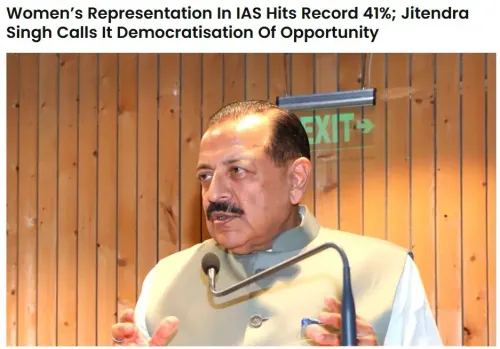
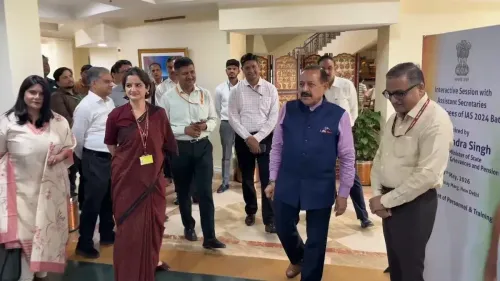
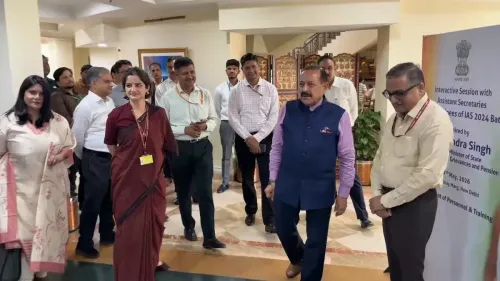
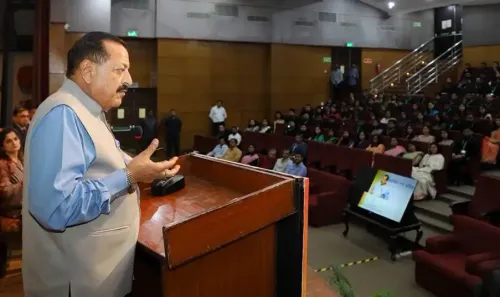
Dr. Jitendra Singh Addresses IAS 2024 Batch, Cites Record 41% Women
Synopsis
Union Minister Dr. Jitendra Singh addressed IAS 2024 batch trainees on 27 May 2026, highlighting that 75 of 184 officers — a record 41% — are women, praising PM Modi's 2016 Assistant Secretary Programme, and urging the batch to embrace their historic responsibility toward India@2047.
Key Takeaways
184 IAS officers form the 2024 batch, with 75 women — nearly 41% , the highest-ever share in any IAS batch.
The Assistant Secretary Programme , introduced in 2016 on PM Narendra Modi 's advice, gives probationers central government exposure before state cadre posting.
States with historically limited civil services representation are now producing significantly more successful UPSC candidates.
Traditionally dominant regions are witnessing a shift in career preferences toward emerging sectors and global opportunities.
The 2024 batch will hold peak leadership positions around 2047 , when India marks 100 years of Independence.
Singh described the changing civil services profile as reflecting a 'more aspirational and dynamic India.'
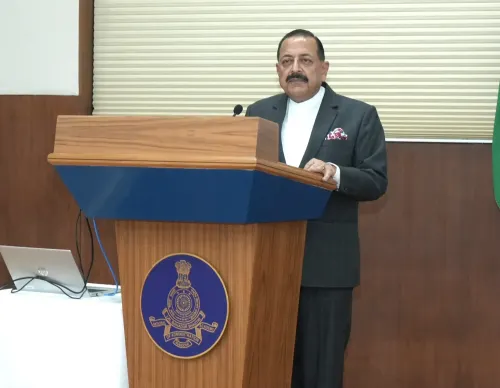
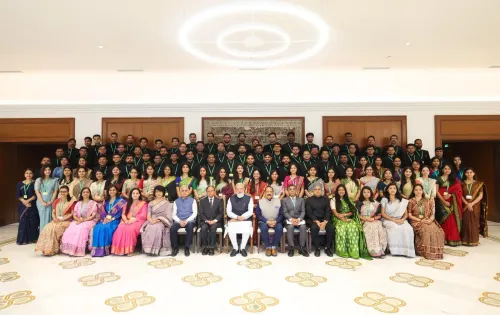
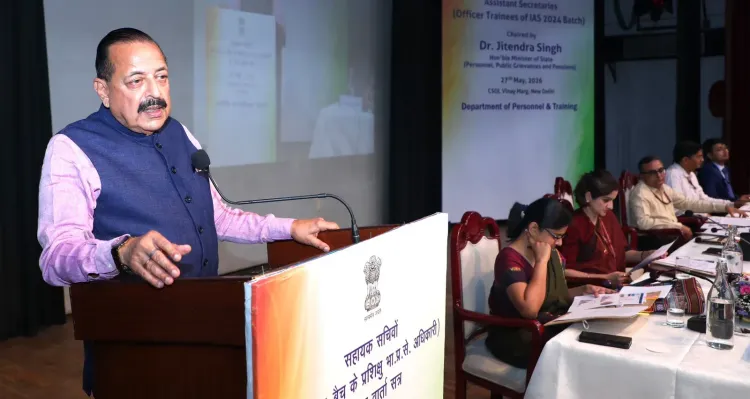
Union Minister of State (Independent Charge) for Science and Technology Dr. Jitendra Singh on Wednesday, 27 May 2026 addressed the IAS 2024 Batch officer trainees, highlighting a record share of women officers, a shifting regional profile in civil services recruitment, and the historic governance responsibility the new batch will carry toward India@2047.
Context
Speaking to the 184 new IAS officer trainees, Dr. Singh noted that the batch marks a landmark in gender representation: 75 of the 184 officers are women, amounting to nearly 41% — described as the highest-ever share in any IAS batch. He framed this as part of a wider democratisation of opportunity, observing that 'growing presence of women across competitive examinations, higher education and professional spaces demonstrates how opportunity and access are becoming increasingly democratised.'
The minister also pointed to a geographic diversification in successful candidates, noting that states with historically limited representation in the civil services are now producing large numbers of officers, while traditionally dominant regions are seeing career preferences shift toward emerging sectors and global opportunities.
Policy Backdrop
Dr. Singh highlighted the Assistant Secretary Programme, introduced in 2016 on the advice of Prime Minister Narendra Modi, which gives fresh IAS probationers a short posting in a central government ministry before they proceed to their respective state cadres. He credited the programme with producing 'a generation of IAS officers that is more confident, policy-oriented and institutionally connected' when they assume state-level assignments.
The programme represents a structural shift in how the Indian administrative apparatus onboards its officers — moving away from a direct state-cadre deployment model to one that builds early familiarity with central policymaking. This approach aligns with the government's broader push for a more integrated, technology-oriented bureaucracy capable of executing large-scale national programmes.
Stakeholders and Impact
For women aspirants and civil services coaching ecosystems across smaller states, the 41% figure in Batch 2024 sends a strong signal about the changing face of India's most prestigious administrative service. State governments receiving these officers will benefit from cadres with prior central exposure, potentially improving coordination on centrally sponsored schemes.
The regional diversification trend also has implications for governance quality in states that were previously under-represented in the IAS, as home-state familiarity combined with central training could improve on-ground policy delivery in those regions.
What's Next
Dr. Singh reminded the trainees that they will be occupying peak leadership roles in 2047, when India celebrates 100 years of Independence — a milestone the current government has branded as Viksit Bharat or Developed India. He called this 'both a privilege as well as a responsibility,' noting that 'a very critical course of India's governance journey would largely be shaped by them.'
As subsequent UPSC cycles unfold, the trajectory of women's participation and non-traditional state representation will be closely watched as indicators of whether the structural democratisation of civil services access is deepening. Any revisions to the Assistant Secretary Programme's duration or structure in future training cycles will also be a key marker of administrative reform intent.
Point of View
Particularly the 2016 Assistant Secretary Programme. The emphasis on 41% women and rising non-traditional state representation allows the government to claim democratisation of opportunity as a policy achievement rather than a demographic accident. Anchoring the batch's career arc to 2047 and Viksit Bharat is a deliberate attempt to build institutional ownership of the long-term national project within the bureaucracy itself. Taken together, the speech positions the current administration as the architect of a reformed, inclusive, and forward-looking civil services.
NationPress
19 Sept 2026
Frequently Asked Questions
How many women are in the IAS 2024 batch?
The IAS 2024 batch includes 75 women out of 184 officers , accounting for nearly 41% — the highest-ever proportion in any IAS batch.
What is the Assistant Secretary Programme for IAS officers?
The Assistant Secretary Programme is a scheme introduced in 2016 on the advice of Prime Minister Narendra Modi that gives newly appointed IAS probationers a short posting in a central government ministry before they are assigned to their respective state cadres, building early policy and institutional familiarity.
Who addressed the IAS 2024 batch officer trainees?
Union Minister of State (Independent Charge) for Science and Technology Dr. Jitendra Singh addressed the IAS 2024 batch officer trainees on 27 May 2026 .
Why is the IAS 2024 batch significant for India@2047?
The officers of the IAS 2024 batch are expected to be in peak leadership roles around 2047 , when India celebrates 100 years of Independence — a milestone the government has linked to its Viksit Bharat development vision, making this batch central to shaping governance during that period.
Is regional diversity improving in the Indian civil services?
Yes. States that earlier had limited representation in the civil services are now producing larger numbers of successful UPSC candidates, while some traditionally dominant states are seeing candidates move toward private sector and global career options, according to Dr. Jitendra Singh's address.