Dr. Jitendra Singh Addresses IAS Officers at LBSNAA Mussoorie
Synopsis
Union Minister Dr. Jitendra Singh addressed mid-career IAS officers at LBSNAA Mussoorie, calling for interactive training models, curriculum innovation, and citing DBT savings of over ₹3.4 lakh crore as proof of technology-driven governance under PM Modi.
Key Takeaways
Jitendra Singh addressed IAS officers at the Mid-Career Training Program at LBSNAA, Mussoorie .
He called for an 'interactive training ecosystem' to replace one-sided lecture models in civil-service education.
The minister highlighted India's regional, linguistic and cultural diversity as a core administrative challenge requiring contextual governance approaches.
Direct Benefit Transfer (DBT) was cited as generating savings exceeding ₹3.4 lakh crore by preventing leakages in welfare delivery.
The last decade of governance was described as driven by bold decision-making, technology, transparency and citizen sensitivity, credited to PM Narendra Modi .
Curriculum innovation and institutional collaboration were identified as key pillars for India's next phase of governance.
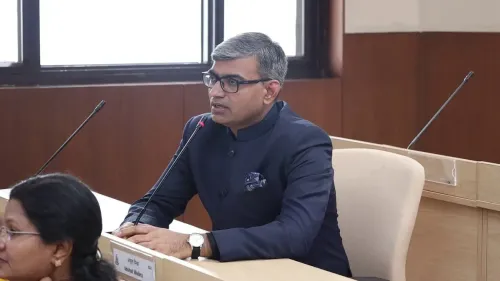
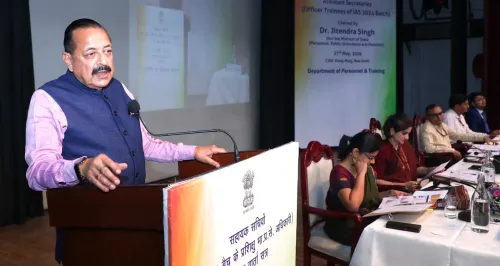
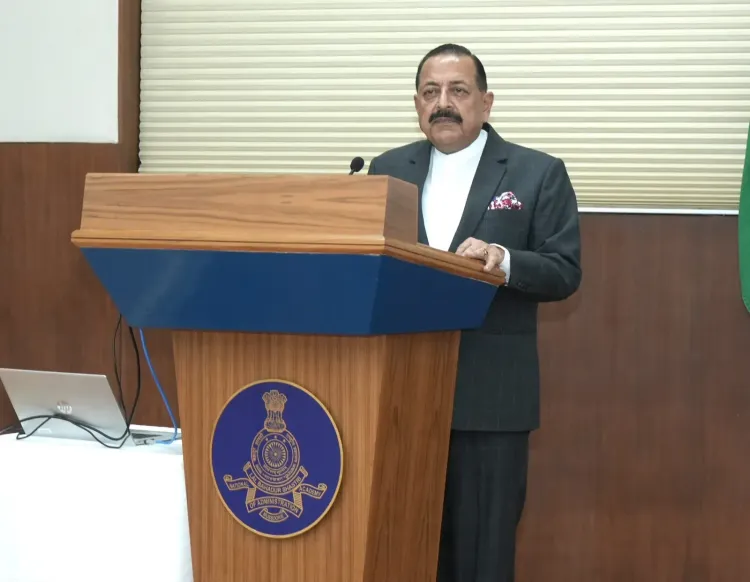
Union Minister of State (Independent Charge) for Science and Technology Dr. Jitendra Singh addressed and interacted with Indian Administrative Service (IAS) officers attending the Mid-Career Training Program at the Lal Bahadur Shastri National Academy of Administration (LBSNAA) in Mussoorie, underlining that India's next phase of governance demands continuous learning, institutional collaboration, and technology blended with human sensitivity.
Context
Speaking to a gathering of serving IAS officers at LBSNAA — the country's premier civil-services training institution nestled in the Uttarakhand hill town of Mussoorie — Dr. Singh laid out a multi-pronged vision for modern public administration. He stressed that 'India's diversity reflects even in its governance systems, where regional realities, linguistic and cultural contexts, political environments and developmental aspirations vary widely across the country.' The minister called the current lecture-heavy model inadequate, advocating instead for 'a more interactive training ecosystem, rather than one-sided discourse.'
The Mid-Career Training Program at LBSNAA is a structured refresher course designed for IAS officers at various seniority levels, run under the Department of Personnel and Training (DoPT), a portfolio that also falls under Dr. Singh's ministerial charge as Minister of State in the Prime Minister's Office.
Policy Backdrop
Dr. Singh credited the last decade of governance with a decisive shift toward bold, technology-driven decision-making, attributing the direction to Prime Minister Narendra Modi. He cited the Direct Benefit Transfer (DBT) scheme as a flagship example, stating it 'prevented leakages to the advantage of the genuinely deserving citizens' and generated 'savings exceeding ₹3.4 lakh crore.'
DBT was formally launched in 2013 and was scaled nationally after 2014 through Aadhaar seeding, eventually covering more than 300 central schemes. The mechanism routes subsidies and welfare payments directly into beneficiaries' bank accounts, eliminating intermediary leakage. Dr. Singh's invocation of DBT before a mid-career officer cohort signals an expectation that field administrators internalise and champion such reforms at the implementation level.
His call for 'curriculum innovation' at LBSNAA aligns with broader DoPT efforts, ongoing since the early 2000s, to modernise civil-service capacity-building beyond traditional classroom instruction.
Stakeholders and Impact
The immediate audience — mid-career IAS officers — are the administrative backbone who translate central policy into ground-level outcomes across every state and union territory. Dr. Singh acknowledged this complexity directly, noting that 'every State and every region presents distinct administrative realities, aspirations and developmental priorities,' making a one-size-fits-all training model insufficient.
Welfare beneficiaries of schemes like DBT stand to gain most from officers who understand both the technology architecture and the human sensitivity required to implement such programmes equitably. The minister's framing positions continuous learning not as a bureaucratic formality but as a governance imperative tied to citizen welfare.
What's Next
Attention will now turn to whether DoPT issues updated circulars revising LBSNAA's mid-career curriculum to incorporate the interactive, technology-blended model the minister advocated. Parliamentary standing committees and audit bodies tracking DBT outcomes will also be watched for updated savings and coverage figures. Dr. Singh's address adds political weight to calls from within the civil-services establishment for a more dynamic, regionally sensitive training architecture — one that could shape how future cohorts of officers approach India's increasingly complex governance landscape.
Point of View
He frames technology-led reform not as an option but as an established benchmark against which future administrators will be measured. The push for interactive, regionally sensitive training signals an acknowledgement within the government that centralised policy design alone is insufficient without adaptive field execution. Coming from a minister who also holds the PMO portfolio, the message carries institutional weight that is likely to filter into DoPT's curriculum planning.
NationPress
9 Oct 2026
Frequently Asked Questions
What did Dr. Jitendra Singh say at LBSNAA Mussoorie?
Dr. Jitendra Singh addressed IAS officers at the Mid-Career Training Program at LBSNAA Mussoorie, stressing the need for interactive training, curriculum innovation, and technology-blended governance, while citing DBT savings of over ₹3.4 lakh crore.
What is the LBSNAA Mid-Career Training Program?
The Mid-Career Training Program at LBSNAA (Lal Bahadur Shastri National Academy of Administration) in Mussoorie is a structured refresher course for serving IAS officers at various seniority levels, conducted under the Department of Personnel and Training.
How much has Direct Benefit Transfer saved the government?
According to Dr. Jitendra Singh's address at LBSNAA, the Direct Benefit Transfer scheme has generated savings exceeding ₹3.4 lakh crore by preventing leakages in welfare delivery to citizens.
Why is Dr. Jitendra Singh involved in IAS training?
Dr. Jitendra Singh holds the charge of Minister of State in the Prime Minister's Office and for Personnel, Public Grievances and Pensions, which oversees the Department of Personnel and Training — the body responsible for LBSNAA and IAS training programmes.
What governance reforms did Dr. Jitendra Singh highlight at Mussoorie?
Dr. Singh highlighted Direct Benefit Transfer, transparency, technology adoption, and citizen-sensitive administration as the defining governance reforms of the last decade, crediting PM Narendra Modi's leadership for encouraging bold decision-making.