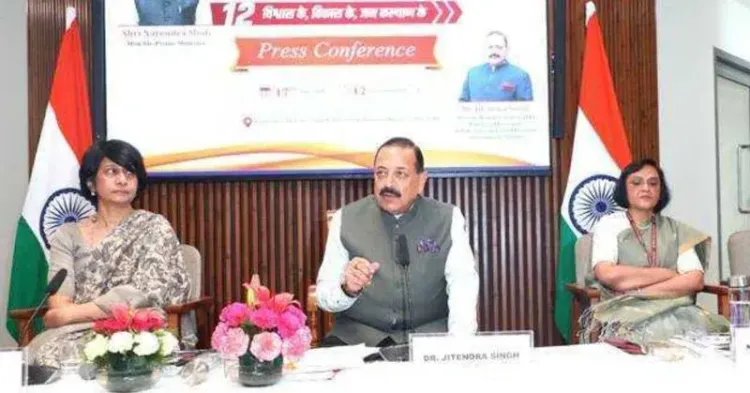
Dr. Jitendra Singh marks 12 years of DoPT governance reforms
Synopsis
Union Minister Dr. Jitendra Singh on June 18, 2026 marked 12 years of DoPT-led civil service reforms, spotlighting the transition from rule-based to role-based governance anchored by Mission Karmayogi and the iGOT platform.
Key Takeaways
Jitendra Singh publicly marked 12 years of DoPT reforms on June 18, 2026 under the hashtag #12YearsOfSeva .
The central reform theme is moving civil servants 'from rule to role' — prioritising outcomes over procedural compliance.
Mission Karmayogi , launched in September 2020 , is the flagship programme driving competency-based capacity building for civil servants.
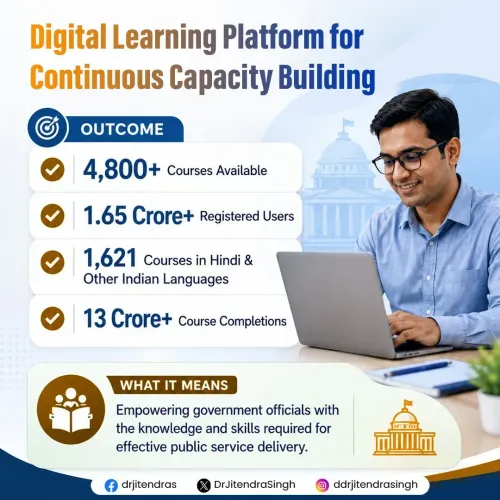
The iGOT Karmayogi digital platform delivers role-based training to government employees across central ministries at scale.
Lateral entry of Joint Secretaries , piloted from 2019 , has opened select senior positions to domain experts outside the traditional cadre.
The next phase of reform is expected to focus on updated performance appraisal frameworks and expanded iGOT Karmayogi modules.
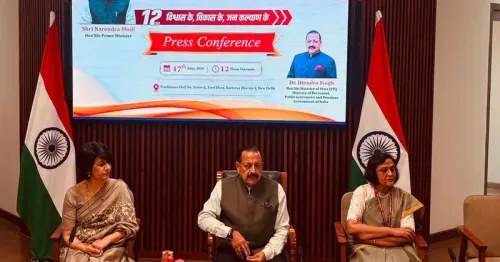
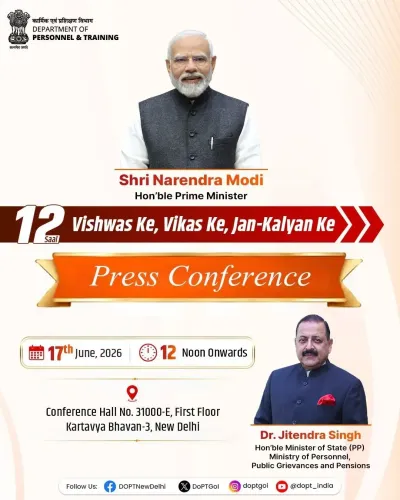
Union Minister of State (Independent Charge) for Science and Technology and Minister of State in the Prime Minister's Office, Dr. Jitendra Singh, on Thursday, June 18, 2026, marked 12 years of administrative reforms under the Department of Personnel and Training (DoPT), highlighting a fundamental shift in how civil servants are expected to function — moving from a rule-bound approach to a role-oriented one.
Context
The post, tagged #12YearsOfSeva and #DoPTReforms, references coverage noting that DoPT's reform agenda has taken civil servants 'from rule to role' — a phrase that encapsulates a decade-long effort to reorient the bureaucracy toward outcomes and accountability rather than procedural compliance alone. Dr. Jitendra Singh oversees DoPT in his capacity as Minister of State for Personnel, Public Grievances and Pensions, making him the political head directly responsible for civil service governance.
The hashtag #12YearsOfSeva places this milestone in the context of the National Democratic Alliance government's tenure since May 2014, framing the DoPT reforms as part of a broader governance transformation under Prime Minister Narendra Modi.
Policy Backdrop
Mission Karmayogi, launched in September 2020, is the flagship programme underpinning this shift. It established the National Programme for Civil Services Capacity Building, anchored on the principle of moving away from rules-based to role-based functioning — precisely the transition Dr. Singh is highlighting. The programme introduced the iGOT Karmayogi digital platform to deliver competency-based training to government employees at scale.
Alongside Mission Karmayogi, DoPT piloted lateral entry of Joint Secretaries from 2019 onwards, opening select positions in central ministries to domain experts from outside the traditional civil services cadre. Together, these initiatives represent a structural attempt to reduce procedural rigidity and improve service delivery across the central government.
Since 2014, the broader administrative reform agenda has also included technology-enabled processes, performance-linked training frameworks, and a reduced compliance burden — all of which fall within DoPT's mandate.
Stakeholders and Impact
The reforms directly affect IAS officers, Indian Police Service officers, and other All India Service cadres, as well as the wider central government workforce. The shift from rule-following to role-ownership demands that civil servants take greater accountability for outcomes, which has implications for how annual performance appraisals are conducted and how cadre allocations are decided.
For citizens, the downstream effect is intended to be faster, more responsive governance — particularly in scheme delivery and grievance redressal. DoPT functions as the nodal body for recruitment, training, and cadre management, meaning its reform agenda has a cascading effect across all central ministries.
What's Next
Attention will now turn to the next phase of iGOT Karmayogi platform modules and any fresh DoPT notifications on performance appraisal frameworks or revised cadre allocation norms. With the 12-year mark being publicly flagged by the minister, it signals continued political emphasis on civil service reform as a core governance priority. The question for observers is whether the next cycle of reforms will deepen role-based accountability or extend lateral entry to a wider set of positions.
Point of View
Tying DoPT's technocratic reform agenda to the broader NDA governance narrative ahead of any future electoral cycle. By foregrounding the 'rule to role' shift, Dr. Singh is positioning Mission Karmayogi not merely as a training programme but as evidence of a structural transformation in how the Indian state operates. The timing also subtly raises the stakes for the next reform phase — if the first twelve years were about building the framework, the implicit promise is that the next phase must demonstrate measurable outcomes. For civil service watchers, the key test remains whether role-based accountability translates into changed behaviour on the ground, or stays a platform-level aspiration.
NationPress
18 Sept 2026
Frequently Asked Questions
What are the DoPT reforms Dr. Jitendra Singh is referring to?
The DoPT reforms refer to a set of civil service changes since 2014 aimed at shifting government employees from rule-based compliance to role-based accountability, including Mission Karmayogi, the iGOT training platform, and lateral entry of domain experts as Joint Secretaries.
What is Mission Karmayogi?
Mission Karmayogi is the National Programme for Civil Services Capacity Building, launched in September 2020, designed to build competency-based skills among civil servants through the iGOT Karmayogi digital platform.
What does 'from rule to role' mean in the context of Indian civil services?
'From rule to role' means moving civil servants away from simply following procedural rules toward taking ownership of their specific functional roles and being accountable for outcomes and service delivery.
What is lateral entry in the IAS and who introduced it?
Lateral entry allows domain experts from outside the traditional civil services cadre to be appointed as Joint Secretaries in central ministries. It was piloted by the central government from 2019 under DoPT's oversight.
What is the iGOT Karmayogi platform?
iGOT Karmayogi is a government digital platform that delivers competency-based and role-specific training modules to central government employees, forming the technological backbone of Mission Karmayogi.