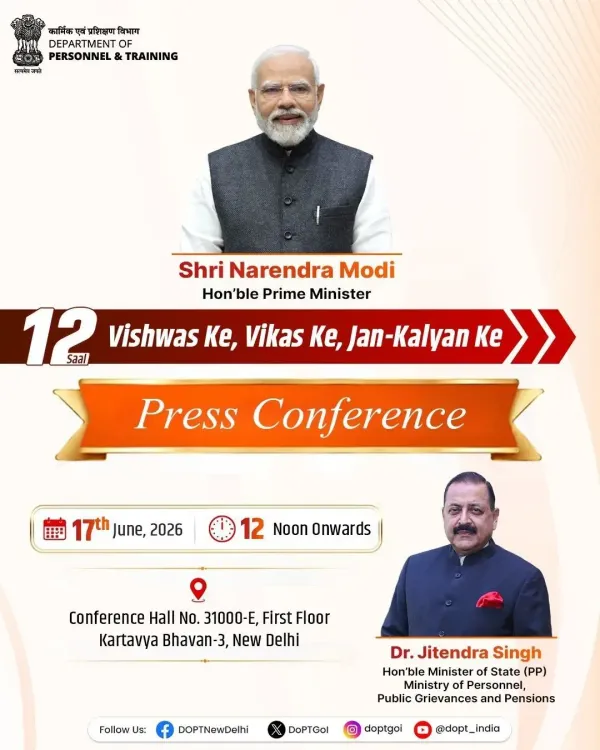
Dr. Jitendra Singh Marks 12 Years of Governance Reforms
Synopsis
Union Minister Dr. Jitendra Singh marked twelve years of NDA governance on 17 June 2026, spotlighting the Ministry of Personnel, Public Grievances and Pensions' record on administrative reform, grievance redressal via CPGRAMS, and pension digitisation under the 'minimum government, maximum governance' agenda.
Key Takeaways
Jitendra Singh posted on 17 June 2026 to mark 12 years of NDA governance, under the hashtags #12YearsOfSeva and #12YearsOfGoodGovernance .
The post was made in his capacity as minister holding charge of the Ministry of Personnel, Public Grievances and Pensions .
The CPGRAMS portal , launched in 2014 , is the government's centralised grievance redressal platform covering all central ministries. e-Office and Digital India initiatives from 2014-15 have driven digitisation of service records and personnel management processes.
Key beneficiaries include central government employees , pensioners on the National Pension System , and citizens filing public grievances.
Further NPS reforms and administrative updates are anticipated in upcoming budget sessions.
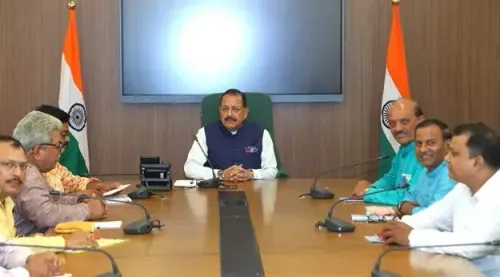
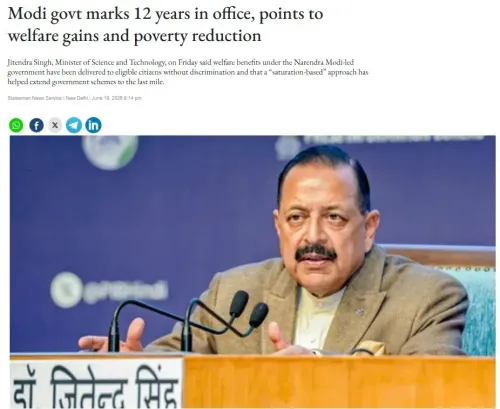
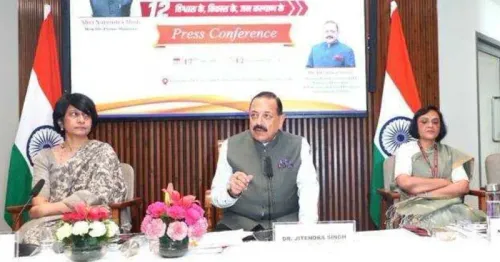
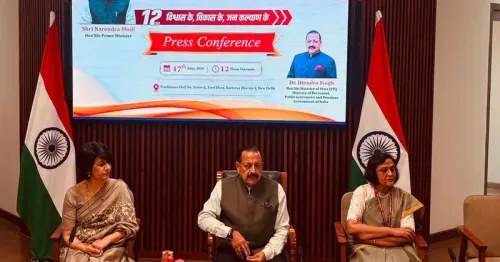
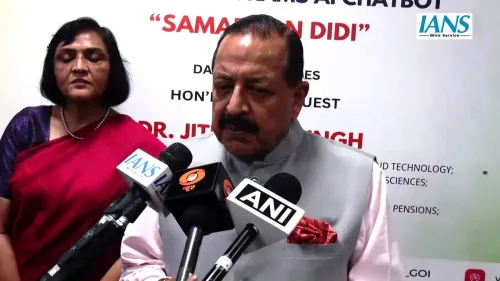
Union Minister of State (Independent Charge) for Science and Technology and Earth Sciences, and Minister of State in the Ministry of Personnel, Public Grievances and Pensions, Dr. Jitendra Singh on Wednesday, 17 June 2026 marked twelve years of the NDA government in office, highlighting the tenure's record on governance and administrative reform under his ministry's purview.
Context
The post, tagged #12YearsOfSeva and #12YearsOfGoodGovernance, was shared by Dr. Singh in his capacity as minister holding charge of the Ministry of Personnel, Public Grievances and Pensions — the nodal ministry for civil services administration, grievance redressal, and pension management across the central government. The milestone refers to the NDA government's return to power in May 2014, completing a full twelve years by mid-2026.
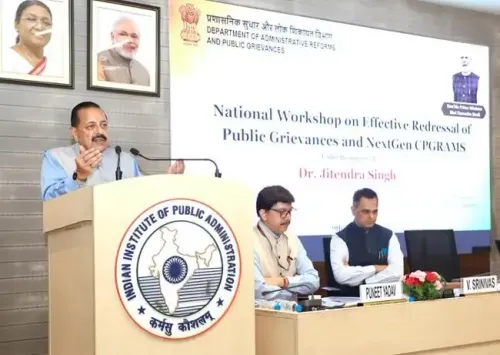
The ministry oversees some of the most citizen-facing infrastructure in the government, including the Centralised Public Grievance Redress and Monitoring System (CPGRAMS), e-Office rollout, and administration of the National Pension System (NPS) for central government employees.
Policy Backdrop
Since 2014, the Ministry of Personnel, Public Grievances and Pensions has been central to the government's 'minimum government, maximum governance' agenda. The CPGRAMS portal, launched in 2014, created a single, centralised channel for citizens to file grievances across all central ministries and track their disposal in real time.
Parallel to this, the e-Office and broader Digital India initiatives from 2014-15 onward pushed ministries to digitise service records, reduce paper-based processes, and accelerate personnel management workflows. Cadre reviews and experiments with lateral entry into the Indian Administrative Service have also featured as recurring reform themes over this period.
Together, these measures form the administrative backbone of what the government has consistently described as a shift toward transparent, accountable, and technology-driven governance.
Stakeholders and Impact
The ministry's reforms touch three broad groups: central government employees who navigate service record digitisation and cadre management; pensioners dependent on timely and accurate NPS processing; and ordinary citizens who use CPGRAMS to seek redressal of grievances against government departments.
Over twelve years, incremental improvements in grievance disposal timelines and the shift to paperless pension processing have been cited by the government as evidence of tangible administrative gains. Dr. Singh's post signals the government's intent to use this anniversary as a platform to restate those achievements publicly.
What's Next
With upcoming budget sessions on the horizon, the Ministry of Personnel, Public Grievances and Pensions is expected to remain a focus area for further pension reform, including possible updates to National Pension System rules. The twelve-year mark is likely to be accompanied by a broader government-wide communication exercise across ministries, reinforcing the governance narrative ahead of any future electoral cycle. Dr. Singh's role spanning both the science portfolio and the personnel ministry positions him as a key voice in that messaging effort.
Point of View
Using the Ministry of Personnel's reform record to anchor the NDA's broader 'good governance' narrative at the twelve-year mark. The choice to foreground this particular ministry — responsible for civil services, grievance redressal, and pensions — signals that the government sees administrative modernisation as a political asset, not merely a bureaucratic exercise. It fits a consistent pattern of ministers using social media to reinforce institutional milestones ahead of electoral cycles. The emphasis on 'seva' (service) also frames governance reform in a cultural register that resonates with the government's wider communication strategy.
NationPress
19 Sept 2026
Frequently Asked Questions
What is #12YearsOfGoodGovernance about?
The hashtag marks twelve years since the NDA government came to power in May 2014, with ministers across portfolios highlighting their respective ministry's reform record over this period.
What does the Ministry of Personnel, Public Grievances and Pensions do?
It is the central ministry responsible for civil services administration, cadre management, the CPGRAMS grievance redressal portal, and pension processing including the National Pension System for central government employees.
What reforms has Dr. Jitendra Singh overseen in personnel and governance?
Under his charge, the ministry has pushed digitisation of service records via e-Office, improved grievance disposal timelines on CPGRAMS, and administered National Pension System reforms for central government employees.
What pension reforms are expected next in India?
Analysts and policy watchers anticipate possible updates to National Pension System rules in upcoming budget sessions, building on incremental reforms pursued over the past twelve years.