Dr. Jitendra Singh flags AI-HI hybrid grievance model launch
Synopsis
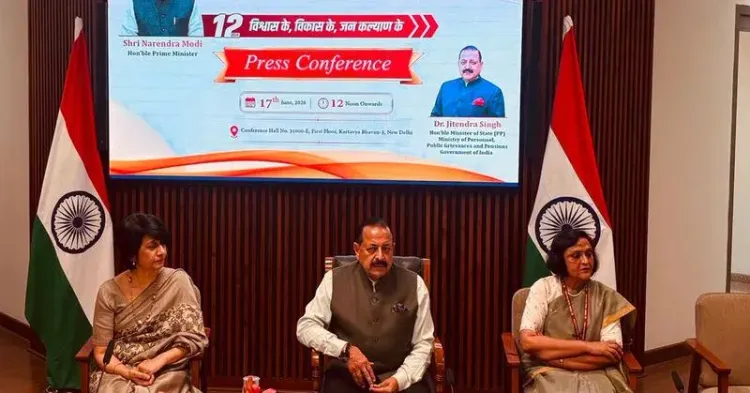
Union Minister Dr. Jitendra Singh on June 18, 2026, flagged DARPG's development of an AI-HI hybrid grievance redressal model under CPGRAMS, marking 12 years of the department's citizen-service mandate and aiming to raise satisfaction levels across central government complaint resolution.
Key Takeaways
DARPG has developed an AI-HI (Artificial Intelligence–Human Intelligence) hybrid model for citizen grievance redressal under the CPGRAMS platform.
The initiative was highlighted by Union Minister Dr.
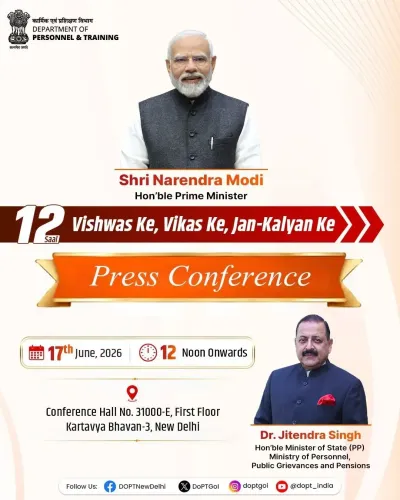
Jitendra Singh on June 18, 2026 , as part of the #12YearsOfSeva milestone.
CPGRAMS has been India's central grievance portal since 2007 , progressively integrated with state portals and all central ministries.
The hybrid model retains human oversight alongside AI, distinguishing it from full automation and maintaining officer accountability in the redressal chain.
The reform aligns with the government's 'minimum government, maximum governance' framework pursued consistently since 2014 .
Future performance will be tracked through DARPG annual reports and parliamentary replies on CPGRAMS disposal rates.
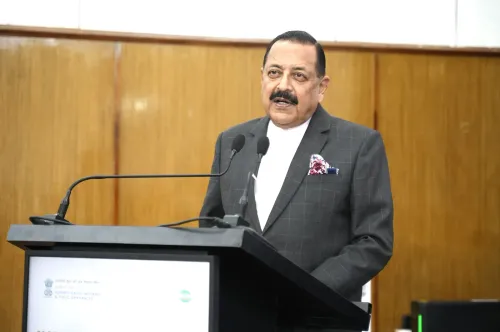
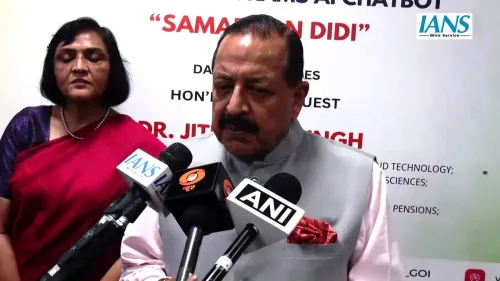
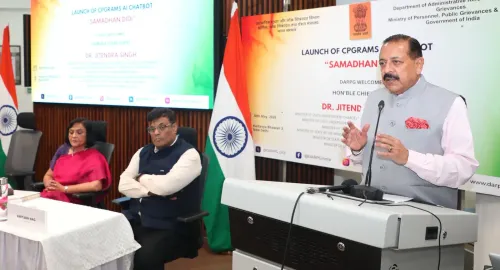
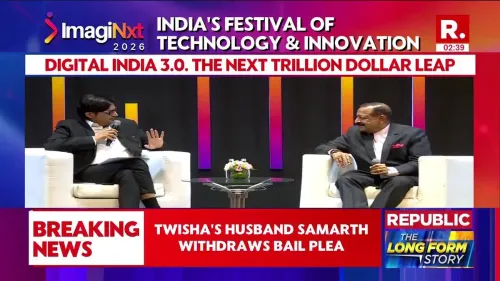
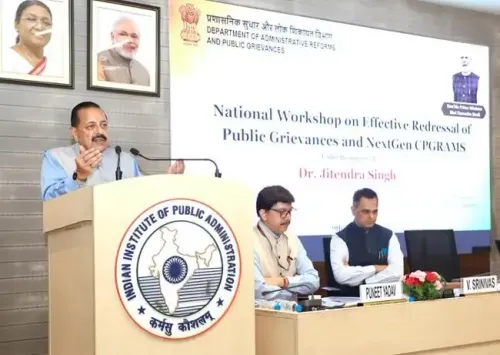
Union Science and Technology Minister Dr. Jitendra Singh on Thursday, June 18, 2026, highlighted the government's development of an Artificial Intelligence–Human Intelligence (AI-HI) hybrid grievance redressal model, sharing the development as part of the Department of Administrative Reforms and Public Grievances (DARPG)'s #12YearsOfSeva milestone. The initiative is aimed at boosting citizen satisfaction with public grievance resolution across central government departments.
Context
The AI-HI hybrid model represents a new phase in the evolution of CPGRAMS — the Centralized Public Grievance Redress and Monitoring System — which has served as the primary online portal for citizens to file complaints against central government departments. By combining automated AI-driven processing with human oversight, the model is designed to improve both the speed and quality of grievance disposal. Dr. Jitendra Singh, who holds the charge of Minister of State for Personnel, Public Grievances and Pensions in the Prime Minister's Office, has been a consistent face of these reforms.
Policy Backdrop
CPGRAMS was progressively integrated with state portals and ministries from 2007 onward, and received a significant push under the Digital India programme launched in 2015, which explicitly included technology-driven grievance redressal as a pillar of administrative reform. DARPG has since pursued successive rounds of process simplification and digital upgrades to reduce pendency and improve disposal rates. The current AI-HI hybrid approach fits squarely within the government's broader 'minimum government, maximum governance' framework that has guided administrative reform since 2014.
The #12YearsOfSeva hashtag accompanying the post marks a significant institutional milestone for DARPG, underscoring continuity of purpose across more than a decade of citizen-centric governance initiatives. The hybrid model signals a qualitative shift: rather than replacing human grievance officers, artificial intelligence is being positioned as a tool to assist and augment human decision-making in the redressal chain.
Stakeholders and Impact
The primary beneficiaries of the hybrid model are ordinary citizens who file grievances against central government departments — a constituency that spans rural and urban India across every ministry's jurisdiction. Grievance redressal officers within departments are also directly affected, as the AI layer is expected to route, categorise, and flag cases more efficiently before human review. Improved disposal rates and faster resolution timelines are the stated goals, with citizen satisfaction serving as the headline metric.
For the broader ecosystem of state governments and local bodies that have progressively linked their portals with CPGRAMS, the hybrid model could serve as a template for sub-national adoption, potentially widening the reform's reach well beyond central government departments.
What's Next
DARPG's annual reports and parliamentary replies on CPGRAMS disposal rates will be the primary indicators of how effectively the hybrid model performs once scaled. Analysts will also watch for possible integration announcements with state-level grievance portals and the next phase of the National e-Governance Plan. The government's ability to demonstrate measurable improvements in citizen satisfaction scores will determine whether the AI-HI approach is expanded, refined, or replicated across other public service delivery channels.
Point of View
DARPG is making a deliberate institutional argument: that reform continuity, not just innovation, is the story. The choice to blend AI with human oversight rather than pursue full automation also reflects a pragmatic reading of India's governance realities, where human accountability in grievance resolution remains politically and administratively important. If the model delivers verifiable improvements in disposal rates, it could become a template for the next phase of e-governance reform at both central and state levels.
NationPress
18 Sept 2026
Frequently Asked Questions
What is the AI-HI hybrid grievance redressal model in India?
The AI-HI hybrid model is a new grievance redressal approach developed by DARPG that combines Artificial Intelligence with Human Intelligence to process and resolve citizen complaints filed through CPGRAMS more efficiently and with greater satisfaction.
What is CPGRAMS and how does it work?
CPGRAMS, or the Centralized Public Grievance Redress and Monitoring System, is the Indian government's online portal where citizens can file complaints against central government departments. It has been operational since 2007 and is managed by DARPG under the Ministry of Personnel, Public Grievances and Pensions.
What is DARPG's 12 Years of Seva milestone?
The #12YearsOfSeva hashtag marks twelve years of DARPG's sustained citizen-service and administrative reform initiatives, used to highlight the department's continuous work on improving public grievance redressal and governance processes.
Who is Dr. Jitendra Singh and what ministry does he head?
Dr. Jitendra Singh is the Union Minister of State (Independent Charge) for Science and Technology and Earth Sciences. He also holds the charge of Minister of State for Personnel, Public Grievances and Pensions in the Prime Minister's Office, making him the political head overseeing DARPG and CPGRAMS reforms.
How will the AI-HI hybrid model improve citizen grievance resolution?
The model is designed to use AI for faster routing, categorisation, and flagging of grievances, while human officers retain oversight and decision-making authority, with the combined approach aimed at reducing pendency and improving citizen satisfaction scores.