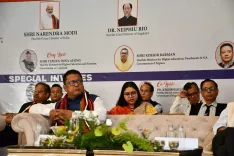
Dr. Jitendra Singh flags India-South Korea AI governance talks

Synopsis
Union Minister Dr. Jitendra Singh flagged India-South Korea discussions on digital governance and AI-led services on 21 June 2026, spotlighting DARPG's role. The talks build on CEPA, the Digital India programme, and India's National AI Strategy, with potential MoUs and joint pilots expected as follow-up.
Key Takeaways
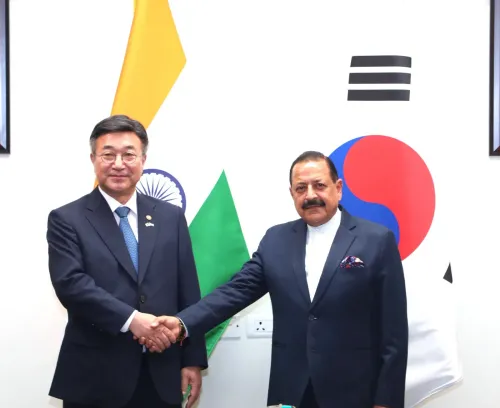
Jitendra Singh highlighted India-South Korea bilateral talks on digital governance and AI-led services on 21 June 2026 .
The post was tagged under #DARPG , indicating the Department of Administrative Reforms and Public Grievances is involved in tracking the engagement.
The bilateral technology relationship is underpinned by the India-South Korea CEPA signed in 2009 and subsequently expanded.
India's Digital India programme (2015) and National AI Strategy (2018) form the domestic policy backbone for such partnerships.
Potential outcomes include MoUs, joint working groups, and AI-governance pilot projects to be watched at future India-Korea summits.
South Korea's strengths in semiconductors, AI research, and digital public services complement India's large-scale digital infrastructure needs.
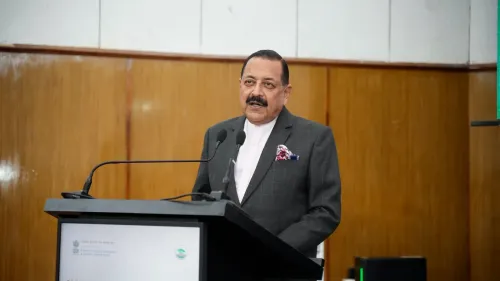
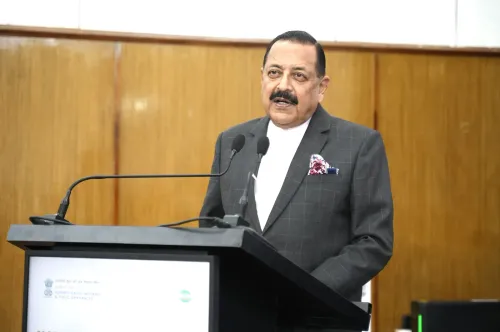
Union Minister of State (Independent Charge) for Science and Technology Dr. Jitendra Singh on Sunday, 21 June 2026 highlighted bilateral discussions between India and South Korea on cooperation in digital governance and AI-led public services, flagging the development under the #DARPG handle on X.
Context
The post draws attention to India and South Korea exploring collaboration in two closely linked domains: digital governance frameworks and the deployment of artificial intelligence in citizen-facing services. DARPG — the Department of Administrative Reforms and Public Grievances — is the nodal agency under the Ministry of Personnel that drives e-governance reform across Union and state governments.
By tagging DARPG, Dr. Singh signals that the bilateral dialogue is not merely a diplomatic exchange but is being tracked at the administrative reform level, where implementation of digital services actually occurs.
Policy Backdrop
India's engagement with South Korea on technology sits within a well-established framework. The two countries signed the Comprehensive Economic Partnership Agreement (CEPA) in 2009, which has since been reviewed to accommodate expanding technology cooperation. India's Digital India programme, launched in 2015, created the domestic infrastructure backbone that now makes such bilateral AI partnerships actionable.
India's National Strategy for Artificial Intelligence, released in 2018 under the theme 'AI for All', laid out a roadmap for responsible AI deployment in governance and industry. The current discussions with Seoul represent a continuation of that arc, now accelerated by India's G20 presidency experience, during which New Delhi showcased ethical AI frameworks to global partners.
South Korea brings complementary strengths: advanced capabilities in semiconductors, AI research, and digital public service delivery that Indian agencies can adapt to local scale and context.
Stakeholders and Impact
The most immediate institutional stakeholder is DARPG, which would be responsible for translating any agreed frameworks into e-governance pilots or procedural reforms. Beyond government agencies, Indian AI startups and technology firms stand to benefit from knowledge transfer and potential joint development arrangements that could emerge from the dialogue.
For citizens, the downstream impact would be faster, smarter public service delivery — from grievance redressal portals to AI-assisted welfare scheme targeting. India's Act East Policy provides the strategic scaffolding for deepening such engagements with South Korea as part of a broader effort to diversify technology supply chains and absorb global best practices.
What's Next
Observers will watch for concrete outcomes: formal Memoranda of Understanding (MoUs), joint working groups, or pilot projects that convert the current exploratory discussions into binding commitments. Future India-Korea summits and multilateral AI governance forums are natural venues where any agreed roadmap could be formalised.
As India scales its digital public infrastructure and looks to position itself as a global AI governance model, partnerships with advanced technology economies like South Korea will be critical to bridging capability gaps and co-developing standards that carry weight in international forums.
Point of View
The minister frames the South Korea engagement as an administrative reform priority, not merely a research collaboration. This fits a broader pattern where New Delhi uses bilateral tech dialogues to import governance-ready AI tools rather than wait for domestic development cycles. The move also reinforces India's Act East Policy with a concrete technology dimension ahead of what could be a productive summit season.
NationPress
19 Sept 2026
Frequently Asked Questions
What did India and South Korea discuss regarding digital governance and AI?
India and South Korea explored cooperation in digital governance frameworks and AI-led public services, with India's DARPG flagged as a key stakeholder in the engagement highlighted by Minister Dr. Jitendra Singh on 21 June 2026.
What is DARPG and why is it relevant to the India-South Korea talks?
DARPG is the Department of Administrative Reforms and Public Grievances, the nodal agency that drives e-governance reform in India. Its involvement signals the bilateral AI discussions are linked to actual public service delivery reform, not just diplomatic dialogue.
What is the existing framework for India-South Korea technology cooperation?
The two countries signed the Comprehensive Economic Partnership Agreement (CEPA) in 2009, which has been reviewed to expand technology cooperation. India's Digital India programme and National AI Strategy provide the domestic policy foundation for such partnerships.
What outcomes can be expected from India-South Korea AI governance discussions?
Observers are watching for MoUs, joint working groups, and AI pilot projects. Future India-Korea summits and multilateral AI governance forums are likely venues where any agreed roadmap could be formalised.
How does the India-South Korea AI partnership fit into India's broader foreign policy?
The engagement aligns with India's Act East Policy, which seeks deeper ties with Indo-Pacific technology leaders. It also extends the AI governance diplomacy India showcased during its G20 presidency, where ethical AI frameworks were a centrepiece.