Jitendra Singh holds bilateral talks with Korea's Interior Minister
Synopsis
Union Minister Dr. Jitendra Singh held over an hour of bilateral talks with South Korea's Interior Minister Yun Hojung on June 20, 2026, focusing on digital governance, e-government, and citizen services, building on the Special Strategic Partnership and an April 2026 Joint Strategic Vision Statement.
Key Takeaways
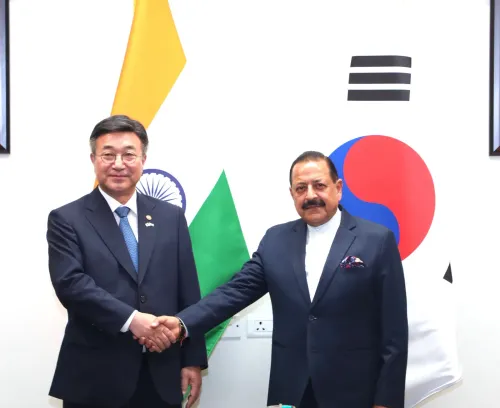
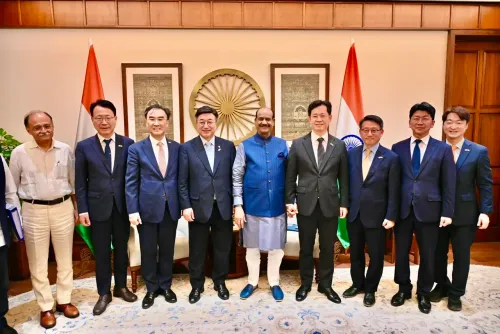
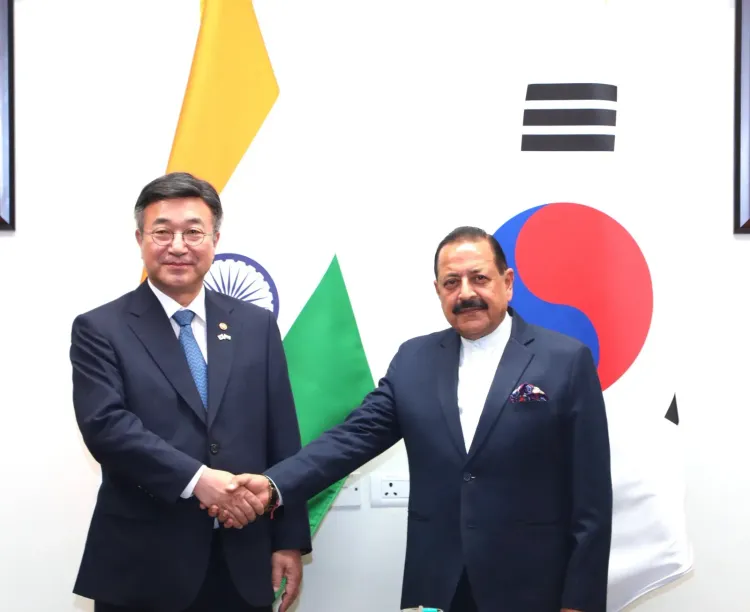
Jitendra Singh met Republic of Korea's Minister of Interior and Safety Yun Hojung on June 20, 2026 , with high-level delegations from both sides present.
Bilateral talks lasted over an hour and covered digital governance, e-government, public administration, capacity building, and citizen-centric service delivery.
The engagement builds on the Special Strategic Partnership formalised in 2015 and the Comprehensive Economic Partnership Agreement (CEPA) of 2009 .
A Joint Strategic Vision Statement was finalised during President Lee Jae Myung's India visit in April 2026 , when he met PM Narendra Modi .
Singh referenced the 48 AD historical link between Princess Suriratna of Ayodhya and King Suro of Gaya as a symbol of ancient India-Korea civilisational ties.
Possible follow-up outcomes include MoUs or joint working groups on e-government platforms.
Union Science and Technology Minister Dr. Jitendra Singh on Saturday, June 20, 2026, held bilateral talks with Republic of Korea's Minister of Interior and Safety, Mr. Yun Hojung, who is currently on an India visit, to explore cooperation in digital governance, e-government, public administration, capacity building, and citizen-centric service delivery. The discussions, accompanied by high-level delegations from both sides, lasted over an hour.
Context
Dr. Singh, posting on X, noted that the two nations are 'vibrant democracies with shared values, heritage and commitment to the rule of law' and described them as 'two major Asian democracies' and 'two major Asian economies.' The bilateral engagement comes at a time when India has been actively showcasing its digital public infrastructure — including grievance redressal mechanisms and service delivery platforms — as models for international partners under its Digital India initiative.
Minister Singh pointed to an important milestone: a Joint Strategic Vision Statement that was finalised when President Lee Jae Myung of the Republic of Korea visited India in April 2026 and met Prime Minister Narendra Modi. That document is seen as the guiding framework for deepening ties across multiple sectors.
Policy Backdrop
India and the Republic of Korea share a Special Strategic Partnership, a framework formalised in 2015 during President Park Geun-hye's visit to New Delhi, which elevated bilateral ties to cover strategic, economic, and people-to-people cooperation. The two countries also operate under a Comprehensive Economic Partnership Agreement (CEPA) signed in 2009, which has underpinned trade and technology collaboration for over a decade.
The current engagement on e-government and public administration fits within India's broader Act East Policy, through which New Delhi has consistently deepened engagement with fellow Asian democracies. India's digital governance stack — spanning platforms for direct benefit transfers, digital identity, and citizen grievance redressal — has drawn interest from multiple partner nations in the region.
Stakeholders and Impact
The talks directly concern e-governance officials and technology ministries on both sides, as well as citizens who rely on digital public services. Any follow-up cooperation could result in knowledge exchange programmes, joint working groups, or memoranda of understanding covering government technology platforms and administrative capacity building.
Dr. Singh also highlighted a cultural dimension, noting that both countries are 'bound together by the historical ties of the 48 AD marital connection between Princess Suriratna of Ayodhya and King Suro of the then Gaya's confederacy of Korea' — an ancient link that has long served as a symbol of civilisational bonds between the two peoples and is frequently invoked in diplomatic exchanges.
What's Next
Observers will watch for concrete outcomes from this visit, including possible MoUs or joint working group agreements on e-government platforms and citizen services. The discussions are also expected to feed into the operationalisation of the April 2026 Joint Strategic Vision Statement, providing institutional mechanisms to translate the bilateral roadmap into actionable cooperation. As Dr. Singh put it, 'there is much to learn from each other and much to share.'
Frequently Asked Questions
Why did Korea's Interior Minister visit India in June 2026?
Republic of Korea's Minister of Interior and Safety Yun Hojung visited India to hold bilateral talks with Union Minister Dr. Jitendra Singh on cooperation in digital governance, e-government, public administration, capacity building, and citizen-centric service delivery.
What is the India-Korea Special Strategic Partnership?
The Special Strategic Partnership is the upgraded framework governing India-Republic of Korea relations, formalised in 2015 during President Park Geun-hye's visit to New Delhi. It covers strategic, economic, and people-to-people cooperation between the two countries.
What was the India-Korea Joint Strategic Vision Statement of April 2026?
The Joint Strategic Vision Statement was finalised when Republic of Korea President Lee Jae Myung visited India in April 2026 and met Prime Minister Narendra Modi. It serves as the guiding roadmap for deepening bilateral ties across multiple sectors.
What is the historical connection between India and South Korea?
According to historical tradition, Princess Suriratna of Ayodhya married King Suro of the Gaya confederacy in Korea in 48 AD. This ancient marital connection is frequently cited as a symbol of civilisational bonds between the two nations.
What could come out of the India-Korea e-government talks?
Possible outcomes include memoranda of understanding or joint working groups on e-government platforms and citizen services, as well as capacity-building programmes that operationalise the April 2026 Joint Strategic Vision Statement.