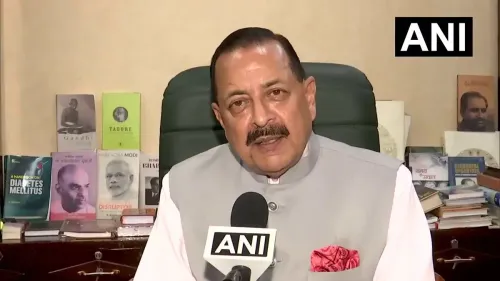
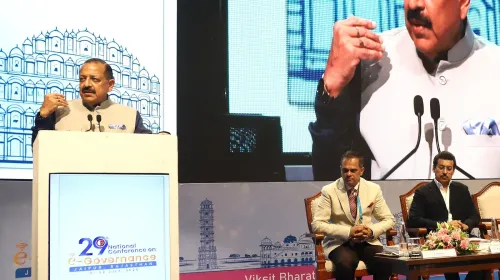
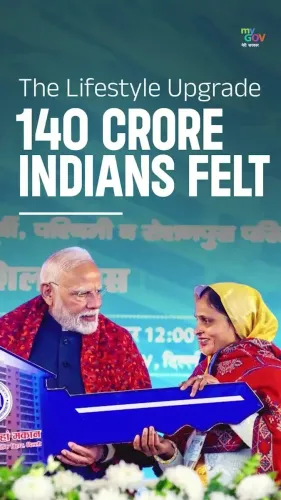
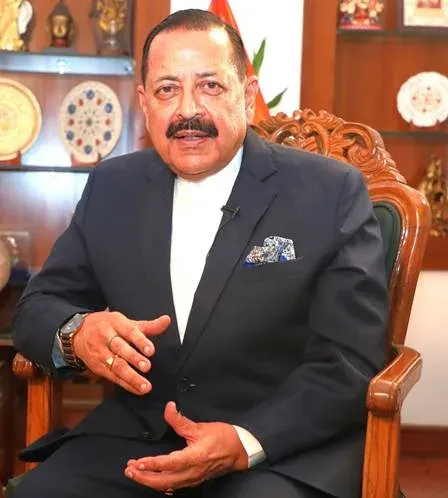
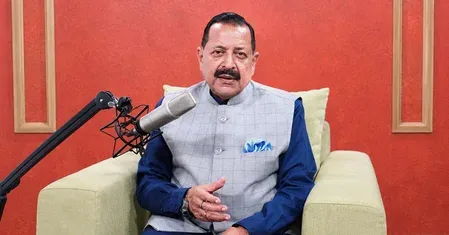
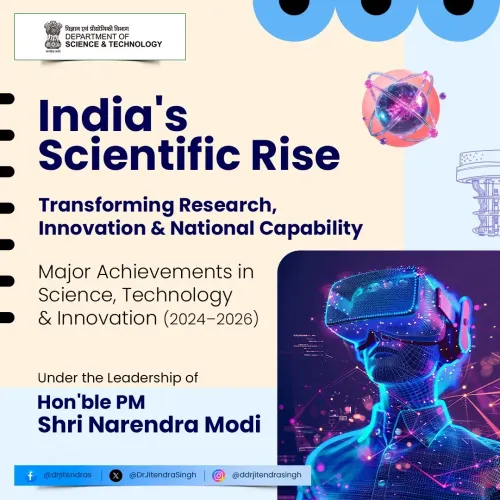
Dr. Jitendra Singh flags ease of living as Modi govt focus
Synopsis
Union Science and Technology Minister Dr. Jitendra Singh on 17 June 2026 flagged ease of living as a central priority of the Modi government, connecting a decade of digital governance reforms — from the Ease of Living Index to Direct Benefit Transfers — to measurable improvements in daily citizen experience across India.
Key Takeaways
Jitendra Singh , Union Minister of State (Independent Charge) for Science and Technology, shared the ease-of-living message on 17 June 2026 .
The Modi government has framed ease of living as a core governance priority since 2014 , distinct from the business-focused ease-of-doing-business metric.
The Digital India programme , launched in 2015 , underpins electronic delivery of government services to reduce citizen-bureaucracy friction.
The Ease of Living Index , introduced in 2018 by the Ministry of Housing and Urban Affairs , benchmarks quality-of-life across Indian cities.
Jitendra Singh's combined portfolios — science, PMO, and personnel — give him a cross-cutting role in citizen-service reform.
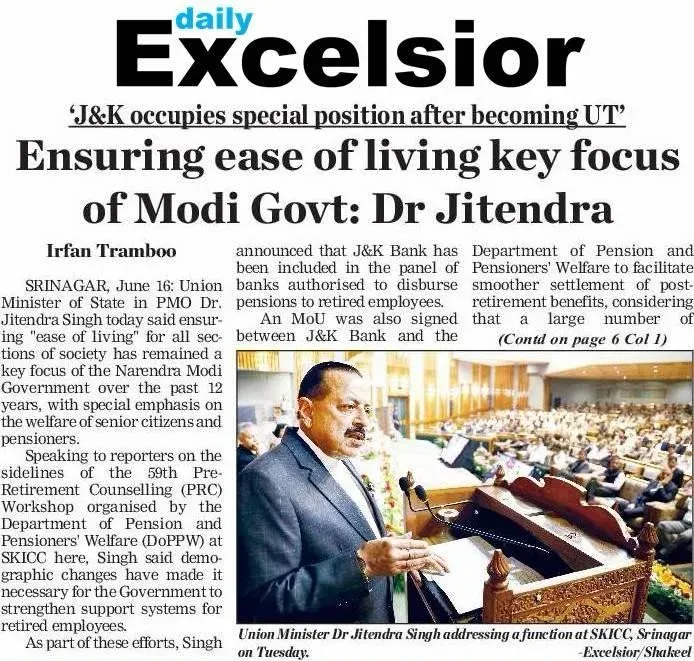
Union Science and Technology Minister Dr. Jitendra Singh on Wednesday, 17 June 2026 shared an article highlighting that ensuring ease of living for citizens remains a central priority of the Modi government, amplifying the message through his official X account.
Context
The minister's post draws attention to the Modi government's stated governance philosophy of making daily life simpler and more dignified for ordinary Indians. The framing of 'ease of living' — distinct from the business-centric 'ease of doing business' — signals a deliberate effort to communicate citizen-centric outcomes rather than purely economic metrics.
Dr. Jitendra Singh holds multiple portfolios, including Minister of State (Independent Charge) for Science and Technology and Earth Sciences, as well as Minister of State in the Prime Minister's Office and the Ministry of Personnel, Public Grievances and Pensions. His amplification of this theme connects governance reform directly to science-and-technology-led service delivery.
Policy Backdrop
The 'ease of living' framework has been a recurring pillar of the Modi government since 2014, underpinned by flagship initiatives such as the Digital India programme launched in 2015, which sought to deliver government services electronically and reduce the burden of bureaucratic interface on citizens.
The Ease of Living Index, introduced in 2018 by the Ministry of Housing and Urban Affairs, formalised this approach by benchmarking quality-of-life parameters across Indian cities, covering areas such as education, health, mobility, and public infrastructure. Reforms in passport issuance, income-tax filings, and direct-benefit transfers have all been cited as concrete expressions of this philosophy over the past decade.
Stakeholders and Impact
The primary beneficiaries of ease-of-living reforms are Indian citizens, particularly those in urban centres assessed under the Ease of Living Index. Urban local bodies are key implementation agencies, responsible for translating national policy goals into on-ground service improvements.
From the science-and-technology angle, Dr. Jitendra Singh's ministry plays an enabling role by developing and deploying digital tools — from e-governance platforms to grievance redressal systems — that directly affect how citizens interact with the state. The convergence of his PMO and personnel portfolios with his science brief gives him a cross-cutting vantage point on this agenda.
What's Next
Attention will turn to the next edition of the Ease of Living Index report, which will provide a measurable update on how Indian cities are progressing on quality-of-life parameters. Parliamentary questions on the integration of science-and-technology tools into citizen-service delivery platforms are also likely to follow as the session calendar advances.
The broader pattern suggests the government will continue to anchor its communication around tangible improvements in daily citizen experience, with ministers across portfolios reinforcing this narrative ahead of future electoral cycles.
Point of View
Reinforcing a governance narrative the Modi government has cultivated for over a decade. By sharing this message through his personal X account, he extends the reach of a communication strategy that frames policy outcomes in terms of citizen experience rather than administrative process. The timing — mid-2026 — suggests the government is actively refreshing its ease-of-living messaging, possibly in anticipation of the next Ease of Living Index release or upcoming legislative sessions. The cross-portfolio nature of Dr. Singh's brief makes him a credible voice on this theme, bridging science-and-technology delivery with broader public administration reform.
NationPress
16 Sept 2026
Frequently Asked Questions
What is the Modi government's ease of living initiative?
The ease of living initiative refers to the Modi government's decade-long policy push to simplify daily interactions between citizens and the state through digital services, grievance redressal, and quality-of-life benchmarking. It is distinct from the ease-of-doing-business framework and focuses on outcomes such as health, education, mobility, and public infrastructure.
What is the Ease of Living Index in India?
The Ease of Living Index is an assessment framework introduced in 2018 by the Ministry of Housing and Urban Affairs to measure quality-of-life parameters across Indian cities. It covers areas including education, health, mobility, and public infrastructure, and is used to benchmark urban governance performance.
What portfolios does Dr. Jitendra Singh hold?
Dr. Jitendra Singh serves as Union Minister of State (Independent Charge) for Science and Technology and Earth Sciences, Minister of State in the Prime Minister's Office, and Minister of State for Personnel, Public Grievances and Pensions.
How does Digital India relate to ease of living?
The Digital India programme, launched in 2015 , is a foundational pillar of the ease-of-living agenda. It enables electronic delivery of government services — from passport issuance to direct-benefit transfers — reducing the need for citizens to navigate physical bureaucratic processes.
What comes next for India's ease of living policy?
The next edition of the Ease of Living Index report will provide updated benchmarks on urban quality of life. Parliamentary scrutiny of science-and-technology integration into citizen-service platforms is also expected to continue.