India's AI-driven governance reforms: Dr. Jitendra Singh at Shillong conference
Synopsis
India's governance overhaul is no longer just about digitisation — it's about AI at the administrative core. With UPI clocking 18 billion monthly transactions, CPGRAMS grievances rising twelvefold since 2014, and a single cleanliness campaign generating ₹4,000 crore, the Shillong conference marks a pivot toward AI-embedded, citizen-first public administration at national scale.
Key Takeaways
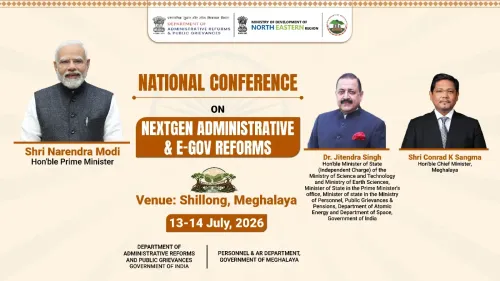
Jitendra Singh inaugurated the two-day National Conference on Next Generation Administrative and e-Governance Reforms in Shillong on 13 July .
UPI now processes over 18 billion transactions per month , making India a global leader in digital payments.
Annual grievances on CPGRAMS have grown from 2 lakh in 2014 to nearly 25 lakh today , now supported by AI-powered multilingual chatbots.
Nearly 2,000 obsolete rules have been removed over the past decade as part of administrative reform.
The Special Campaign for Disposal of Pending Matters has freed 700 lakh sq ft of office space and generated over ₹4,000 crore .
More than 56 crore Jan Dhan accounts and Aadhaar-enabled delivery have reshaped citizen-state interactions.
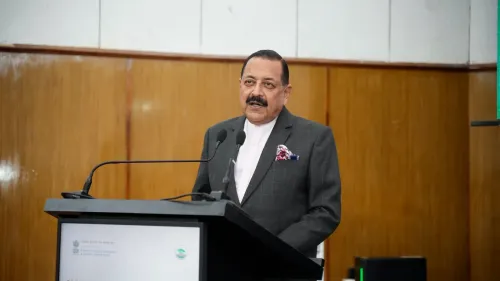
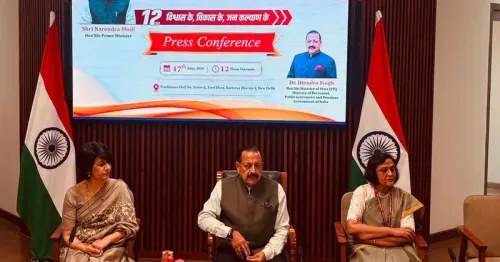
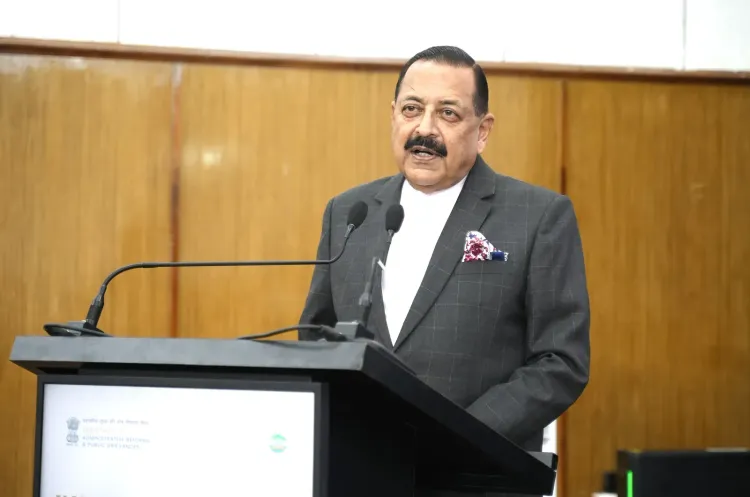
Union Minister of State for Science and Technology and Earth Sciences Dr. Jitendra Singh on Monday, 13 July declared that India is entering the next phase of governance transformation, with artificial intelligence, cybersecurity, and digital public infrastructure at its core. Speaking at the inauguration of the two-day National Conference on Next Generation Administrative and e-Governance Reforms in Shillong, he said the country's administrative architecture is being rebuilt around citizen-centric service delivery and AI-enabled platforms.
Key Developments at the Shillong Conference
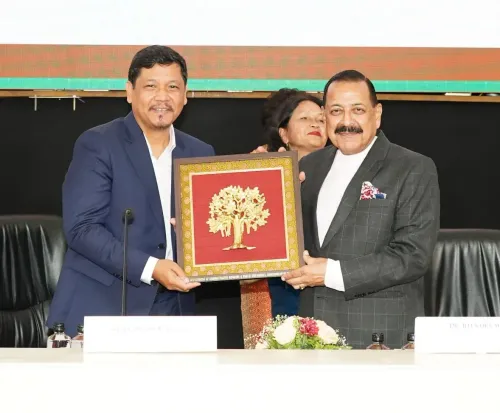
The conference, jointly organised by the Department of Administrative Reforms and Public Grievances (DARPG) and the Government of Meghalaya, brought together administrators and policymakers to chart the roadmap for next-generation governance. Dr. Singh highlighted a decade of path-breaking administrative reforms, including the removal of nearly 2,000 obsolete rules, and stressed that future reforms must embed AI, digital public infrastructure, and robust cybersecurity frameworks into every layer of governance.
Digital India's Scale: Numbers That Define a Decade
The minister cited a series of figures that underscore the depth of India's digital transformation. More than 56 crore Jan Dhan accounts, Aadhaar-enabled service delivery, Direct Benefit Transfer (DBT), and the Unified Payments Interface (UPI) have, according to Dr. Singh, fundamentally redefined the relationship between citizens and the state. UPI now processes over 18 billion transactions every month, positioning India as a global leader in digital payments — a benchmark few nations have matched at comparable scale.
CPGRAMS: From 2 Lakh to 25 Lakh Grievances Annually
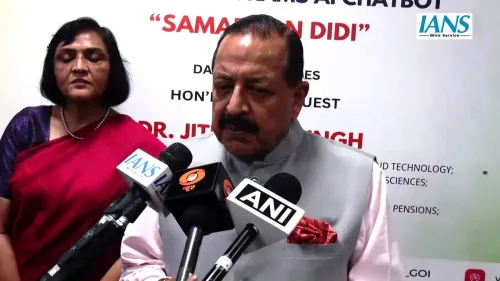
One of the conference's focal points was the transformation of the Centralised Public Grievance Redress and Monitoring System (CPGRAMS), which DARPG has developed into one of the world's largest technology-enabled grievance platforms. Annual grievances registered on the platform have surged from around 2 lakh in 2014 to nearly 25 lakh today — a more than tenfold increase that reflects both wider digital access and growing citizen confidence in the system. The platform is now supported by AI-powered multilingual chatbot services, though Dr. Singh noted that a human interface is retained at the final stage of grievance disposal to ensure both efficiency and empathy.
Special Campaign Frees Space, Generates ₹4,000 Crore
Dr. Singh also highlighted the nationwide Special Campaign for Disposal of Pending Matters and Cleanliness, which has generated over ₹4,000 crore through the scientific disposal of scrap and obsolete materials. The drive has freed nearly 700 lakh square feet of government office space — a logistical achievement that signals a broader shift from administrative bloat toward leaner, more responsive governance. This comes amid a wider push by the Centre to move from a regulatory posture to one of facilitation, placing citizens at the centre of policymaking.
What Comes Next
The two-day conference in Shillong is expected to produce a set of recommendations on integrating AI and digital platforms into state and district-level administration. As India scales its digital infrastructure, the challenge ahead lies in ensuring that the gains in transaction volume and grievance redressal translate into measurable improvements in last-mile service delivery — particularly for citizens outside major urban centres.
Point of View
But they measure inputs and volumes, not outcomes. CPGRAMS processing 25 lakh grievances is only meaningful if resolution quality has kept pace — a figure the government has not foregrounded. Similarly, UPI's 18 billion monthly transactions reflect private adoption as much as state design. The real governance test is whether AI integration reaches district collectors and gram panchayats, not just central dashboards. Until last-mile delivery data is independently audited, these numbers risk becoming a showcase of scale rather than a proof of transformation.
NationPress
12 Oct 2026
Frequently Asked Questions
What was the National Conference on Next Generation Administrative and e-Governance Reforms?
It is a two-day conference held in Shillong, jointly organised by the Department of Administrative Reforms and Public Grievances (DARPG) and the Government of Meghalaya, focused on integrating AI, cybersecurity, and digital platforms into India's administrative framework. Union MoS Dr. Jitendra Singh inaugurated the event on 13 July.
How many transactions does UPI process monthly in India?
UPI processes over 18 billion transactions every month, according to figures cited by Dr. Jitendra Singh at the Shillong conference. This volume positions India as a global leader in digital payments.
What is CPGRAMS and how has it changed?
CPGRAMS — the Centralised Public Grievance Redress and Monitoring System — is a technology-enabled platform managed by DARPG for citizens to file complaints against government services. Annual grievances have grown from around 2 lakh in 2014 to nearly 25 lakh today, and the platform now uses AI-powered multilingual chatbots while retaining human oversight at the final disposal stage.
What did the Special Campaign for Disposal of Pending Matters achieve?
The nationwide campaign generated over ₹4,000 crore through scientific disposal of scrap and obsolete materials, and freed nearly 700 lakh square feet of government office space. It is part of the broader push to streamline administrative functioning across central government offices.
How many obsolete rules has India removed in the past decade?
According to Dr. Jitendra Singh, nearly 2,000 obsolete rules have been removed over the past decade as part of India's administrative reform programme, aimed at reducing regulatory burden and improving ease of governance.