CM Dhami: Centre Approves ₹451.63 Cr for Uttarakhand
Synopsis
The Centre has sanctioned ₹451.63 crore as the first SASCI instalment for Uttarakhand in FY 2026-27, targeting roads, health, education, drinking water and tourism infrastructure. CM Dhami credited PM Modi and Finance Minister Sitharaman for the support to the Himalayan state.
Key Takeaways
The central government has approved ₹451.63 crore as the first instalment under the SASCI scheme for Uttarakhand in FY 2026-27 .
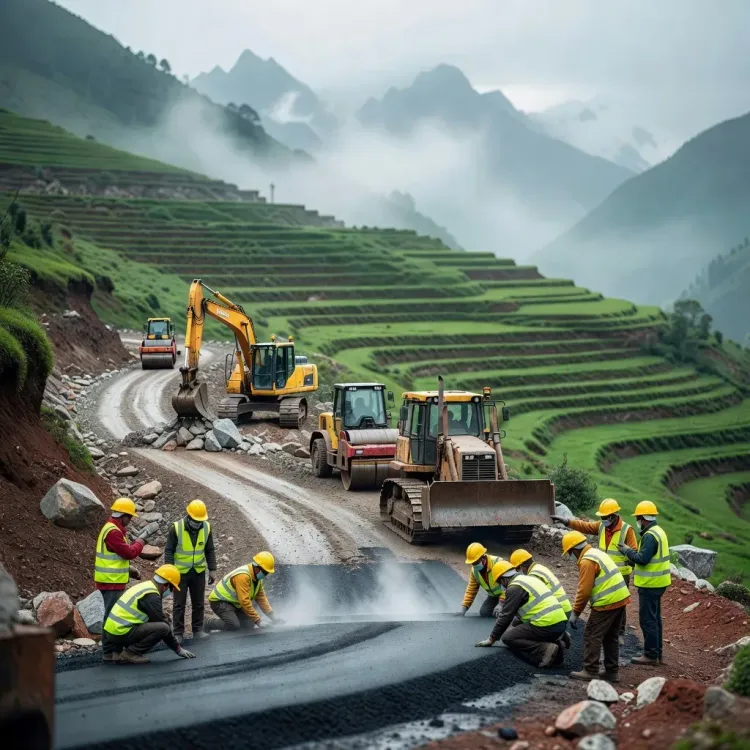
Funds are earmarked for projects in roads, health, education, drinking water, tourism and other basic infrastructure.
The scheme is designed to ensure time-bound implementation , with subsequent tranches linked to utilisation and progress.
CM Pushkar Singh Dhami credited PM Narendra Modi and Finance Minister Nirmala Sitharaman for the central support.
The SASCI scheme was launched in Union Budget 2021-22 with a national allocation of ₹15,000 crore to boost state capital expenditure.
The disbursement is expected to generate employment and stimulate economic activity across Uttarakhand .
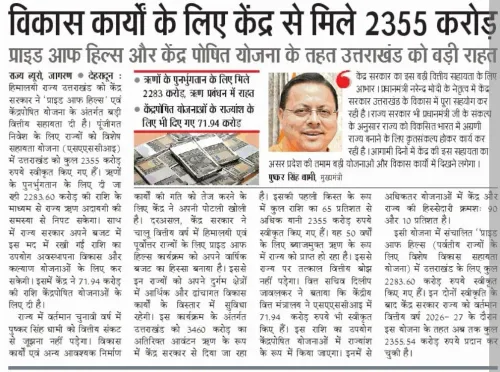
Uttarakhand Chief Minister Pushkar Singh Dhami announced on Monday, 13 July 2026 that the central government has sanctioned the first instalment of ₹451.63 crore for the state under the Special Assistance to States for Capital Investment (SASCI) scheme for the financial year 2026-27.
Context
In a post on X, CM Dhami stated that the funds are meant to accelerate 'the timely implementation of public welfare projects related to roads, health, education, drinking water, tourism and other basic infrastructure' — and will additionally stimulate economic activity and create new employment opportunities in the state. He credited Prime Minister Narendra Modi and Union Finance Minister Nirmala Sitharaman for the support, thanking them for their continued commitment to Uttarakhand, which he referred to by its traditional name Devbhoomi (land of the gods).
Policy Backdrop
The SASCI scheme was introduced in the Union Budget 2021-22 with an initial national allocation of ₹15,000 crore to revive state-level capital expenditure in the aftermath of the pandemic. The scheme provides interest-free loans or grants to states tied to the timely execution of projects in priority sectors, reflecting the Centre's broader strategy of cooperative federalism. Himalayan and north-eastern states have been among the consistent beneficiaries, given their structural connectivity and service-delivery challenges.
Uttarakhand, a mountainous state with dispersed populations and difficult terrain, has historically required higher per-capita investment to build and maintain roads, health facilities, and water supply networks. Central capital assistance under schemes such as SASCI supplements the state's own budgetary resources, enabling it to push projects that would otherwise be delayed by fiscal constraints.
Stakeholders and Impact
The ₹451.63 crore first instalment is expected to benefit residents across Uttarakhand through improved road connectivity, upgraded health and education infrastructure, and expanded drinking-water coverage. The tourism sector — a critical pillar of the state economy — stands to gain from infrastructure improvements that ease access to pilgrimage and adventure-tourism destinations. Infrastructure contractors and local employment markets are also expected to see near-term activity from project mobilisation.
Employment generation is explicitly cited by CM Dhami as a key anticipated outcome, aligning with the Centre's stated objective of using capital expenditure as a lever for job creation in states. The time-bound implementation conditionality attached to SASCI funds is designed to ensure that disbursements translate into on-ground progress rather than remaining unspent.
What's Next
The release of the first instalment typically triggers a project-execution cycle, with subsequent tranches contingent on utilisation reports and physical progress verified by the Centre. Stakeholders will watch for the disbursement of remaining instalments for FY 2026-27 and for project-wise disclosures from the state government on how the funds are being deployed. Any revision to SASCI allocations in the next Union Budget will also signal the Centre's medium-term commitment to state capital investment support.
Point of View
But the underlying fiscal transfer is substantive — ₹451.63 crore for a state with a relatively small budget is a meaningful injection. The time-bound conditionality attached to SASCI funds also serves as a governance accountability mechanism, pressuring state machinery to deliver measurable outcomes. Watchers of cooperative federalism will note that Himalayan states continue to receive disproportionate per-capita central support, a trend likely to persist given their strategic and ecological significance.
NationPress
12 Oct 2026
Frequently Asked Questions
What is the SASCI scheme and how does it benefit Uttarakhand?
The Special Assistance to States for Capital Investment (SASCI) scheme provides central funds to states for capital expenditure on infrastructure. For Uttarakhand in FY 2026-27, the Centre has approved ₹451.63 crore as the first instalment to fund projects in roads, health, education, drinking water and tourism.
How much money has the Centre approved for Uttarakhand under SASCI in 2026-27?
The Centre has approved ₹451.63 crore as the first instalment under the SASCI scheme for Uttarakhand for the financial year 2026-27.
Which sectors will benefit from the ₹451.63 crore central grant to Uttarakhand?
The funds are directed at roads, health, education, drinking water, tourism and other basic infrastructure projects, with an emphasis on time-bound implementation and employment generation.
When was the SASCI scheme launched and what is its national allocation?
The SASCI scheme was introduced in the Union Budget 2021-22 with an initial national allocation of ₹15,000 crore to accelerate state capital expenditure after the pandemic.
What did CM Pushkar Singh Dhami say about the central funds for Uttarakhand?
CM Dhami announced the sanction on 13 July 2026 and thanked PM Narendra Modi and Finance Minister Nirmala Sitharaman, saying the funds would accelerate public welfare projects and create new employment opportunities in Devbhoomi Uttarakhand.