CM Sai Announces 5 New Medical Colleges, 250 MBBS Seats for Chhattisgarh
Synopsis
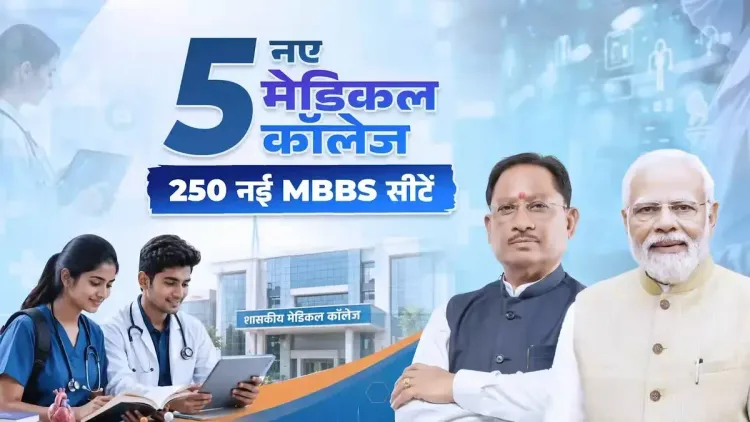
Chhattisgarh Chief Minister Vishnu Deo Sai announced on 13 July 2026 that the state will get five new government medical colleges and 250 additional MBBS seats, crediting central-state coordination under the BJP's 'double engine government' framework to expand healthcare access in remote and tribal regions.
Key Takeaways
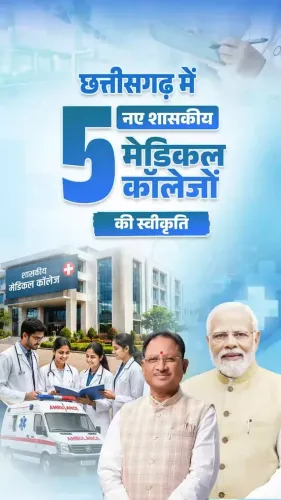
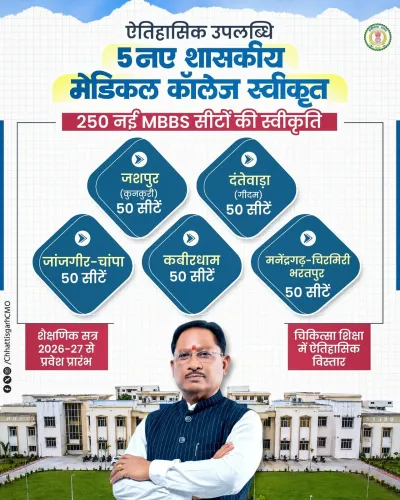
Five new government medical colleges are to be established in Chhattisgarh, as announced by CM Vishnu Deo Sai on 13 July 2026 .
250 new MBBS seats will be added, expanding affordable medical education access in the state.
CM Sai credited the 'double engine government' — aligned BJP governments at the state and centre — for enabling the development.
The announcement is aimed at benefiting medical aspirants , particularly from rural and tribal backgrounds, and improving long-term healthcare delivery in remote areas .
Actual operationalisation will depend on NMC approvals , faculty recruitment, location finalisation, and hospital infrastructure readiness.
The move aligns with a national push since 2014 to increase government MBBS capacity in underserved states under schemes such as PMSSY .
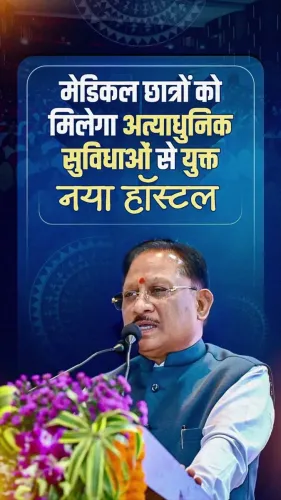
Chhattisgarh Chief Minister Vishnu Deo Sai on Monday, 13 July 2026, announced that the state will receive five new government medical colleges and 250 additional MBBS seats, describing the development as a historic milestone driven by the coordinated efforts of the central and state governments.
Context
Posting on X, CM Sai wrote — 'डबल इंजन सरकार के प्रयासों से छत्तीसगढ़ को एक साथ 5 नए शासकीय मेडिकल कॉलेज और 250 नई एमबीबीएस सीटों की ऐतिहासिक सौगात मिली है' — ('Through the efforts of the double-engine government, Chhattisgarh has received the historic gift of 5 new government medical colleges and 250 new MBBS seats simultaneously'). He added that the new institutions would give 'new wings to the dreams of thousands of Chhattisgarh youth who want to become doctors' and build a stronger foundation for healthcare delivery in remote areas.
The term 'double engine government' is used by the BJP to describe the alignment between a BJP-led state government and the BJP-led central government, enabling faster clearance and funding of large infrastructure projects.
Policy Backdrop
The expansion fits within a broader national push, accelerated since 2014, to increase medical education capacity across India. The central government has pursued schemes — including the Pradhan Mantri Swasthya Suraksha Yojana (PMSSY) — aimed at establishing new government medical colleges in underserved districts, particularly those without existing tertiary healthcare infrastructure.
Chhattisgarh, a central Indian state with a large tribal and rural population, has historically faced acute shortages of trained medical professionals and healthcare facilities in its interior and forested regions. Adding government MBBS seats is seen as a long-term strategy to produce doctors who may eventually serve in these areas, often through bond or incentive-linked rural postings.
Similar announcements of medical college and seat additions have been made in several other BJP-governed states in recent years, reflecting a coordinated national effort to raise total MBBS capacity and reduce dependence on private medical education.
Stakeholders and Impact
Medical aspirants from Chhattisgarh stand to benefit most directly: 250 additional government MBBS seats mean more affordable pathways into medicine, reducing the financial burden associated with private college fees that can run into tens of lakhs per year. Students from tribal and rural backgrounds, who often lack resources for private medical education, are among the primary intended beneficiaries.
For the rural and remote population of the state, the long-term promise is improved healthcare access, as new colleges are typically paired with attached hospitals that serve surrounding communities. However, the actual impact on service delivery will depend on the pace at which these institutions become fully operational and begin producing graduates.
What's Next
The practical rollout of the five new colleges will hinge on several steps: finalisation of locations, approvals from the National Medical Commission (NMC), recruitment of faculty, and construction or upgrade of attached hospital facilities. These regulatory and infrastructure milestones will determine when students can actually enrol and when communities can access the associated hospital services.
CM Sai framed the announcement as part of the state's commitment to building a 'healthy, capable, and developed Chhattisgarh' — a formulation that signals further investment in health infrastructure is likely on the government's agenda ahead of ongoing development benchmarks.
Point of View
As with previous such announcements, will be the speed and quality of operationalisation — NMC approvals and faculty availability have historically been bottlenecks that delay the translation of seat additions into functional institutions.
NationPress
13 Jul 2026
Frequently Asked Questions
How many new medical colleges is Chhattisgarh getting?
Chhattisgarh is set to receive five new government medical colleges, as announced by Chief Minister Vishnu Deo Sai on 13 July 2026.
How many new MBBS seats will be added in Chhattisgarh?
250 new MBBS seats will be added across the five new government medical colleges announced for Chhattisgarh.
What is the 'double engine government' that CM Sai referred to?
'Double engine government' is a BJP phrase describing the coordination between a BJP-led state government and the BJP-led central government, which the party says enables faster approvals and funding for development projects.
When will the new Chhattisgarh medical colleges become operational?
No specific opening date has been announced. Operationalisation will depend on location finalisation, National Medical Commission (NMC) approvals, faculty recruitment, and hospital infrastructure readiness.
Who will benefit from the new MBBS seats in Chhattisgarh?
Medical aspirants from Chhattisgarh — particularly students from rural, tribal, and economically weaker backgrounds — are the primary intended beneficiaries, as government seats offer significantly lower fees than private medical colleges.