Telangana's three-phase El Niño plan: seeds, monitoring, and district alerts

Synopsis
With 20 of Telangana's 33 districts already in rainfall deficit, Agriculture Minister Tummala Nageswara Rao has locked in a phased El Niño response that pre-positions up to 16.30 lakh quintals of seeds and mandates a district-specific scientific approach — a rare instance of a state government getting ahead of a climate event rather than reacting to it.
Key Takeaways
Telangana has finalised a three-phase El Niño contingency plan with trigger dates of 15 July , 30 July , and 15 August .
Seed reserves pre-positioned: 16.30 lakh quintals (delay to 15 July), 13.82 lakh quintals (delay to 30 July), 12.70 lakh quintals (drought to 15 August).
20 of 33 districts currently face a rainfall deficit; 13 districts have recorded normal rainfall.
A Dynamic District-Specific Response (DSR) approach has been ordered, covering soil moisture monitoring, crop diversification, and real-time weather advisories.
A weekly Agro-Weather Bulletin will be released until end of August, disseminated via WhatsApp, panchayats, and local media.
Review meeting held at ICRISAT, Hyderabad , with scientists from IMD , IIOR , IIMR , CRIDA , and Telangana Agricultural University .
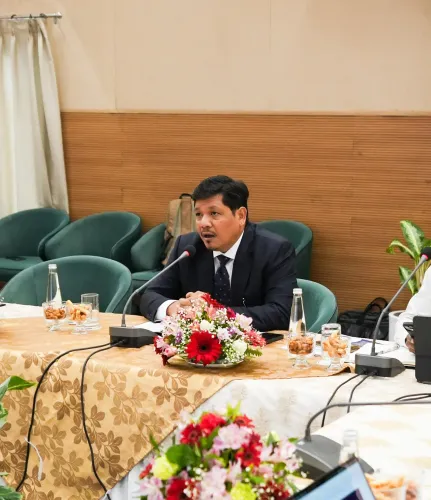
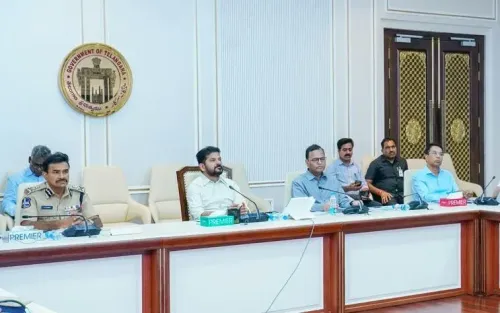
The Telangana government has drawn up a three-phase contingency plan to shield farmers from the impact of El Niño, Agriculture Minister Tummala Nageswara Rao announced on Monday, 13 July following a high-level review meeting held at ICRISAT, Hyderabad. The plan phases its response around three trigger dates — 15 July, 30 July, and 15 August — calibrated to how long monsoon rains remain delayed across the state's 33 districts.
What the Three-Phase Plan Covers
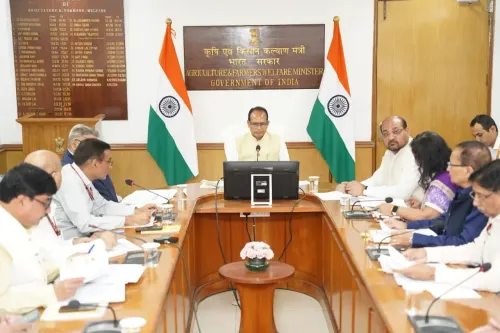
The contingency framework was finalised after Minister Tummala held a comprehensive review with scientists from the India Meteorological Department (IMD), Professor Jayashankar Telangana Agricultural University, Indian Institute of Oilseeds Research (IIOR), Indian Institute of Millets Research (IIMR), and the Central Research Institute for Dryland Agriculture (CRIDA), along with senior officials from agriculture and allied sectors.
Scientists presented reports on drought-tolerant crop varieties and field-level management measures for already-cultivated crops facing dry-spell stress. The minister directed that every scientific recommendation be communicated to farmers at the field level and implemented by district authorities without delay.
Seed Reserves Linked to Rainfall Triggers
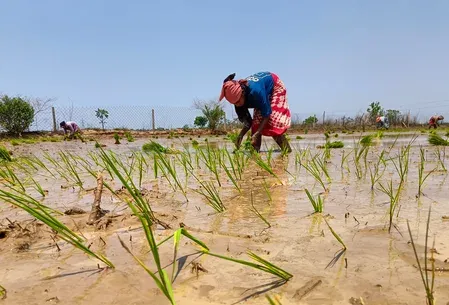
The Director of Agriculture outlined seed requirement estimates tied directly to the delay in monsoon onset. If rains are delayed until 15 July, the state will need 16.30 lakh quintals of seeds. A delay until 30 July reduces the requirement to 13.82 lakh quintals, and if drought-like conditions persist until 15 August, the need drops further to 12.70 lakh quintals. Steps have already been taken to ensure advance availability of seeds across all three scenarios.
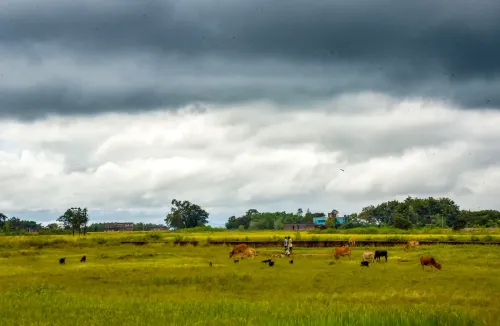
As of the latest report, 13 districts have recorded normal rainfall while 20 districts are facing a rainfall deficit — a distribution that underscores the uneven monsoon pattern this season.
Dynamic District-Specific Response Ordered
Minister Tummala directed the adoption of a Dynamic District-Specific Response (DSR) approach, mandating scientific tools including real-time rainfall monitoring, weather-based agricultural advisories, soil moisture monitoring, crop growth assessment, weather hazard analysis, alternative crop action planning, and crop diversification strategies.
District collectors, agricultural officers, and scientists in rain-deficient districts were instructed to jointly review conditions and act immediately. The minister emphasised that El Niño must be addressed scientifically, not through generic state-wide responses.
Weekly Agro-Weather Bulletin to Guide Farmers
A key outcome of the review is the launch of a comprehensive weekly Agro-Weather Bulletin, to be released every week until the end of August in coordination with the IMD, Irrigation Department, Ground Water Department, Power Department, Agriculture Department, and Horticulture Department.
The bulletin will cover rainfall data by mandal, week-ahead and month-ahead weather forecasts, dry-spell probabilities, temperature ranges, soil moisture and groundwater status, irrigation water availability, power supply conditions, crop health updates, and weather forecasts for catchment areas of irrigation projects. It will be disseminated to farmers through farmer forums, village panchayats, agricultural extension officers, WhatsApp groups, social media, digital platforms, and local media.
The Ground Water Department was separately directed to map groundwater availability by mandal and prepare a district-level water usage plan. With the monsoon season still unfolding, the state's response framework will be tested in the weeks ahead.
Point of View
Trigger-based response to El Niño is notable precisely because it moves beyond the usual post-drought damage assessment. Pre-positioning seeds across three rainfall scenarios and mandating a district-specific scientific protocol are the right instincts. The harder question is execution: whether district collectors and agricultural extension officers — chronically stretched during kharif season — can actually deliver real-time advisories to the last farmer in the last mandal. The weekly Agro-Weather Bulletin is a sound idea, but its value depends entirely on last-mile reach, which has historically been the weakest link in Indian state agricultural extension systems.
NationPress
14 Jul 2026
Frequently Asked Questions
What is Telangana's three-phase El Niño contingency plan?
It is a pre-emptive agricultural response framework with three trigger dates — 15 July, 30 July, and 15 August — each calibrated to a different degree of monsoon delay or drought severity. The plan covers seed reserves, drought-tolerant crop advisories, soil moisture monitoring, and district-level action protocols.
How many seeds has Telangana pre-positioned for El Niño?
The state has prepared seed reserves of 16.30 lakh quintals if rains are delayed until 15 July, 13.82 lakh quintals if delayed until 30 July, and 12.70 lakh quintals if drought-like conditions continue until 15 August. Steps have been taken to ensure advance availability across all three scenarios.
Which districts in Telangana are facing a rainfall deficit?
As of the latest report, 20 of Telangana's 33 districts are recording a rainfall deficit, while 13 districts have received normal rainfall. Rainfall conditions across all 33 districts are being reviewed daily.
What is the Dynamic District-Specific Response (DSR) approach ordered by the minister?
The DSR approach mandates scientific tools tailored to each district's conditions, including real-time rainfall monitoring, weather-based agricultural advisories, soil moisture and crop growth assessment, weather hazard analysis, alternative crop planning, and crop diversification. District collectors and agricultural officers in rain-deficient districts are required to jointly review and act on these measures immediately.
What will the weekly Agro-Weather Bulletin contain?
The bulletin, released every week until end of August, will include mandal-level rainfall data, week-ahead and month-ahead weather forecasts, dry-spell probabilities, temperature ranges, soil moisture and groundwater status, irrigation water availability, power supply updates, crop health advisories, and weather forecasts for catchment areas of irrigation projects. It will be distributed through farmer forums, panchayats, WhatsApp groups, and local media.