Kharif 2024: Centre flags 315 districts at risk as monsoon runs 43% below normal
Synopsis
With rainfall already 43% below normal and El Niño threatening to keep the monsoon weak, the Centre has put 315 districts on a crisis footing — 111 of them with irrigation cover below 25%. The contingency plan is India's most structured pre-emptive agricultural response to a monsoon deficit in recent years, and its execution will determine food security outcomes for millions of rainfed farmers.
Key Takeaways
The Centre launched a kharif contingency plan on 23 June covering 315 vulnerable districts across 12 states .
Southwest monsoon rainfall is running approximately 43% below normal , with the deficit expected to persist through the week ending 2 July , according to IMD .
111 districts are classified high priority with irrigation coverage below 25% ; 76 are medium priority and 128 low priority.
Plan prescribes shift to short-duration crops , pulses , millets , and oilseeds ; water conservation via MGNREGA and VB-GRAMG schemes.
Expanded PM Fasal Bima Yojana coverage and fast-tracked Kisan Credit Cards ordered for at-risk districts.
731 Krishi Vigyan Kendras activated to deliver real-time advisories to farmers via SMS, WhatsApp, and broadcast media.
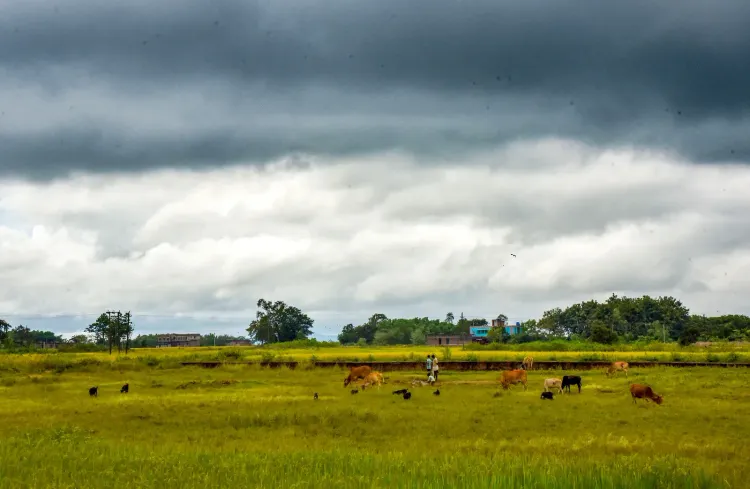
The Centre on Tuesday, 23 June rolled out a special agricultural contingency plan covering 315 vulnerable districts across 12 states, responding to fears that an El Niño weather pattern could sustain a weak southwest monsoon and severely damage kharif crops this season. Rainfall so far has run approximately 43 per cent below normal, according to the India Meteorological Department (IMD), with no significant recovery expected through the week ending 2 July.
Key Developments
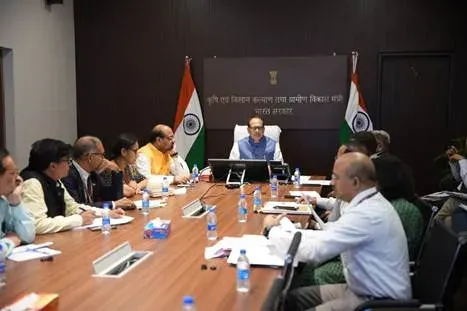
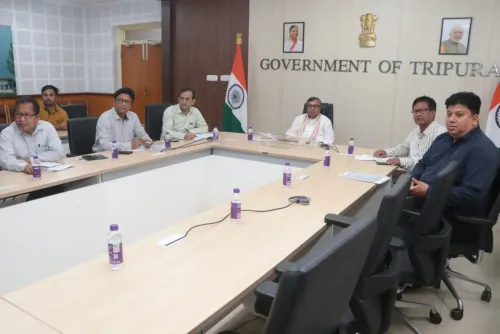
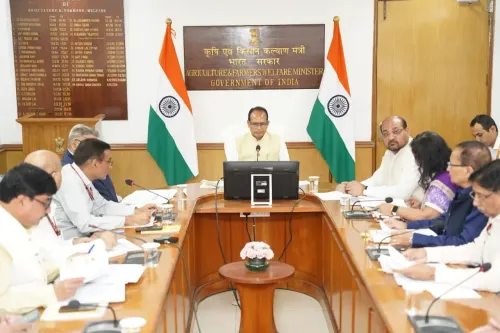
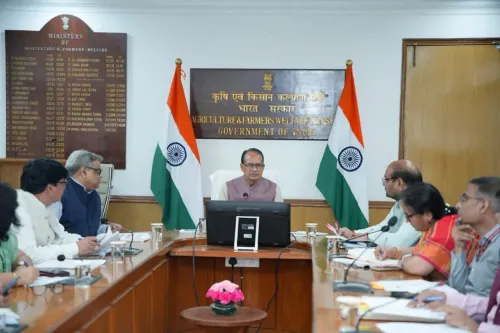
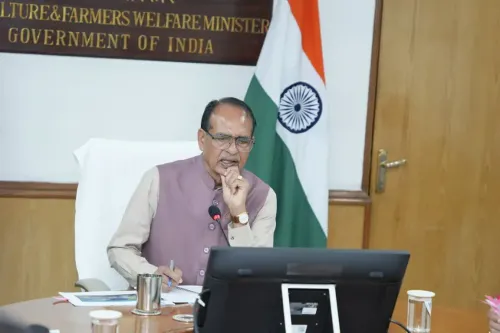
Union Minister for Agriculture and Farmers Welfare Shivraj Singh Chouhan chaired a high-level virtual meeting with state Agriculture Ministers, senior officials, and experts from the Indian Council of Agricultural Research (ICAR), ICAR-CRIDA, and the IMD to assess ground conditions and coordinate a national response.
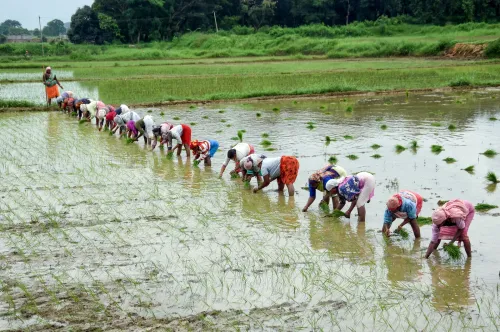
Addressing reporters after the meeting, Chouhan said the southwest monsoon is significantly delayed this year and that the rainfall deficit is placing rainfed agricultural regions — which depend almost entirely on seasonal rains — under acute stress.
How the 315 Districts Are Classified
Of the 315 districts identified as potentially at risk, 111 have been designated high priority, with irrigation coverage below 25 per cent. A further 76 districts fall under the medium-priority bracket, with irrigation coverage between 25 and 50 per cent. The remaining 128 districts are classified as low priority, benefiting from relatively better access to dams and other irrigation infrastructure.
The bulk of these districts are spread across Madhya Pradesh, Maharashtra, Gujarat, Uttar Pradesh, Rajasthan, Karnataka, Bihar, Jharkhand, Telangana, Andhra Pradesh, and Odisha. Agriculture Ministers and District Collectors from these states were urged to accelerate local-level preparedness, Chouhan said.
What the Contingency Plan Prescribes
ICAR and ICAR-CRIDA have prepared district-specific agriculture contingency plans factoring in local climatic conditions, cropping patterns, water resources, and risk profiles. These plans recommend switching to short-duration, drought-tolerant crop varieties, diversifying into pulses, millets (Shri Anna), and oilseeds — all of which perform better under limited moisture — and optimising available water use.
Water conservation has been accorded top priority. Chouhan directed that ponds, reservoirs, farm ponds, check dams, stop dams, and temporary embankment structures be repaired and reinforced immediately under the MGNREGA and VB-GRAMG schemes. Districts under stress have also been advised to prioritise drinking water supply and, where necessary, arrange transfers from water-surplus regions.
Inputs, Insurance, and Farmer Support
On the supply side, Chouhan said adequate seed stocks for the kharif season are already in place, with additional reserves earmarked for the most vulnerable districts. Fertiliser availability — including urea, DAP, MOP, NPK, and SSP — is described as satisfactory. Advance fodder supply plans are also being prepared to counter the risk of livestock shortages if the monsoon remains deficient.
The government is pushing for expanded enrolment under the Pradhan Mantri Fasal Bima Yojana in at-risk districts to ensure timely crop-loss compensation. States have been directed to fast-track the issuance of Kisan Credit Cards to eligible farmers to cover seed losses, resowing costs, and other emergency agricultural expenditure.
The country's 731 Krishi Vigyan Kendras have been tasked with delivering real-time scientific advisories to farmers via SMS, WhatsApp, call centres, radio, television, and social media. With the monsoon's trajectory still uncertain, the effectiveness of these ground-level networks could prove decisive for millions of farming households dependent on the season's outcome.
Point of View
But the Centre's response — classifying districts by irrigation cover rather than treating all 315 uniformly — marks a more granular approach than past drought advisories. The harder test is execution: contingency plans have historically struggled to reach farmers in the highest-risk, lowest-irrigation districts precisely because those areas also have the weakest extension infrastructure. The push to fast-track Kisan Credit Cards is sound in principle, but credit alone cannot substitute for water. If El Niño persists into August, the plan's crop-diversification advisories will need to be backed by guaranteed procurement of alternative crops — otherwise farmers face the double risk of a bad monsoon and an uncertain market.
NationPress
22 Sept 2026
Frequently Asked Questions
Why has the Centre issued a special kharif contingency plan in 2024?
The Centre issued the plan because southwest monsoon rainfall is running approximately 43% below normal as of 23 June 2024, with the IMD forecasting continued weakness through early July. An El Niño weather pattern is raising concerns about a prolonged deficit that could damage kharif crops across rainfed regions.
Which states are most affected by the weak monsoon warning?
The 315 vulnerable districts are concentrated across 12 states: Madhya Pradesh, Maharashtra, Gujarat, Uttar Pradesh, Rajasthan, Karnataka, Bihar, Jharkhand, Telangana, Andhra Pradesh, and Odisha. Agriculture Ministers and District Collectors from these states were specifically urged to accelerate preparedness.
What crops are being recommended as alternatives under the contingency plan?
ICAR and ICAR-CRIDA are recommending a shift toward short-duration, drought-tolerant varieties and a greater focus on pulses, millets (referred to as Shri Anna), and oilseeds — crops that perform better under limited moisture conditions. Crop diversification is a central element of the district-level plans.
How will the government support farmers if crop losses occur?
The government is expanding enrolment under the Pradhan Mantri Fasal Bima Yojana in at-risk districts to ensure timely compensation for crop losses. States have also been directed to fast-track Kisan Credit Card issuance so farmers have funds for seed replacement, resowing, and other emergency inputs.
What is the difference between high-priority and low-priority districts in the plan?
High-priority districts — 111 in total — have irrigation coverage below 25% and are most exposed to a monsoon shortfall. Medium-priority districts (76) have irrigation cover between 25% and 50%, while the 128 low-priority districts have relatively better access to dams and other irrigation sources, making them more resilient to rainfall deficits.