Kharif 2026: Chouhan orders monitoring of 270 rain-deficient districts
Synopsis
With rainfall running 23% below normal and sowing lagging last year's pace, Agriculture Minister Shivraj Singh Chouhan has put 270 sensitive districts under continuous watch — deploying KVKs, state channels, and weekly mission reviews to prevent a supply shock before the Kharif season peaks.
Key Takeaways
Agriculture Minister Shivraj Singh Chouhan ordered continuous monitoring of 270 rain-deficient districts at a high-level review on 21 July 2026 .
Kharif sowing stood at 658.19 lakh hectares as of 17 July 2026 , below last year's level, though paddy, pulses, and other crops showed positive momentum.
Average national rainfall between 1 June and 15 July 2026 was 23% below normal at 227 mm against a normal of 294.2 mm .
East and Northeast India recorded the steepest deficit at 36% ; Southern Peninsular India at 26% .
The South-West Monsoon covered the entire country by 9 July 2026 — one day behind the normal date.
Adequate fertiliser and seed availability has been confirmed for Kharif 2026, with supply monitored through state coordination.
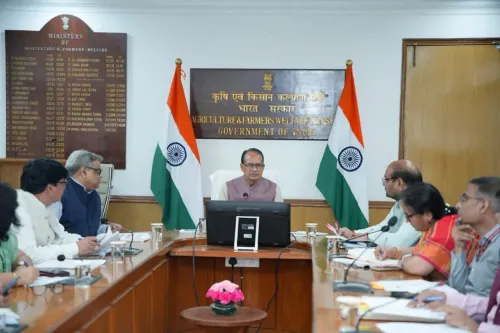
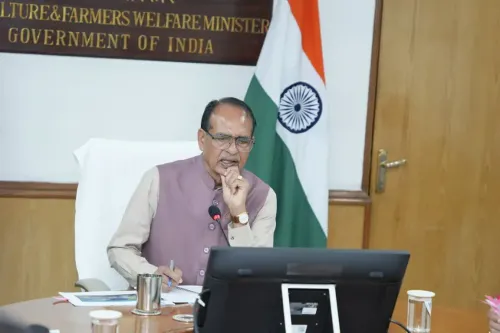
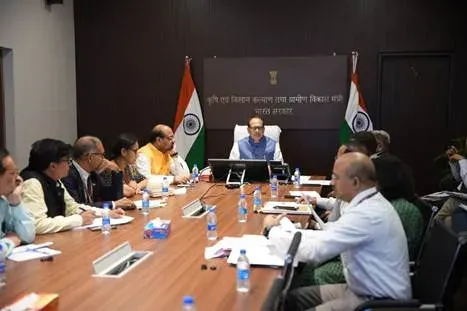
Union Minister for Agriculture and Farmers' Welfare Shivraj Singh Chouhan on Tuesday, 21 July 2026, directed officials to maintain continuous surveillance over agricultural conditions in 270 rain-deficient sensitive districts across India, working in close coordination with state governments to ensure uninterrupted supply of fertilisers and seeds for the Kharif 2026 season. The directive came at a high-level review meeting held in New Delhi.
Key Developments from the Review Meeting
The meeting assessed the progress of Kharif crop sowing, the status of water storage in reservoirs, and the potential impact of El Nino conditions on the ongoing monsoon season. Officials confirmed that adequate availability of fertilisers — particularly urea — and seeds has been secured for Kharif 2026, with supply chains being tracked through regular coordination with state administrations.
Chouhan directed that ground-level information be sourced directly through Krishi Vigyan Kendras (KVKs) and state governments. He emphasised that any shortfalls in the fertiliser distribution system must be resolved swiftly, ensuring farmers receive inputs as per their actual requirement.
Sowing Progress and Crop Coverage
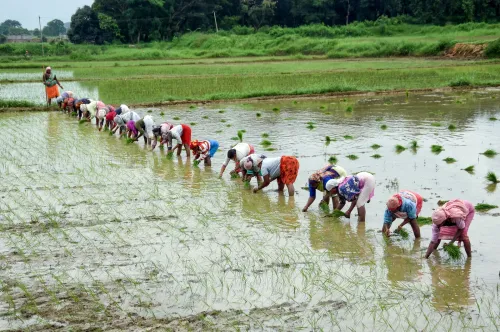
As of 17 July 2026, total Kharif crop sowing across the country stood at 658.19 lakh hectares — a figure lower than the corresponding period last year. However, officials noted positive momentum in sowing of paddy, pulses, and other crops across several states. The minister directed that weekly review meetings be held by the pulses, oilseeds, and cotton missions with state governments, with field-level feedback driving quick corrective action.
Monsoon Situation and Rainfall Deficit
The South-West Monsoon completed its nationwide spread by 9 July 2026, covering the remaining parts of Rajasthan, Haryana, and Punjab — just one day behind the normal date of 8 July. Despite this near-normal onset, rainfall has remained significantly below par in the weeks since.
Between 1 June and 15 July 2026, the country recorded an average rainfall of 227 mm against a normal of 294.2 mm — a deficit of 23 per cent. The shortfall is most acute in East and Northeast India, where only 348 mm fell against a normal of 540.2 mm, representing a 36 per cent deficit. Southern Peninsular India recorded a 26 per cent deficiency, Northwest India a 19 per cent shortfall, and Central India a 13 per cent deficit.
The meeting also reviewed rainfall forecasts from the India Meteorological Department (IMD) and assessed crop conditions using satellite-based indicators including NDVI (Normalised Difference Vegetation Index).
What Happens Next
With the monsoon now spread across the country and favourable sowing conditions emerging in most states, the Centre's focus is shifting to ensuring the deficit does not deepen into a full-scale agricultural crisis. Continuous monitoring through KVKs and state channels, combined with weekly mission-level reviews, will be the primary mechanism for early intervention. The trajectory of rainfall over the next three to four weeks will be critical in determining the final Kharif output for 2026.
Point of View
If sustained, compresses Kharif output and pushes food inflation well before the rabi harvest arrives. The government's response — monitoring through KVKs, weekly mission reviews, and fertiliser tracking — is the right institutional instinct, but the real test is speed of execution at the district level, where input delays historically do the most damage. Notably, East and Northeast India's 36% deficit is the sharpest regional stress point and one that often receives the least policy attention. Whether the Centre's coordination mechanisms translate into on-ground relief before the critical sowing window closes will determine whether 2026 becomes a headline crisis or a managed stress.
NationPress
20 Oct 2026
Frequently Asked Questions
Why is the Centre monitoring 270 rain-deficient districts for Kharif 2026?
The Centre has identified 270 districts as sensitive due to below-normal rainfall, which risks disrupting Kharif crop sowing and input supply. Agriculture Minister Shivraj Singh Chouhan directed continuous monitoring through Krishi Vigyan Kendras and state governments to ensure timely availability of fertilisers and seeds and prevent localised shortfalls from escalating.
How much has India's rainfall deficit been in 2026 so far?
Between 1 June and 15 July 2026, India recorded 227 mm of rainfall against a normal of 294.2 mm — a deficit of 23%. East and Northeast India saw the steepest shortfall at 36%, followed by Southern Peninsular India at 26%, Northwest India at 19%, and Central India at 13%.
What is the current Kharif sowing status as of July 2026?
Total Kharif sowing across India stood at 658.19 lakh hectares as of 17 July 2026, which is lower than the same period last year. However, positive progress has been reported in sowing of paddy, pulses, and other crops in several states.
When did the South-West Monsoon cover all of India in 2026?
The South-West Monsoon completed its nationwide spread by 9 July 2026, covering the remaining parts of Rajasthan, Haryana, and Punjab — just one day later than the normal date of 8 July.
Is there a fertiliser shortage for Kharif 2026?
Officials confirmed at the 21 July review meeting that adequate fertiliser — including urea — and seed availability has been ensured for Kharif 2026. Continuous supply monitoring is being conducted through regular coordination with state governments, and any distribution gaps are to be resolved swiftly.