Shivraj Singh Chouhan Reviews Kharif 2026 Prep, Eyes El Niño Risk
Synopsis
Union Agriculture Minister Shivraj Singh Chouhan chaired a weekly Kharif 2026 review at Krishi Bhawan on 16 June 2026, ordering El Niño-linked district contingency plans, pushing cotton productivity measures and advancing the Dalhan Atmanirbharta Mission for pulses self-reliance.
Key Takeaways
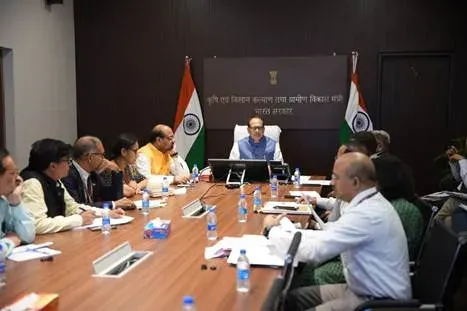
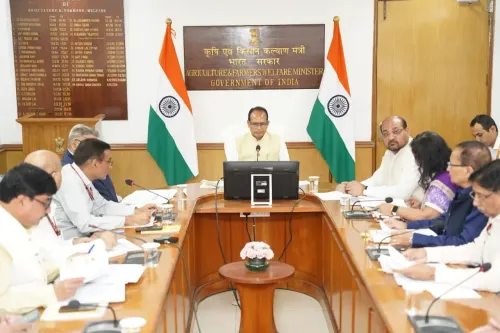
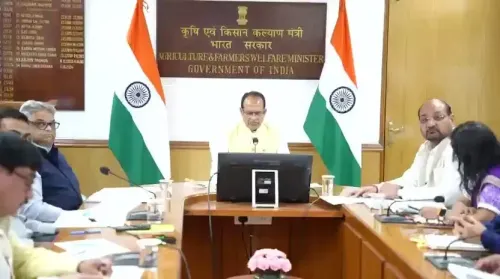
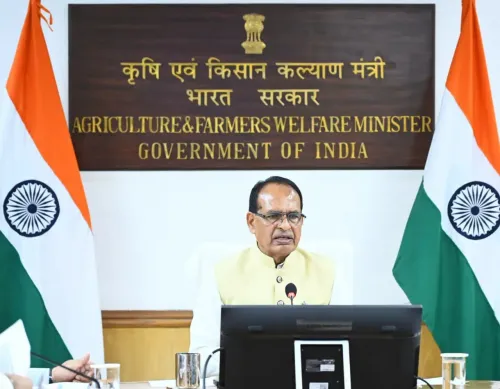
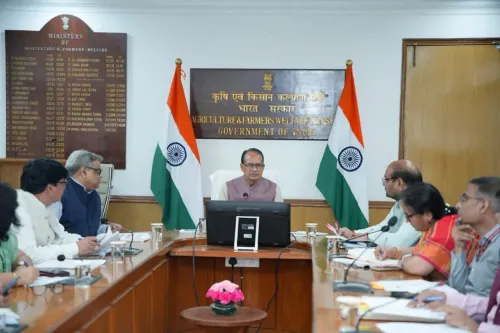
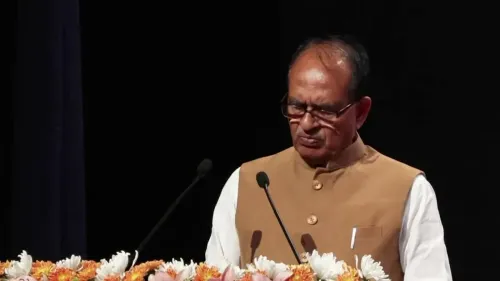
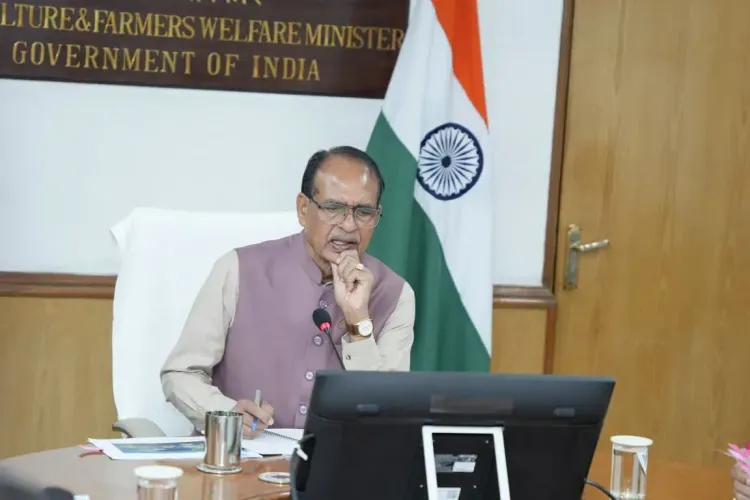
Shivraj Singh Chouhan chaired a high-level weekly agriculture review at Krishi Bhawan, New Delhi on 16 June 2026 .
Officials were directed to identify districts at risk of low or uneven rainfall due to El Niño and prepare crop-wise contingency plans with state governments before peak sowing.
Farmers in at-risk districts are to receive immediate alternatives, advisory support and assistance in the event of any weather-related disruption.
Special focus was placed on boosting cotton production through scientific methods, right variety selection, intercropping, mulching and moisture conservation.
The Dalhan Atmanirbharta Mission was reviewed, with emphasis on raising domestic production of arhar, urad and moong to reduce import dependence and secure farmer incomes.
State-wise preparedness and crop-wise sowing targets for Kharif 2026 were assessed during the meeting.
Union Agriculture Minister Shivraj Singh Chouhan chaired a high-level weekly agriculture review meeting at Krishi Bhawan, New Delhi, on Tuesday, 16 June 2026, directing senior officials to prepare district-level contingency plans for Kharif 2026 in anticipation of potential El Niño-driven rainfall deficits and uneven monsoon distribution across the country.
Context
Posting on X after the meeting, Chouhan said officials were instructed to identify districts at risk of low or uneven rainfall and work with state governments to prepare crop-wise contingency plans in advance. 'ताकि किसी भी मौसमीय चुनौती की स्थिति में किसानों को तुरंत विकल्प, सलाह और सहायता उपलब्ध कराई जा सके' — 'so that in any weather-related challenge, farmers can be immediately provided alternatives, advice and assistance' — he wrote. The meeting also reviewed crop-wise targets, sowing progress and state-wise preparedness for the upcoming Kharif season, which runs from June to October.
Policy Backdrop
El Niño conditions — caused by warming of the central and eastern Pacific Ocean — have historically been associated with deficient or spatially uneven monsoon rainfall in India, making advance contingency planning a critical tool for protecting farm incomes. Weekly Kharif reviews and El Niño-linked contingency frameworks have been standard practice in past episodes of monsoon risk, with state agriculture departments playing a central coordination role. The National Mission for Sustainable Agriculture (2011) had earlier institutionalised mulching, moisture conservation and climate-resilient practices in rainfed districts, forming the policy lineage for the current directives.
On cotton, Chouhan called for large-scale promotion of scientific methods, selection of the right varieties, intercropping, mulching and moisture conservation — measures rooted in the Technology Mission on Cotton launched in 2000 — with the explicit aim of raising both cotton productivity and farmer income. The meeting gave special attention to strategies for boosting cotton output, reflecting ongoing concerns about India's position as a major cotton producer facing yield stagnation.
Stakeholders and Impact
The review also covered the Dalhan Atmanirbharta Mission (Pulses Self-Reliance Mission), which targets raising domestic production of arhar (pigeon pea), urad (black gram) and moong (green gram) to reduce import dependence. Chouhan stated that the government's effort is to make the country as self-reliant as possible in these pulses while securing farmer incomes. Pulse growers, cotton farmers and state agriculture departments are the primary stakeholders who will be engaged in finalising and implementing the district-level plans.
The dual focus — climate resilience for the immediate Kharif 2026 season and structural self-sufficiency in pulses — signals a convergence of short-term weather risk management with longer-term food security goals. India's dependence on pulse imports has been a recurring pressure point on household food budgets and trade balances, making the mission's progress closely watched.
What's Next
The ministry is expected to coordinate with state governments to finalise and roll out district-wise contingency plans before the peak sowing window opens. Sowing progress reports for Kharif 2026 will be monitored through subsequent weekly review meetings at Krishi Bhawan. If El Niño conditions materialise as anticipated, the speed and quality of state-level plan implementation will be the critical test of the preparedness framework Chouhan has now set in motion.
Point of View
A posture that reflects lessons from past monsoon failures where late contingency action hurt farm output and rural incomes. The simultaneous push on cotton productivity and the Dalhan Atmanirbharta Mission reveals a ministry trying to advance structural crop-diversification goals even within a weather-risk-management meeting — a dual-track approach that has become a hallmark of Chouhan's tenure. The emphasis on state-government coordination for district-level plans is politically significant: it distributes accountability downward while keeping the Centre in a directing role, a governance pattern consistent with the BJP's cooperative-federalism framing. Whether state agriculture departments can operationalise district contingency plans before the sowing window closes will determine whether this review translates into on-ground impact or remains a policy signal.
NationPress
24 Sept 2026
Frequently Asked Questions
What was discussed at Shivraj Singh Chouhan's Kharif 2026 agriculture review meeting?
The 16 June 2026 meeting at Krishi Bhawan covered El Niño contingency planning, crop-wise sowing targets, state-wise preparedness, cotton productivity measures and progress on the Dalhan Atmanirbharta Mission for pulses self-reliance.
What is the Dalhan Atmanirbharta Mission?
The Dalhan Atmanirbharta Mission is a government initiative to raise India's domestic production of pulses — particularly arhar, urad and moong — to reduce dependence on imports and improve farmer incomes.
How does El Niño affect India's Kharif season?
El Niño conditions, caused by Pacific Ocean warming, are historically linked to deficient or spatially uneven monsoon rainfall in India, which can reduce Kharif crop yields and hurt farmer incomes if contingency measures are not in place.
What contingency measures did Chouhan order for El Niño-prone districts?
Chouhan directed officials to identify districts at risk of low or uneven rainfall, prepare crop-wise contingency plans in coordination with state governments, and ensure farmers receive immediate alternatives, advisory support and assistance if weather disruptions occur.
What steps did the agriculture ministry announce to boost cotton production in Kharif 2026?
The ministry called for large-scale promotion of scientific cultivation methods, selection of appropriate cotton varieties, intercropping, mulching and moisture conservation techniques to raise cotton productivity and increase farmer income.