Shivraj Singh Chouhan flags El Niño threat, vows ministerial review
Synopsis
Union Agriculture Minister Shivraj Singh Chouhan has flagged the El Niño challenge facing India's farming sector and confirmed he is personally leading ministerial-level reviews to ensure timely government action, invoking PM Modi's leadership as the guiding framework for the response.
Key Takeaways
Union Agriculture Minister Shivraj Singh Chouhan publicly acknowledged the El Niño threat to India's agricultural sector on 23 June 2026 .
Chouhan confirmed he is personally conducting regular reviews at the ministerial level to monitor the situation.
The Minister stated that his entire team is continuously assessing conditions to enable timely government action .
India has standing policy tools — including Pradhan Mantri Fasal Bima Yojana and district-level contingency plans — developed after the 2015 El Niño episode.
Key variables to watch include the IMD's updated long-range monsoon forecast and any state-level drought declarations that may follow.
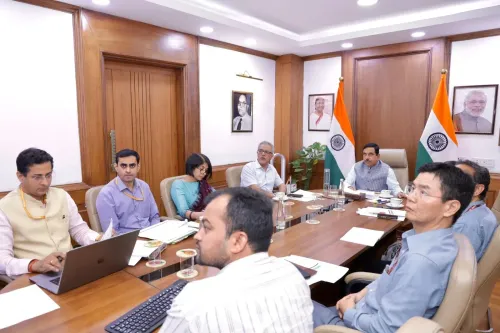
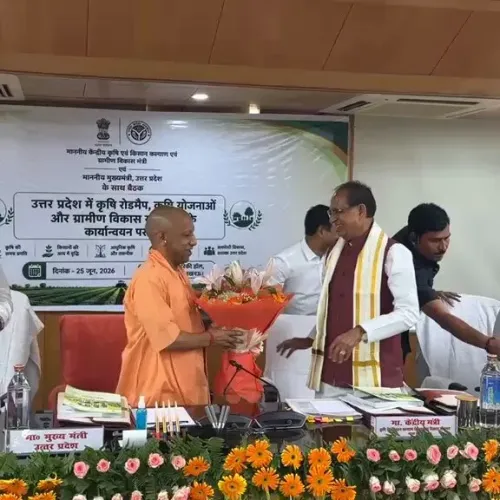
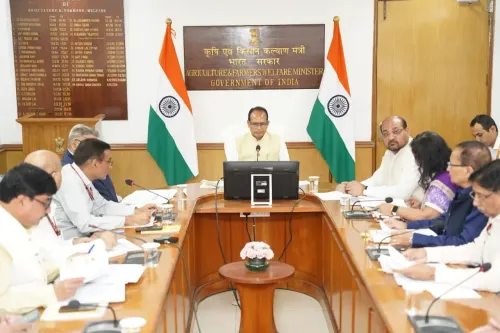
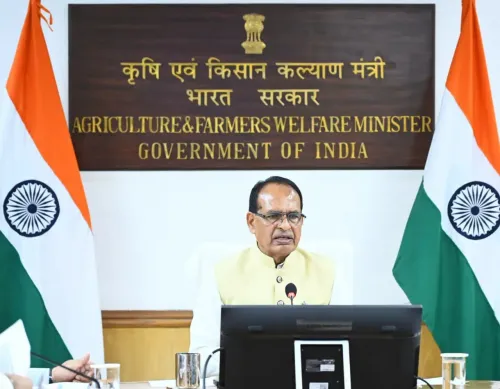
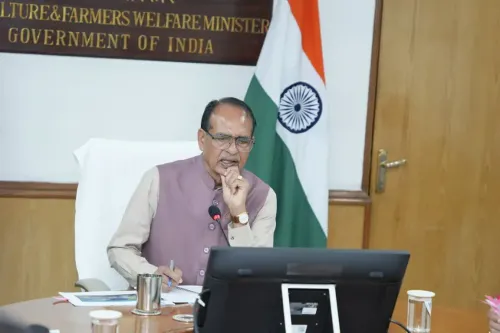
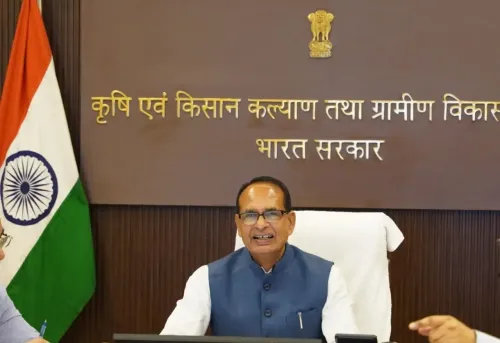
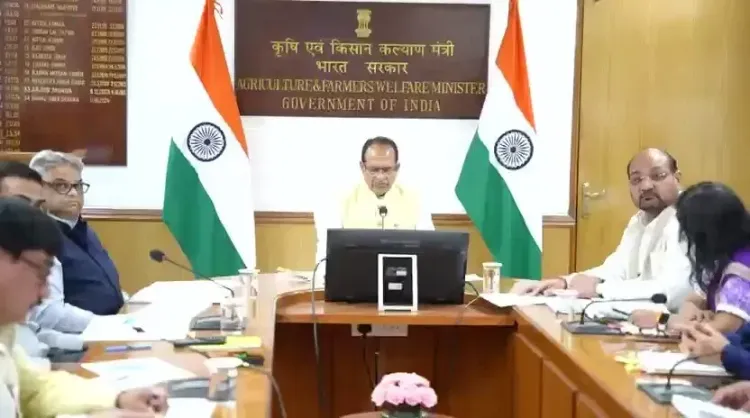
Union Agriculture Minister Shivraj Singh Chouhan on Tuesday, 23 June 2026 acknowledged the mounting challenge that the ongoing El Niño event poses to India's agricultural sector, asserting that the government is conducting regular ministerial-level reviews to stay ahead of any adverse impact on crop production and farmer welfare.
Posting in Hindi on X, the Minister stated: 'देश और दुनिया इस समय अल नीनो की चुनौती का सामना कर रही है' ('The country and the world are currently facing the challenge of El Niño'). He added that while the agricultural sector faces a significant challenge, the government under Prime Minister Narendra Modi does not shy away from difficulties. 'I myself am conducting regular reviews at the ministerial level,' he wrote, adding that his entire team is continuously assessing the situation 'so that necessary steps can be taken in time.'
Context
El Niño is a periodic warming of surface waters in the central and eastern Pacific Ocean that disrupts global weather patterns. For India, its most consequential effect is a suppression or uneven distribution of the southwest monsoon — the lifeline of kharif crops such as paddy, pulses, and oilseeds that feed hundreds of millions of people. When El Niño conditions intensify during the June-to-September monsoon window, agricultural output, rural incomes, and food prices can all come under simultaneous pressure.
The India Meteorological Department (IMD) tracks El Niño-Southern Oscillation (ENSO) signals and issues long-range monsoon forecasts that feed directly into the Ministry of Agriculture's contingency planning. Chouhan's public acknowledgement of ministerial-level reviews signals that the government has placed the 2026 El Niño episode on its highest-priority watch list.
Policy Backdrop
India has institutionalised responses to El Niño over successive administrations. In 2015, the Ministry of Agriculture rolled out district-level contingency plans and crop-specific advisories to counter a monsoon shortfall linked to that year's El Niño. The following year, in 2016, the government launched Pradhan Mantri Fasal Bima Yojana (PMFBY) — a flagship crop-insurance scheme designed to protect farmers against weather-induced losses, including those triggered by El Niño-driven drought.
Beyond insurance, the broader climate-resilience architecture includes promotion of drought-tolerant seed varieties, micro-irrigation expansion, and early-warning advisory systems that relay real-time agronomic guidance to farmers at the block and panchayat level. Chouhan's statement suggests these standing mechanisms are being actively activated rather than held in reserve.
Stakeholders and Impact
India's farming community — estimated at well over 100 million cultivator households — stands as the most directly affected stakeholder. A deficient or erratic monsoon compresses yields, depresses farm incomes, and can push vulnerable households into debt. State governments in rain-dependent agrarian belts such as Madhya Pradesh, Maharashtra, Rajasthan, Karnataka, and Uttar Pradesh typically trigger relief measures — input subsidies, fodder camps, and employment guarantee schemes — when central drought advisories are issued.
Food-price stability is a secondary but politically sensitive concern: a shortfall in pulses or edible oils can transmit quickly into retail inflation, affecting urban consumers and complicating monetary policy. The Ministry's early-intervention posture, as signalled by Chouhan, is partly aimed at breaking this transmission chain before it escalates.
What's Next
Attention will now turn to the IMD's updated long-range monsoon forecast and any subsequent state-level drought declarations. Analysts and farmer organisations will watch for concrete follow-up actions — additional central assistance packages, enhanced PMFBY payouts, or accelerated release of contingency funds — that translate the Minister's assurance of timely steps into measurable on-ground relief. Inter-ministerial coordination with the Ministry of Jal Shakti on reservoir levels and with the Ministry of Consumer Affairs on buffer-stock management will also be critical in the weeks ahead.
Point of View
The statement also serves to reassure the farm vote bank that the highest level of political authority is engaged. The move fits a broader pattern in which the BJP government has sought to project proactive crisis management on agrarian issues, particularly after criticism over delayed drought relief in earlier cycles. Whether the signal translates into substantive, verifiable policy action will determine its credibility with farmers and opposition alike.
NationPress
22 Sept 2026
Frequently Asked Questions
What is El Niño and how does it affect Indian agriculture?
El Niño is a periodic warming of Pacific Ocean surface waters that typically weakens or disrupts India's southwest monsoon, reducing rainfall during the critical June-to-September kharif season and raising the risk of drought, lower crop yields, and higher food prices.
What did Agriculture Minister Shivraj Singh Chouhan say about El Niño?
On 23 June 2026, Chouhan posted on X that India's agricultural sector faces a major challenge from the ongoing El Niño event, and that he is personally conducting regular ministerial-level reviews so that necessary steps can be taken in time.
What government schemes protect Indian farmers from El Niño-related losses?
The primary central scheme is Pradhan Mantri Fasal Bima Yojana (PMFBY), launched in 2016, which provides crop-insurance cover against weather-induced losses including drought. District-level contingency plans and drought-resistant seed programmes also form part of the response toolkit.
Which crops are most at risk from El Niño in India?
Kharif crops — particularly paddy, pulses, and oilseeds — that depend heavily on monsoon rainfall are most vulnerable. A deficient or erratic monsoon can sharply reduce yields and depress farm incomes across states like Madhya Pradesh, Maharashtra, Rajasthan, and Karnataka.
What should Indian farmers watch for in the coming weeks?
Farmers and state governments should track the India Meteorological Department's updated long-range monsoon forecast, any central drought advisories, and announcements of additional financial assistance, enhanced insurance payouts, or input subsidies from the Ministry of Agriculture.