Shivraj Reviews UP Farm, Rural Plans With CM Yogi
Synopsis
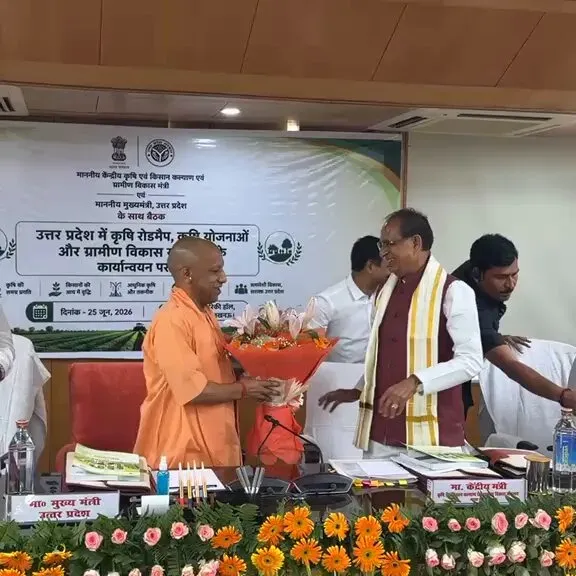
Union Agriculture Minister Shivraj Singh Chouhan reviewed Uttar Pradesh's agriculture and rural development schemes in Lucknow with CM Yogi Adityanath on 25 June 2026, focusing on a scientific farming roadmap, district contingency plans and climate resilience amid El Niño fears.
Key Takeaways
Shivraj Singh Chouhan chaired a comprehensive agriculture review meeting in Lucknow on 25 June 2026 with CM Yogi Adityanath and senior UP ministers.
The meeting flagged El Niño , below-normal rainfall and rising temperatures as key threats to Uttar Pradesh 's agricultural season.
A scientific agricultural roadmap being prepared for UP was discussed in detail, covering district-wise contingency planning.
Focus areas included short-duration, low-water crops , water conservation, crop diversification, improved seeds and modern technology adoption.
Timely delivery of scientific advisory to farmers was highlighted as a priority to bridge the gap between research and ground-level practice.
Uttar Pradesh was described as a 'primary pillar of national food security,' underlining the national stakes of the state's farm performance.
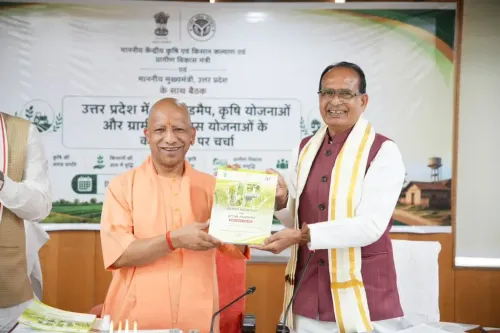
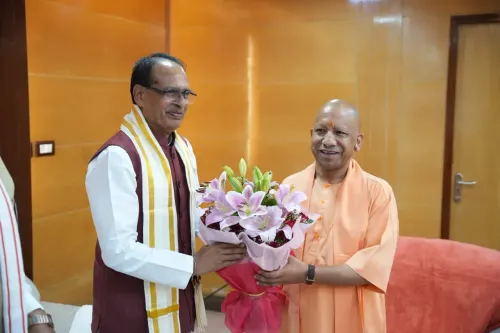
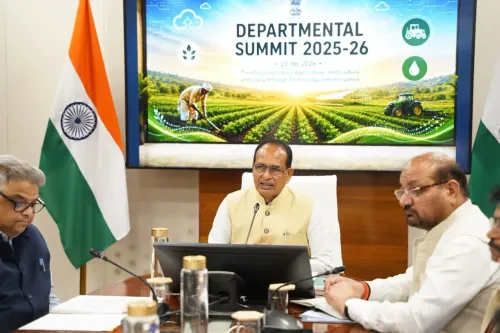
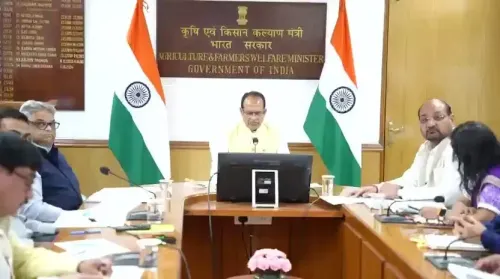
Union Agriculture Minister Shivraj Singh Chouhan on Thursday, 25 June 2026, chaired a comprehensive review meeting in Lucknow with Uttar Pradesh Chief Minister Yogi Adityanath and senior state officials to assess agriculture and rural development schemes, with a sharp focus on climate resilience and a scientific farming roadmap for the state.
Posting on X, Chouhan wrote: 'आज लखनऊ में... उत्तर प्रदेश की कृषि और ग्रामीण विकास योजनाओं की व्यापक समीक्षा की' ('Today in Lucknow, a comprehensive review of Uttar Pradesh's agriculture and rural development schemes was conducted'). The meeting was also attended by Deputy Chief Minister Keshav Prasad Maurya, State Agriculture Minister S.P. Shahi, and Minister of State for Agriculture Baldev Singh Aulakh, along with senior bureaucrats.
Context
The review comes at a moment of heightened concern over monsoon reliability. Chouhan's post flagged the potential impact of El Niño, warning of 'below-normal rainfall, rising temperatures and climate change presenting new challenges.' Uttar Pradesh, India's most populous state, is a cornerstone of national foodgrain output, making its agricultural preparedness a matter of food-security significance for the entire country.
The minister underscored that advancing with a 'scientific approach' is now essential to make farming 'more resilient, sustainable and profitable' — language that signals a shift from reactive relief toward proactive, data-driven planning at the state level.
Policy Backdrop
The discussion centred on a scientific agricultural roadmap being prepared specifically for Uttar Pradesh. Key agenda items included district-wise contingency plans, promotion of short-duration and low-water crops, water conservation, crop diversification, availability of improved seeds, adoption of modern technology, and timely delivery of scientific advisory to farmers.
These priorities align with the framework of the National Mission for Sustainable Agriculture, launched in 2011 under the National Action Plan on Climate Change, which promotes climate-resilient farming practices. The Rashtriya Krishi Vikas Yojana, introduced in 2007, similarly supports state-level agricultural planning of this kind. The Pradhan Mantri Kisan Samman Nidhi scheme, operational since 2019, provides income support to farmer families and forms a parallel pillar of the Centre's agrarian strategy.
Stakeholders and Impact
Uttar Pradesh is home to tens of millions of farm households, and any deterioration in monsoon conditions could affect both crop yields and rural incomes across the state. The emphasis on district-wise contingency plans suggests the administration intends to tailor responses to local agro-climatic conditions rather than apply a one-size-fits-all approach.
Promotion of low-water and short-duration crop varieties is particularly relevant for rain-shadow districts in the state's Bundelkhand and eastern regions, which are historically vulnerable to drought. Timely scientific advisory — highlighted explicitly in the minister's post — addresses a long-standing gap between research institutions and ground-level farmers.
What's Next
The immediate watch point is the finalisation and rollout of the scientific agricultural roadmap and district contingency plans ahead of the 2026-27 agricultural season. Centre-state alignment on funding mechanisms — potentially through the Rashtriya Krishi Vikas Yojana or other central schemes — will determine how quickly these plans translate into on-ground action for Uttar Pradesh's farming communities.
Point of View
A narrative shift with implications for how agrarian distress is managed ahead of the next UP election cycle. The emphasis on district-level contingency plans suggests an attempt to institutionalise climate adaptation at a granular level, moving beyond broad national missions. Whether the roadmap translates into budgetary commitments and measurable outcomes will be the real test of this coordination exercise.
NationPress
24 Sept 2026
Frequently Asked Questions
Why did Shivraj Singh Chouhan visit Lucknow on 25 June 2026?
Union Agriculture Minister Shivraj Singh Chouhan visited Lucknow on 25 June 2026 to chair a comprehensive review of Uttar Pradesh's agriculture and rural development schemes alongside Chief Minister Yogi Adityanath and senior state ministers.
What is the scientific agricultural roadmap for Uttar Pradesh?
A scientific agricultural roadmap is being prepared for Uttar Pradesh covering district-wise contingency plans, promotion of short-duration and low-water crops, water conservation, crop diversification, improved seeds, modern technology and timely scientific advisory to farmers.
How does El Niño affect Indian agriculture and Uttar Pradesh?
El Niño is a climate phenomenon associated with deficient monsoons and higher temperatures in India, which can reduce crop yields and strain rural incomes. Uttar Pradesh, as a major foodgrain producer, is particularly vulnerable to below-normal rainfall linked to El Niño conditions.
What is the Rashtriya Krishi Vikas Yojana and how does it relate to UP's farm plans?
The Rashtriya Krishi Vikas Yojana, introduced in 2007, is a central scheme that supports state-level agricultural planning and development. It provides a potential funding framework for implementing district contingency plans and the scientific roadmap discussed at the Lucknow meeting.
Who attended the agriculture review meeting in Lucknow with Shivraj Singh Chouhan?
The meeting was attended by UP Chief Minister Yogi Adityanath, Deputy Chief Minister Keshav Prasad Maurya, State Agriculture Minister S.P. Shahi, Minister of State for Agriculture Baldev Singh Aulakh, and senior government officials.