Shivraj Singh Chouhan Meets Agriculture Students, Calls Fields India's Real Ministry
Synopsis
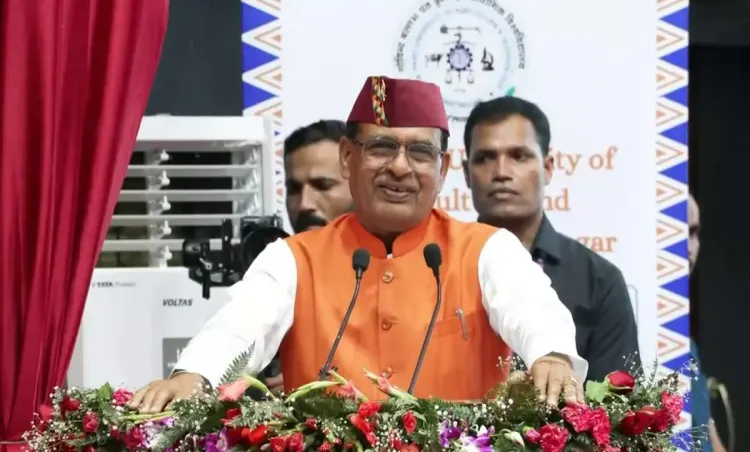
Union Agriculture Minister Shivraj Singh Chouhan met with agriculture students on 26 June 2026, declaring that the ministry runs from fields, not offices. He called the interaction an encounter with the bright future of Indian agriculture, underscoring a governance philosophy rooted in ground-level engagement.
Key Takeaways
Shivraj Singh Chouhan held a dialogue with agriculture students on 26 June 2026 .
The minister stated: 'The Agriculture Ministry does not run only from offices — it runs from the fields.' Chouhan described the students as the 'bright future of Indian agriculture.' The engagement aligns with a broader pattern of Union ministers conducting institutional outreach to bridge policy and on-farm realities.
India's agricultural education network, anchored by ICAR -affiliated universities, is a key platform for such ministerial interactions.
Potential policy announcements on student internship schemes or agricultural education linkages may follow ahead of the monsoon session of Parliament.
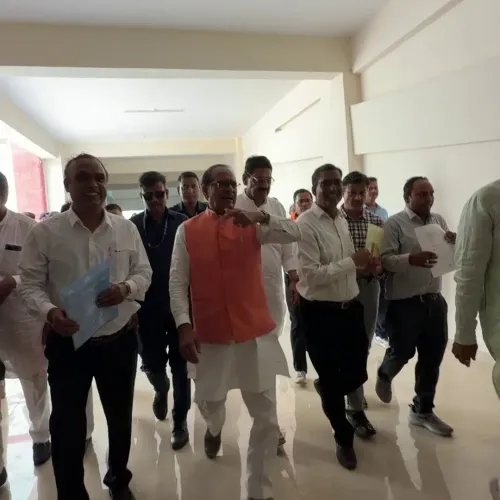
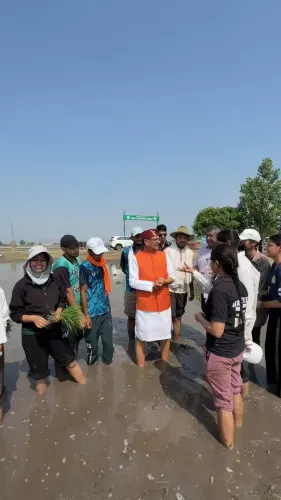
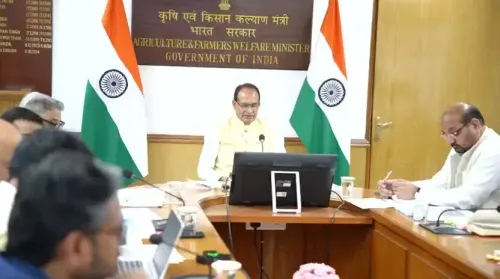
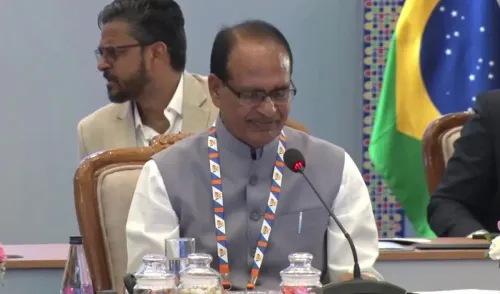
Union Agriculture Minister Shivraj Singh Chouhan on Friday, 26 June 2026, engaged with agriculture students in a dialogue session, describing the interaction as an encounter with the 'bright future of Indian agriculture.' The minister used the occasion to reinforce his philosophy that agricultural governance must be rooted in ground realities, not confined to administrative offices.
Posting on X, Chouhan wrote: 'कृषि मंत्रालय केवल दफ्तरों से नहीं चलता, खेतों से चलता है।' ['The Agriculture Ministry does not run only from offices — it runs from the fields.'] He added that in conversing with students, he felt he had met the bright future of Indian agriculture.
Context
The statement reflects a recurring emphasis by Chouhan on direct engagement with farmers, rural communities, and now the next generation of agriculture professionals. As a four-term former Chief Minister of Madhya Pradesh, Chouhan built a political identity closely tied to agrarian welfare, a posture he has carried into his tenure at the Ministry of Agriculture and Farmers Welfare and Rural Development.
Union ministers have periodically conducted field visits and institutional interactions to signal ground-level commitment to agricultural policy. Such sessions are seen as a bridge between administrative decision-making and on-farm implementation challenges.
Policy Backdrop
India's agricultural education ecosystem is anchored by a network of institutions affiliated with the Indian Council of Agricultural Research (ICAR), which oversees agricultural universities and research stations across the country. Successive governments have sought to deepen the linkage between these institutions and the policy apparatus.
The Skill India Mission, launched in 2015, extended vocational training to agriculture and allied sectors, aiming to equip rural youth with practical competencies. These efforts address a long-standing challenge: attracting and retaining educated young people in agriculture at a time when the sector faces productivity pressures and demographic shifts away from farm-based livelihoods.
Stakeholders and Impact
The primary beneficiaries of such ministerial outreach are agriculture students and rural youth — a constituency that straddles both the education system and the farming economy. Engagements of this nature can shape policy priorities around agricultural internships, research funding, and curriculum alignment with ground-level needs.
For students pursuing careers in agronomy, horticulture, animal husbandry, or rural development, direct access to the ministry's top leadership signals institutional intent to treat them as stakeholders in policy design, not merely recipients of schemes.
What's Next
With the monsoon session of Parliament approaching, observers will watch for concrete announcements on agricultural education linkages or structured student internship programmes emerging from the ministry. Chouhan's public framing — positioning students as the future of Indian agriculture — could presage policy initiatives aimed at formalising such engagement.
The broader question is whether this dialogue translates into institutional mechanisms that connect ICAR-affiliated universities, the ministry, and farming communities in a sustained, programmatic way — moving beyond symbolic outreach toward structural reform in how agricultural knowledge is generated and applied.
Point of View
Not offices' — is a deliberate positioning that serves both a governance message and a political one, reinforcing his identity as a farmer-friendly administrator ahead of what could be a consequential monsoon session of Parliament. The outreach to students signals an attempt to build a constituency among educated rural youth, a demographic that has grown increasingly vocal about the gap between agricultural policy and ground realities. If this translates into structured programmes linking ICAR institutions with the ministry, it could mark a meaningful evolution in how India's agricultural bureaucracy engages with the next generation of practitioners. For now, it reads as a strong rhetorical signal awaiting institutional follow-through.
NationPress
25 Sept 2026
Frequently Asked Questions
What did Shivraj Singh Chouhan say about the Agriculture Ministry?
He said the Agriculture Ministry does not run only from offices but from the fields, emphasising ground-level governance over administrative processes.
Why did Shivraj Singh Chouhan meet with agriculture students?
Chouhan engaged with agriculture students in a dialogue session on 26 June 2026, describing the interaction as an encounter with the bright future of Indian agriculture.
What is Shivraj Singh Chouhan's role in the central government?
Shivraj Singh Chouhan is the Union Minister of Agriculture and Farmers Welfare and Rural Development, and a senior BJP leader and former four-term Chief Minister of Madhya Pradesh.
How does the Agriculture Ministry engage with agricultural education institutions?
The ministry engages through ICAR-affiliated agricultural universities and initiatives like the Skill India Mission, which has extended vocational training to agriculture and allied sectors since 2015.
What policy announcements might follow Chouhan's student interaction?
Observers are watching for announcements on agricultural education linkages or student internship schemes, potentially ahead of the upcoming monsoon session of Parliament.