CM Himanta: 14,000 Assam children treated for heart disease
Synopsis
Assam Chief Minister Himanta Biswa Sarma announced on 10 August 2026 that the state government has enabled free treatment for over 14,000 children with Congenital Heart Disease, with 14 more children now being sent to Mumbai and Bengaluru for fully sponsored cardiac surgery.
Key Takeaways
The Assam government has facilitated free treatment for over 14,000 children with Congenital Heart Disease (CHD) at leading Indian hospitals.
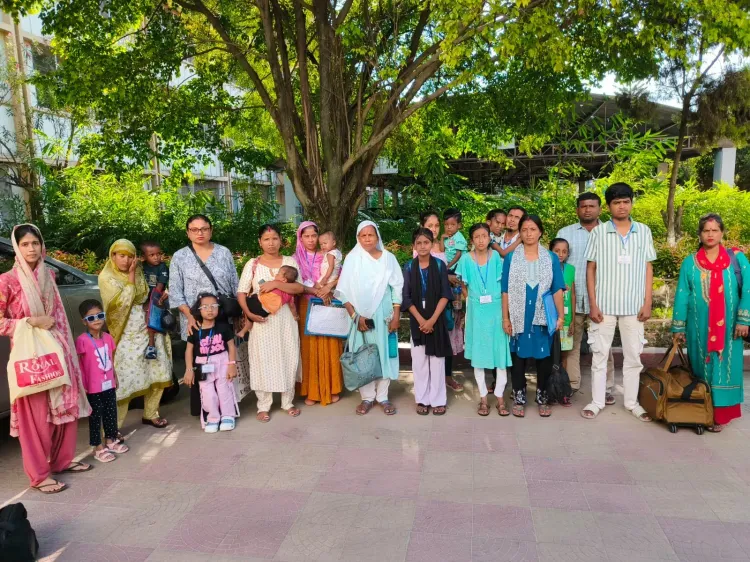
A fresh batch of 14 children is being sent to hospitals in Mumbai and Bengaluru for fully sponsored cardiac care.
The programme covers children who cannot afford high-cost paediatric cardiac surgery, removing the financial burden from families.
The out-of-state referral model supplements national schemes like Ayushman Bharat by bridging cost gaps for complex procedures.
CM Himanta Biswa Sarma announced the milestone on 10 August 2026 , framing it as a core state governance commitment.
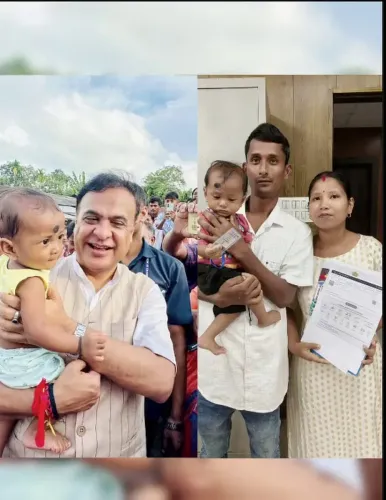
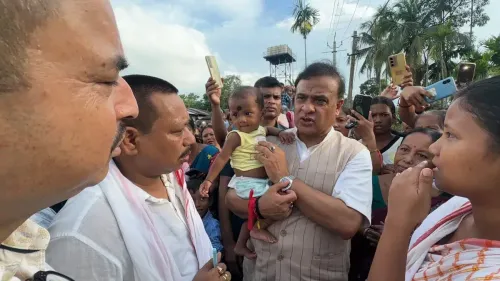
Fourteen thousand children in Assam have received free surgical care for Congenital Heart Disease — and Assam Chief Minister Himanta Biswa Sarma says the state is not stopping there. On Monday, 10 August 2026, the Chief Minister announced that another 14 children are being sent to hospitals in Mumbai and Bengaluru for fully sponsored treatment, underscoring what has become one of the state government's most visible health commitments.
14,000 surgeries and counting
The scale is striking. Congenital Heart Disease — structural defects present from birth — is among the most expensive conditions a family in rural or semi-urban Assam can face. Open-heart procedures at top-tier hospitals routinely cost several lakh rupees, an amount that can push an ordinary household into debt or force a family to abandon treatment altogether. The Assam government's programme has absorbed that cost for over 14,000 children, routing them to some of India's best cardiac centres.
CM Sarma framed the mission in plain terms: 'every child deserves a fighting chance, not a bill their family can't afford.' It is a line that cuts through policy language and lands where the stakes actually are — at the bedside.
Why Mumbai and Bengaluru
Assam does not yet have the full paediatric cardiac surgery infrastructure to handle every complex case in-state. By empanelling leading hospitals in Mumbai and Bengaluru, the state government can offer procedures that require specialised teams and equipment unavailable locally. This out-of-state referral model complements national coverage schemes like Ayushman Bharat, which cap reimbursements at levels that often fall short of the actual cost of complex paediatric cardiac surgery. The state's top-up funding bridges that gap.
The current batch of 14 children is headed to those cities under fully sponsored arrangements — travel, treatment, and associated costs covered by the state.
A BJP-led health push in the North-East
Under CM Sarma, Assam has positioned itself as a reform-oriented state within India's north-east, using targeted welfare programmes to demonstrate governance dividends. The CHD initiative fits a broader pattern: high-visibility, high-impact interventions in health and education that are politically resonant precisely because the beneficiaries are children and the adversary is poverty, not a rival party. As convenor of the North-East Democratic Alliance (NEDA), Sarma's governance record in Assam carries weight beyond the state's borders.
Every new batch of children referred for treatment will be watched as a signal of whether the programme can sustain its momentum — and whether Assam's health budget in the next fiscal cycle earmarks fresh funds to keep the pipeline open.
Fourteen thousand hearts healed. Fourteen more on their way. The number that matters most is the one that comes next.
Point of View
Particularly for high-cost paediatric procedures. For CM Sarma, the optics are powerful — children as beneficiaries, poverty as the obstacle — and the programme reinforces Assam's claim to being a model BJP-governed state in the north-east. The sustained out-of-state referral pipeline also signals a pragmatic acknowledgement of Assam's infrastructure limits, choosing outcomes over optics of local capacity. Whether the programme scales further will depend on the next state budget cycle and the pace of building in-state paediatric cardiac capacity.
NationPress
25 Sept 2026
Frequently Asked Questions
What is the Assam government's CHD treatment programme?
The Assam government's Congenital Heart Disease programme funds free surgical treatment for children born with heart defects, sending them to empanelled hospitals across India at no cost to their families.
How many children have been treated under Assam's free heart surgery scheme?
Over 14,000 children with Congenital Heart Disease have received free treatment under the Assam government's programme, according to CM Himanta Biswa Sarma's announcement on 10 August 2026 .
Which hospitals are treating Assam children with heart disease?
The latest batch of 14 children is being sent to hospitals in Mumbai and Bengaluru . The programme empanels some of India's leading cardiac centres for complex paediatric cases.
Is the Assam CHD programme different from Ayushman Bharat?
Yes. While Ayushman Bharat provides national health coverage, it often does not fully cover the cost of complex paediatric cardiac surgery. The Assam state programme provides additional funding to bridge that gap.
Who is Himanta Biswa Sarma?
Himanta Biswa Sarma is the Chief Minister of Assam since 2021 , a senior BJP leader, and the convenor of the North-East Democratic Alliance (NEDA).