CM Himanta Earmarks ₹1 Lakh Each for HIV-Affected Kids, Widows in Assam Budget 2026
Synopsis
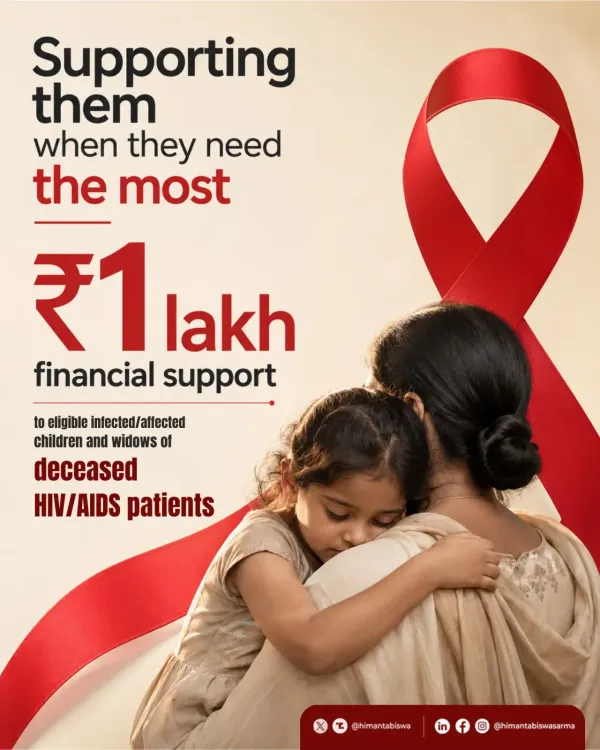
Assam CM Himanta Biswa Sarma announced on 20 July 2026 that AssamBudget2026 earmarks ₹1 lakh each for over 140 children and widows infected or affected by HIV, extending the state's AssamCares direct-benefit welfare framework to one of its most marginalised groups.
Key Takeaways
AssamBudget2026 has earmarked ₹1 lakh each for over 140 HIV-affected children and widows in Assam.
The allocation targets families where the sole breadwinner has died due to HIV, compounding economic and social hardship.
The relief falls under the AssamCares state welfare initiative focused on direct financial transfers to vulnerable groups.
The announcement aligns with India's National AIDS Control Programme (NACP) framework but fills a cash-assistance gap not covered by central schemes.
Disbursement details, including the beneficiary-identification process and nodal agency, are yet to be specified by the Assam Health Department .
The scheme could serve as a model for other Northeast states addressing HIV-affected households outside central welfare nets.
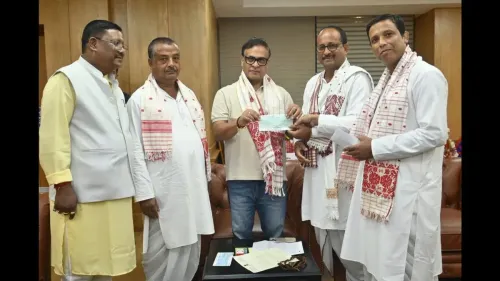
Assam Chief Minister Himanta Biswa Sarma on Monday, 20 July 2026, announced that AssamBudget2026 has set aside ₹1 lakh each for over 140 children and widows who are infected or affected by HIV, acknowledging the acute financial distress faced by families that lose their sole breadwinner to the disease.
Context
Posting on X under the hashtag #AssamCares, CM Sarma stated: 'We understand the agony of families affected by HIV or where the sole breadwinner loses their life due to the disease. To ease their sufferings, #AssamBudget2026 has earmarked ₹1 lakh each to over 140 children and widows who are infected/affected with HIV.' The announcement targets one of the most socially marginalised groups in the state — households left without income after an HIV-related death, where stigma often compounds economic hardship.
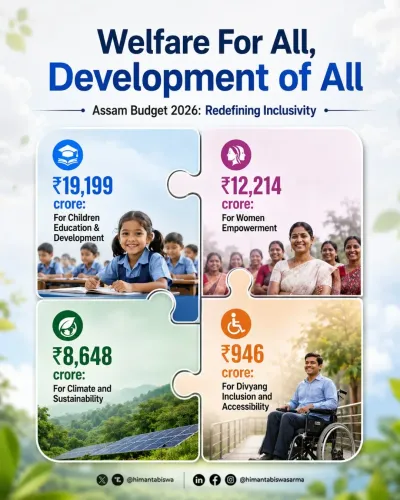
The allocation falls under the AssamCares umbrella, the state government's welfare initiative designed to deliver direct financial relief to vulnerable populations, including those affected by serious disease or the sudden loss of a family's primary earner.
Policy Backdrop
India has operated the National AIDS Control Programme (NACP) since 1992, progressively expanding treatment access and social-welfare linkages for people living with HIV through successive phases administered by the National AIDS Control Organisation (NACO). While the central framework covers antiretroviral therapy and counselling, direct cash assistance to affected families has historically remained a gap that state governments have been encouraged to fill through their own budgets.
Assam's BJP-led administration has built a pattern of targeted, direct-benefit transfers for health-related vulnerabilities since coming to power in 2016, including the Atal Amrit Abhiyan cashless health-coverage scheme for critical illnesses. The AssamBudget2026 HIV allocation extends that pattern into social-welfare territory, combining a health-equity rationale with a direct-transfer mechanism.
Stakeholders and Impact
The immediate beneficiaries are over 140 children and widows in Assam who are either living with HIV themselves or have been left economically vulnerable by the death of an HIV-positive breadwinner. For these households, a one-time grant of ₹1 lakh can cover several months of nutrition, schooling costs, or medical co-payments not reimbursed by central schemes.
Civil-society groups working on HIV support in the Northeast have long flagged that stigma prevents many affected families from accessing even the limited state support available to them. A named, budgeted allocation signals institutional recognition that may encourage more families to come forward and register with the Assam Health Department.
What's Next
The operational details — including the identification process, disbursement timeline, and the nodal agency responsible — are expected to be clarified by the Assam Health Department in the weeks following the budget announcement. Advocacy groups and legislators are likely to press for a transparent beneficiary-selection framework when the Assam Legislative Assembly next takes up the budget for detailed scrutiny.
If the disbursement mechanism is rolled out effectively, the scheme could set a replicable precedent for other Northeast states grappling with HIV-affected households that fall outside the coverage of central welfare nets.
Point of View
The announcement reinforces his administration's brand of targeted direct-benefit transfers as a complement to larger central health schemes — a formula that has proven politically effective in the Northeast. The relatively small beneficiary count of 140-plus also suggests the government is prioritising verifiable, high-need cases over broad coverage, which could be a feature or a limitation depending on how rigorously the identification process is designed. The real test will be whether disbursement follows through before the next budget cycle, or whether the allocation joins a long list of announced-but-delayed welfare line items.
NationPress
20 Oct 2026
Frequently Asked Questions
What is the Assam government giving to HIV-affected families in Budget 2026?
AssamBudget2026 has earmarked ₹1 lakh each for over 140 children and widows in Assam who are infected or affected by HIV, announced by CM Himanta Biswa Sarma on 20 July 2026 .
Who are the beneficiaries of the Assam HIV welfare scheme?
The beneficiaries are children and widows in Assam who are either living with HIV themselves or have been economically affected by the HIV-related death of their family's primary breadwinner.
How does the Assam HIV relief fit into India's national AIDS policy?
India's National AIDS Control Programme (NACP) , run by NACO since 1992 , covers treatment and counselling but has limited direct cash assistance for affected families. The Assam budget allocation fills that gap at the state level.
When will the ₹1 lakh be distributed to HIV-affected families in Assam?
The disbursement timeline and the process for identifying eligible beneficiaries have not yet been specified; the Assam Health Department is expected to release operational details following the budget announcement.