Assam's Sneha Sparsha Funds Specialised Care for Sick Children
Synopsis
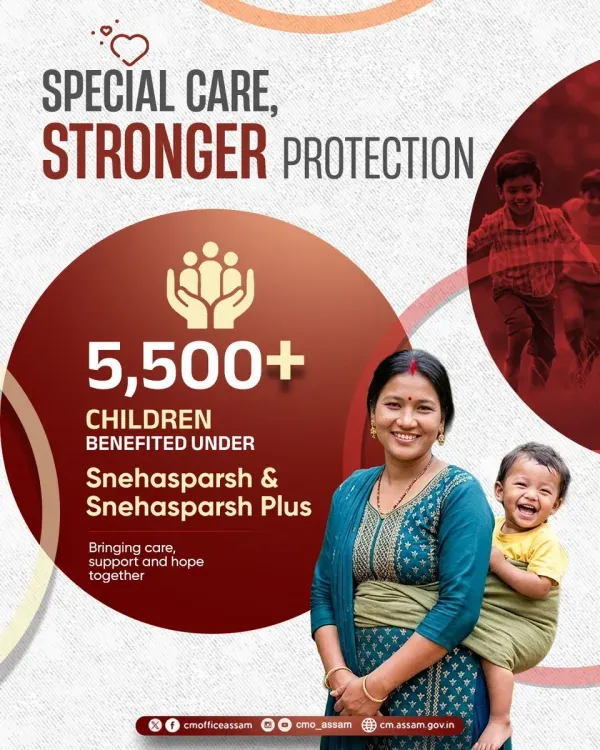
The Chief Minister's Office of Assam on June 12, 2026 highlighted Sneha Sparsha, a state scheme providing financial support for specialised treatment of children with serious ailments such as cancer and heart conditions, underscoring CM Himanta Biswa Sarma's focus on inclusive paediatric healthcare.
Key Takeaways
The Chief Minister's Office of Assam highlighted the Sneha Sparsha scheme on June 12, 2026 .
Sneha Sparsha provides financial assistance for specialised treatment of children suffering from serious ailments including cancer and cardiac conditions.
The scheme is presented as central to CM Himanta Biswa Sarma 's inclusive healthcare agenda since he took office in May 2021 .
Assam's earlier Atal Amrit Abhiyan (launched 2016 ) covered critical illnesses up to Rs 2 lakh , forming the policy lineage for current child-health support.
The initiative complements national frameworks — National Health Mission and Ayushman Bharat — with a state-specific paediatric layer.
Utilisation data and potential budget enhancements are expected to be reviewed in upcoming Assam assembly or health department sessions.
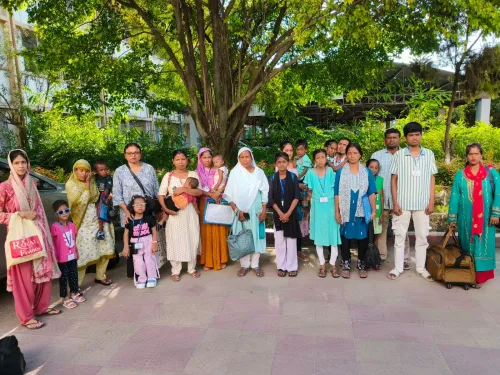
The Chief Minister's Office of Assam on Friday, June 12, 2026 highlighted the state government's Sneha Sparsha scheme, which extends financial support for specialised treatment of children suffering from serious ailments, reaffirming inclusive healthcare as a core governance priority.
Context
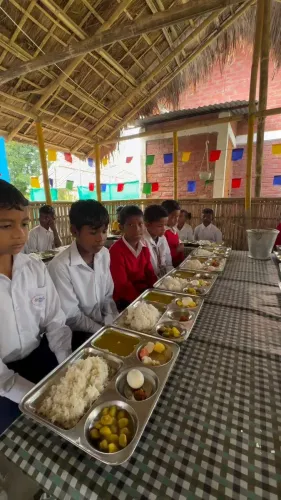
The post states that 'ensuring quality healthcare for every child remains a key priority of the Assam Government,' framing Sneha Sparsha as a direct instrument of that commitment. The scheme targets children with conditions such as cancer and serious cardiac ailments — illnesses that frequently push families into catastrophic health expenditure. The CMO described the initiative as 'a reflection of HCM Dr. Himanta Biswa Sarma's commitment to inclusive healthcare.'
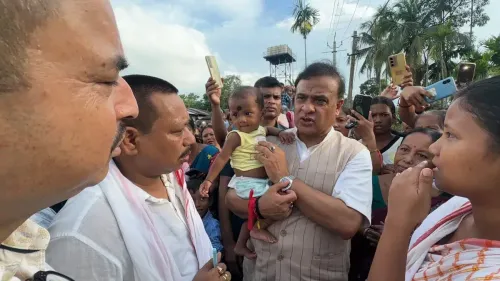
Himanta Biswa Sarma, who has served as Chief Minister of Assam since May 2021, has positioned expanded healthcare access — particularly for vulnerable groups — as a signature policy thrust of his administration.
Policy Backdrop
Assam has a precedent of state-funded health protection for critical illnesses. The Atal Amrit Abhiyan, launched in 2016, provided health coverage of up to Rs 2 lakh for critical conditions, including for children. Sneha Sparsha builds on this lineage by directing financial assistance specifically toward paediatric specialised care, a gap that general health-insurance frameworks often leave inadequately covered.
The scheme complements national-level programmes such as the National Health Mission and Ayushman Bharat, which together aim to reduce out-of-pocket health spending across India. Assam's state-specific layer addresses the particular challenges of the northeastern region, where access to tertiary medical facilities has historically been limited.
Stakeholders and Impact
The primary beneficiaries are children diagnosed with serious ailments and their families across Assam. For households — especially in rural and semi-urban areas — the cost of specialised paediatric treatment at tertiary centres can be financially ruinous. A state-backed financial support mechanism directly reduces this burden and can improve treatment-seeking behaviour.
Across India, northeastern states have increasingly adopted targeted financial support schemes for paediatric tertiary care, recognising that geography and income together create compounded barriers to specialised medical access. Assam's approach is consistent with this regional pattern.
What's Next
Analysts and health-policy observers will watch for utilisation data and potential budget enhancements for Sneha Sparsha in upcoming Assam assembly sessions or health department reviews. Expanding the scheme's coverage — in terms of eligible conditions, age brackets, or financial ceilings — could further strengthen the state's paediatric healthcare safety net.
As Indian states compete to demonstrate welfare delivery, Assam's continued investment in child health schemes signals that paediatric care is likely to remain a visible political and policy priority for the Sarma administration in the near term.
Point of View
Positioning Sneha Sparsha within a broader narrative of child-centric governance under CM Himanta Biswa Sarma. It signals that paediatric health spending is being elevated as a political differentiator for the Assam government, particularly as northeastern states compete on welfare delivery metrics. The reference to 'inclusive healthcare' is also a coded message to economically marginalised families — the scheme's core constituency — that the state is reducing financial barriers to tertiary care. Whether the scheme's actual reach matches its political salience will depend on utilisation figures and budgetary commitments in coming legislative cycles.
NationPress
26 Oct 2026
Frequently Asked Questions
What is the Sneha Sparsha scheme in Assam?
Sneha Sparsha is an Assam government scheme that provides financial assistance for the specialised treatment of children suffering from serious ailments such as cancer and heart conditions, aimed at making quality healthcare accessible to every family in the state.
Who launched Sneha Sparsha in Assam?
The scheme operates under the Assam government led by Chief Minister Himanta Biswa Sarma , who has been in office since May 2021 and has championed inclusive healthcare as a policy priority.
What diseases are covered under Sneha Sparsha?
The scheme covers children with serious ailments including cancer and cardiac conditions, though the full list of eligible diseases is subject to official government notifications.
How does Sneha Sparsha relate to Atal Amrit Abhiyan?
Atal Amrit Abhiyan, launched in 2016 , provided health coverage up to Rs 2 lakh for critical illnesses in Assam. Sneha Sparsha extends this policy lineage with a specific focus on financial support for specialised paediatric care.
How does Sneha Sparsha complement Ayushman Bharat?
Sneha Sparsha acts as a state-specific layer that targets paediatric specialised care, complementing the national Ayushman Bharat programme and the National Health Mission to reduce out-of-pocket health expenditure for Assam's families.