Shivraj Singh Chouhan Plants Paddy With Students at Agri University
Synopsis
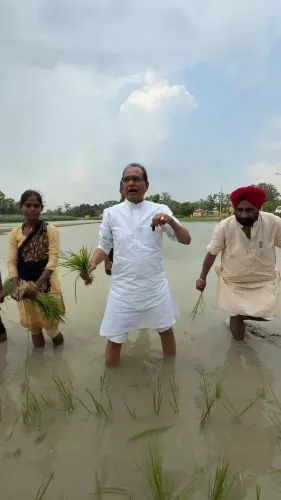
Union Agriculture Minister Shivraj Singh Chouhan joined agricultural university students in transplanting paddy on 26 June 2026, arguing that farming must be lived in the field. The visit reflects his long-standing push to bridge classroom theory and practical farm skills across India's agricultural universities.
Key Takeaways
Shivraj Singh Chouhan participated in paddy transplanting at an agricultural university on 26 June 2026 .
He stated that agriculture 'cannot be learnt from books alone' and must be experienced directly in the field.
The minister described the session as a two-way learning experience, saying he too learnt alongside the students.
Chouhan promoted similar field-linked training during his four terms as Chief Minister of Madhya Pradesh (2005–2023) .
The visit signals ministerial pressure on ICAR and state agricultural universities to prioritise experiential, field-based curricula.
Young farmers and agricultural students are the primary stakeholders, amid broader concerns about youth migration away from farming.
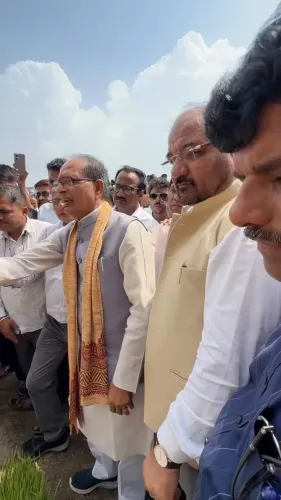
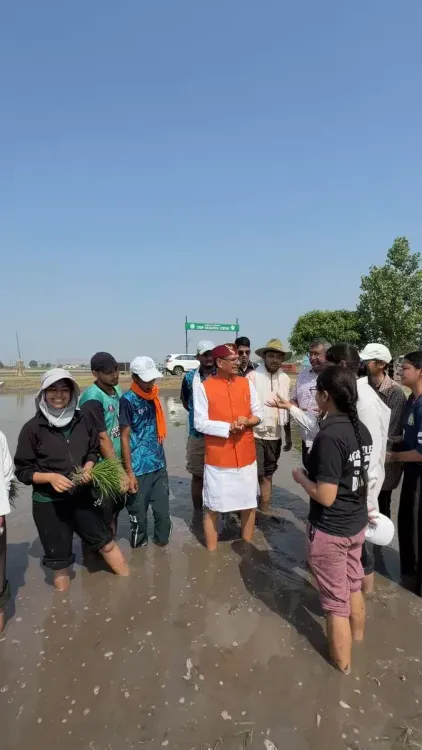
Union Agriculture Minister Shivraj Singh Chouhan on Friday, 26 June 2026, took to paddy fields alongside students at an agricultural university, participating hands-on in transplanting rice seedlings and reflecting on the irreplaceable value of field-based learning in farming education.
Posting on X, the minister wrote: 'Aaj krishi vishwavidyalaya mein apne bhanje-bhanjiyon ke saath khet mein dhan ki ropai karne ka avsar mila' — 'Today I got the opportunity to transplant paddy in the field alongside my students at the agricultural university.' He added that farming, in his view, cannot be learnt from books alone: it must be lived by stepping into the field.
Context
Chouhan has long championed experiential agriculture education, a theme that defined much of his record as a four-term Chief Minister of Madhya Pradesh. His participation in the paddy transplanting session — shoulder to shoulder with students he affectionately called bhanje-bhaniyan (nephews and nieces) — was framed not as a ceremonial gesture but as a mutual learning exercise. 'Today I too learnt a great deal alongside these students of mine,' he said.
The visit underscores a broader ministerial effort to keep the Agriculture Ministry's public communication rooted in the lived realities of farming, at a time when India's farm sector faces compounding pressures from climate variability and shifting rural demographics.
Policy Backdrop
India's agricultural universities, governed largely through the Indian Council of Agricultural Research (ICAR) framework, have for decades grappled with the gap between classroom theory and practical farm skills. Successive governments have pushed for experiential learning modules, field internships, and 'learn-by-doing' curricula at state agricultural universities.
During his tenure as Madhya Pradesh Chief Minister (2005–2018 and 2020–2023), Chouhan promoted state-level extension programmes that linked university campuses directly with farming communities. As Union Minister, he has continued to signal that hands-on training must be central — not supplementary — to agricultural education at every level.
Stakeholders and Impact
The primary audience for this messaging is agricultural students and young farmers across India, a demographic the government is keen to retain in the farm sector. Youth migration away from agriculture remains a structural concern, and ministerial visibility in actual field work is intended to lend dignity and aspiration to farming as a vocation.
For agricultural universities, a signal from the Union Minister reinforcing field practice carries institutional weight: it can influence curriculum design, faculty priorities, and the allocation of resources toward practical training infrastructure over purely academic programmes.
What's Next
Observers will watch for concrete policy follow-through, including possible revisions to ICAR curricula that mandate a higher proportion of field-hours, or fresh guidelines to state agricultural universities on experiential learning benchmarks. With parliamentary sessions on agriculture education budgets approaching, such symbolic field visits often precede or accompany substantive announcements.
If the Agriculture Ministry translates this visible commitment into structured policy — tying university funding or accreditation to measurable field-training outcomes — it could mark a meaningful shift in how India trains the next generation of farmers.
Point of View
Relatable gestures to reinforce a governing philosophy rather than leaving it to policy documents alone. The framing of students as 'nephews and nieces' is characteristic of his political persona, designed to project accessibility and emotional proximity to rural India. Whether the optics translate into measurable curriculum reform at ICAR-affiliated universities will be the real test of intent.
NationPress
25 Sept 2026
Frequently Asked Questions
Why did Shivraj Singh Chouhan visit an agricultural university to transplant paddy?
Chouhan visited the agricultural university to participate in a hands-on paddy transplanting session with students, reinforcing his belief that farming skills must be acquired through direct field experience rather than classroom instruction alone.
What did Shivraj Singh Chouhan say about agricultural education?
He said that farming cannot be learnt from books alone and must be 'lived by stepping into the field,' describing the session as a continuous, two-way process of learning and teaching.
Which agricultural university did Shivraj Singh Chouhan visit on 26 June 2026?
The specific university was not named in the minister's post. The research background notes the exact location is unverified.
What is ICAR and how does it relate to farm education in India?
The Indian Council of Agricultural Research (ICAR) is the apex body overseeing agricultural universities and research institutes in India. It sets curriculum frameworks that determine the balance between theoretical and practical training for agriculture students.
Has Shivraj Singh Chouhan promoted hands-on farming education before?
Yes. During his tenure as Chief Minister of Madhya Pradesh from 2005 to 2023, Chouhan actively promoted extension programmes that linked state agricultural universities with farming communities for field-based learning.