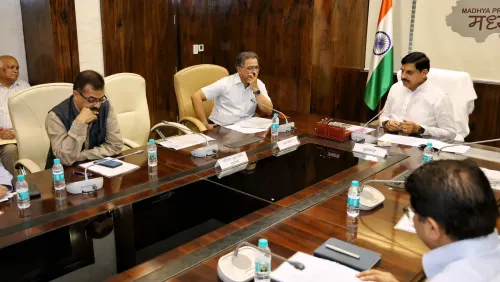
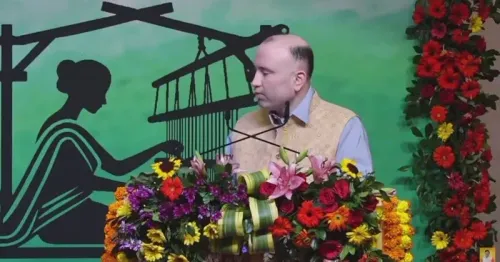
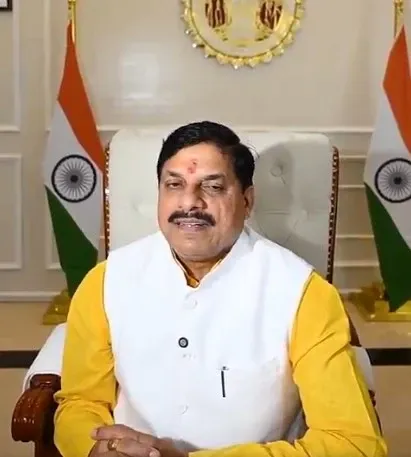
CM Mohan Yadav unveils August-September cultural calendar for MP
Synopsis
Madhya Pradesh CM Dr. Mohan Yadav has announced a cultural calendar from 14 August to 6 September 2026, featuring the Pravasi Senani Veethi gallery launch at Shaurya Smarak, a Tiranga Bike Rally, Rakshabandhan civic events, and a nine-day Shri Krishna Parv across the state.
Key Takeaways
14 August 2026 : Photo exhibition, launch of Pravasi Senani Veethi gallery, and Tiranga Bike Rally at Shaurya Smarak, Bhopal .
The day marks both Partition Horrors Remembrance Day (designated by the Centre in 2021 ) and the 150th anniversary of Vande Mataram .
Pravasi Senani Veethi highlights contributions of overseas Indians to India's independence movement.
28 August : Rakshabandhan observed as a 'national festival of social bonds' across Madhya Pradesh.
29 August – 6 September : Shri Krishna Parv with cultural, sports, and agricultural events state-wide; Balram Jayanti on 2 September .
From a photo exhibition honouring diaspora freedom fighters to a state-wide Shri Krishna Parv stretching nearly a week, Madhya Pradesh Chief Minister Dr. Mohan Yadav has announced a packed cultural and commemorative calendar running from 14 August to 6 September 2026 — anchored at Bhopal's Shaurya Smarak and radiating out to every district in the state.
14 August: Partition Remembrance meets Vande Mataram at 150
The calendar opens on 14 August — Bharat Vibhajan Vibhishika Smriti Diwas (Partition Horrors Remembrance Day) — with a twin purpose. At the Shaurya Smarak, the war memorial in Bhopal dedicated to the armed forces, a photo exhibition will go up alongside the formal launch of the 'Pravasi Senani Veethi' — a gallery walkway spotlighting the overlooked contributions of overseas Indians to the independence movement. A Tiranga Bike Rally will close the day on the streets.
The day carries double historical weight in 2026: it is both the annual remembrance of the 1947 Partition — a day the Central government designated in 2021 to ensure the trauma of displacement is not forgotten — and part of the nationwide celebration marking 150 years of Vande Mataram, India's national song.
Pravasi Senani Veethi: the diaspora's forgotten chapter
The launch of the Pravasi Senani Veethi is the most distinctive element of the 14 August programme. The gallery is designed to underscore how Indians living abroad — in South Africa, Fiji, the Caribbean, and beyond — organised, funded, and fought for India's freedom at a time when the struggle needed every ally it could find. State governments have coordinated such cultural heritage initiatives with the Ministry of Culture since the early 2000s, but a dedicated walkway of this kind at a prominent war memorial signals an intent to make the diaspora angle a permanent fixture of Madhya Pradesh's remembrance architecture.
Rakshabandhan, Shri Krishna Parv, and Balram Jayanti across MP
The calendar does not pause after Independence Day. 28 August brings Rakshabandhan, framed explicitly as a 'national festival of social bonds' — a framing that positions the occasion beyond family ritual and into the register of civic harmony. Then, from 29 August to 6 September, the state hosts Shri Krishna Parv, a nine-day celebration spanning cultural performances, sports events, and agricultural activities across Madhya Pradesh's districts. 2 September within that window is marked as Balram Jayanti, the birth anniversary of Krishna's elder brother — a figure closely associated with agrarian tradition, fitting for a state where farming remains central to daily life.
The breadth of the programme — combining historical remembrance, religious celebration, sport, and agriculture — reflects a template state administrations have used to stitch together diverse constituencies under a single cultural umbrella.
Whether the Tiranga Bike Rally draws mass participation and how the district-level Shri Krishna Parv events unfold will be the real measure of how deeply this calendar lands beyond Bhopal.
Point of View
Religious festivals, and diaspora pride into a single, state-administered cultural arc — giving the party both patriotic and devotional optics simultaneously. The Pravasi Senani Veethi is a subtle but pointed move: by foregrounding the diaspora's role in the freedom struggle, the government connects overseas Indian communities to a narrative of sacrifice that typically centres on domestic leaders. With assembly elections on the horizon in several states, Madhya Pradesh's dense cultural calendar also serves as a proof-of-governance moment — demonstrating administrative reach from Bhopal down to district level.
NationPress
10 Aug 2026
Frequently Asked Questions
What is Partition Horrors Remembrance Day and why is it on 14 August?
Partition Horrors Remembrance Day is observed every year on 14 August — the eve of Independence Day — to commemorate the millions who were displaced, killed, or traumatised during the 1947 Partition of India . The Government of India officially designated the day in 2021 .
What is the Pravasi Senani Veethi being launched in Bhopal?
Pravasi Senani Veethi is an exhibition gallery at Shaurya Smarak, Bhopal that highlights the contributions of overseas Indians — from South Africa to Fiji — to India's freedom struggle. It is being inaugurated on 14 August 2026 as part of Partition Remembrance Day and Vande Mataram's 150th anniversary.
What is Shri Krishna Parv in Madhya Pradesh?
Shri Krishna Parv is a state-wide cultural celebration announced by CM Dr. Mohan Yadav running from 29 August to 6 September 2026 , featuring cultural performances, sports events, and agricultural activities across Madhya Pradesh's districts, with Balram Jayanti marked on 2 September .
What is Vande Mataram's 150th anniversary about?
Vande Mataram , India's national song, is marking 150 years in 2026 . State governments across India, including Madhya Pradesh, are organising cultural programmes in coordination with the Ministry of Culture to celebrate the sesquicentennial.
Where is Shaurya Smarak located?
Shaurya Smarak is a war memorial in Bhopal, Madhya Pradesh , dedicated to the martyrs of India's armed forces. It is the venue for the 14 August 2026 photo exhibition, Pravasi Senani Veethi launch, and Tiranga Bike Rally.