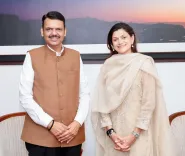
Shivraj Singh Chouhan Hosts Vriksh Mitra Meet at Pusa
Synopsis
Union Agriculture Minister Shivraj Singh Chouhan met Vriksh Mitra volunteers at Pusa, New Delhi on 12 July 2026, celebrating the campaign's growth to roughly 16,000 virtual participants and urging Indians to plant a tree on every personal milestone as a legacy for future generations.
Key Takeaways
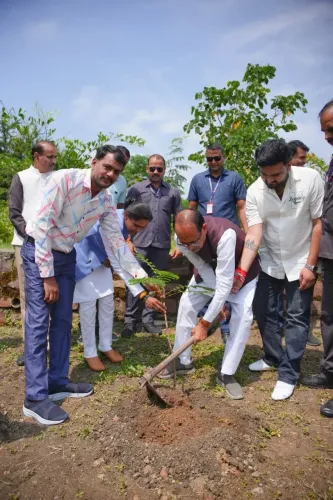
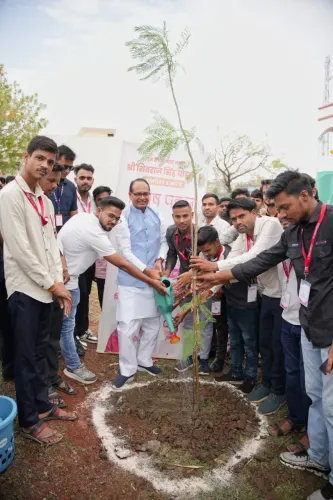
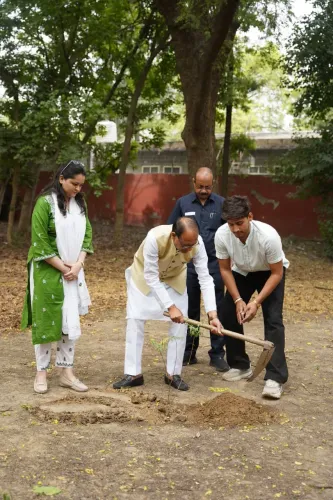
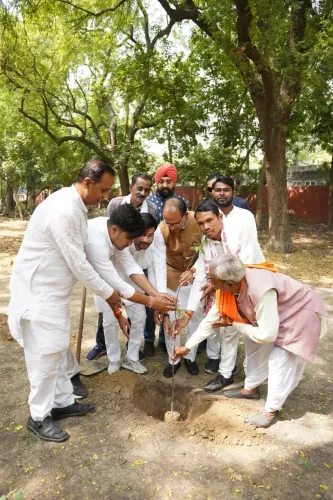
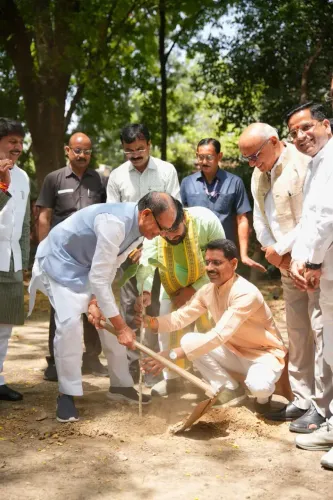
Shivraj Singh Chouhan hosted an in-person dialogue with Vriksh Mitra volunteers at Pusa, New Delhi on 12 July 2026 .
The campaign has attracted approximately 16,000 virtual participants from across India since its social media launch.
Volunteers shared field experiences and suggestions, and renewed their commitment to environmental conservation.
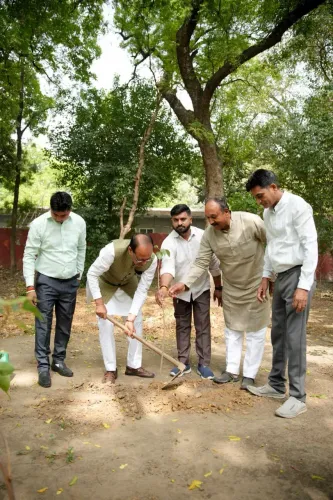
Chouhan called for tree planting on personal milestones — birthdays, anniversaries, and in memory of loved ones — to embed conservation in everyday life.
The initiative aligns with India's National Mission for a Green India and Chouhan's track record of statewide plantation drives during his tenure as Chief Minister of Madhya Pradesh .
Future integration of the volunteer network with state forest department reporting could formalise the campaign's role in official green-cover accounting.
Union Agriculture Minister Shivraj Singh Chouhan on Sunday, 12 July 2026, met with Vriksh Mitra (tree friend) volunteers from across India at Pusa, New Delhi, marking a significant milestone for his citizen-led tree-planting campaign that has drawn approximately 16,000 virtual participants nationwide.
Context
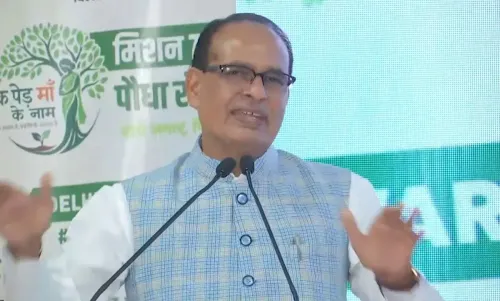
The in-person dialogue at Pusa — home to several of India's premier agricultural research institutions — brought together volunteers who had joined the Vriksh Mitra initiative following Chouhan's earlier social media appeal. Participants shared field experiences and suggestions, and collectively reaffirmed their commitment to environmental conservation. Addressing the gathering, Chouhan expressed satisfaction that the campaign had grown to connect 'lagbhag 16 hazaar Vriksh Mitra' ('approximately 16,000 tree friends') virtually from across the country.
The minister underscored a central conviction: 'Jab samaj swayam aage aayega, tabhi paryavaran sanrakshan jan-andolan banega' — 'Only when society steps forward on its own will environmental conservation become a people's movement.' He called on citizens to plant and nurture at least one sapling on birthdays, wedding anniversaries, in memory of loved ones, and on every auspicious occasion.
Policy Backdrop
Chouhan's emphasis on community-driven afforestation is consistent with his long record on the issue. During his four terms as Chief Minister of Madhya Pradesh, he oversaw multiple statewide plantation drives aimed at expanding forest cover. That state-level experience has now been channelled into a national, social-media-amplified model under the Vriksh Mitra banner.
The approach complements the National Mission for a Green India, a flagship programme under India's climate action framework that sets targets for forest and tree cover enhancement. By tying tree planting to personal milestones — a practice with deep roots in Indian cultural tradition — the campaign seeks to embed conservation into everyday social rituals rather than confining it to government-led drives.
Stakeholders and Impact
The primary beneficiaries of the Vriksh Mitra network are the volunteers themselves, who gain a structured community around a shared environmental goal, and the broader public, which stands to benefit from improved green cover, air quality, and biodiversity. The campaign's virtual architecture means participants from remote districts can stay engaged without travelling to New Delhi.
Environmental observers note that converting individual acts of tree planting into a documented, networked movement can strengthen accountability. When volunteers share updates and experiences, it creates informal monitoring that supplements official afforestation data — a gap that has historically made it difficult to assess the true survival rate of planted saplings.
What's Next
The immediate question is how the Vriksh Mitra volunteer network will be integrated with state forest department reporting mechanisms. Future parliamentary sessions or environment ministry reviews could announce formal targets or institutional linkages for the campaign, giving the citizen network a clearer role within India's official green-cover accounting. Chouhan's framing of tree planting as 'the most beautiful legacy for coming generations' suggests the campaign is positioned for a long-term, multigenerational pitch — one that could deepen its social roots well beyond the current volunteer base.
Point of View
Insulating it from the criticism that government plantation drives are top-down and poorly monitored. By anchoring tree planting to personal milestones such as birthdays and anniversaries, the campaign taps into cultural sentiment rather than civic duty, which historically yields stronger grassroots uptake. The Pusa gathering serves a dual purpose: it rewards early adopters and generates visible momentum ahead of any formal policy targets that may be announced. For Chouhan, it also reinforces an identity as a mass-contact leader that he cultivated across four terms in Madhya Pradesh and is now projecting onto the national stage.
NationPress
11 Oct 2026
Frequently Asked Questions
What is the Vriksh Mitra campaign?
Vriksh Mitra, meaning 'tree friend,' is a citizen-led tree-planting initiative promoted by Union Agriculture Minister Shivraj Singh Chouhan through social media, encouraging voluntary participation in environmental conservation across India.
How many people have joined the Vriksh Mitra campaign?
According to Chouhan's post on 12 July 2026, approximately 16,000 Vriksh Mitra volunteers from across India have joined the campaign virtually.
Where did Shivraj Singh Chouhan meet the Vriksh Mitra volunteers?
The in-person dialogue was held at Pusa in New Delhi, which hosts several of India's leading agricultural research institutions.
What did Shivraj Singh Chouhan ask citizens to do for the environment?
Chouhan urged citizens to plant and nurture at least one sapling on birthdays, wedding anniversaries, in memory of loved ones, and on every auspicious occasion, calling it the most beautiful legacy for future generations.
How does the Vriksh Mitra campaign relate to India's national green cover goals?
The campaign complements the National Mission for a Green India by encouraging community-driven afforestation, aiming to convert government-led targets into a broad people's movement with grassroots accountability.